How do I deal with feeling self-conscious in ballet class?
Overcome self-consciousness by shifting your focus from how you look to how you feel. Remember the 'spotlight effect': most dancers are too focused on their own technique to notice yours. Wear attire that makes you feel confident, focus on one specific technical cue, and treat mistakes as essential data points in your learning journey.
Feeling self-conscious in a ballet class is a near-universal experience for adult dancers, whether you are stepping into the studio for the first time or returning after a twenty-year hiatus. Ballet requires a unique level of vulnerability—you are moving your body in unfamiliar ways, often in front of mirrors, while wearing form-fitting clothing. However, shifting your mindset from performance to process can transform your experience from one of anxiety to one of empowerment.
Understand the Spotlight Effect
The most important thing to realize is that every other dancer in the room is preoccupied with their own turnout, their own sequence, and their own balance. In psychology, this is known as the 'spotlight effect'—the tendency to overestimate how much others notice our appearance or mistakes. In a ballet setting, your classmates are likely working through their own internal checklists. When you realize that no one is judging you as harshly as you are judging yourself, you gain the freedom to focus entirely on your own growth.
Focus on Internal Sensation Over External Image
While mirrors are a staple of the ballet studio, they can often become a source of self-criticism rather than a tool for alignment. To combat this, try to focus on proprioception—the sense of where your body is in space. Instead of looking in the mirror to see if your leg is high enough, try to feel the engagement of your standing leg turnout or the lift in your core.
Our program, ✨ The Facets of Ballet: A Complete Adult Ballet Curriculum ✨, helps you build this internal roadmap. By understanding the 'why' behind every movement, you can replace 'Does this look right?' with 'Am I engaging the correct muscles?'. This shift in focus naturally reduces self-consciousness because your brain is too busy processing technical cues to worry about aesthetics.
Dress for Your Current Body and Comfort
There is a common misconception that you must wear a high-cut leotard and pink tights to 'real' ballet. For many adults, this specific attire is a major source of anxiety. As discussed in our Broche Banter podcast with Chelsea from Dianne Dancewear, the best dancewear is the kind that allows you to move without distraction. If a leotard makes you feel exposed, wear leggings and a moisture-wicking t-shirt. Even for men, as highlighted in our Ballet Attire for Men resources, comfort and functionality are the priority. When you aren't tugging at your clothes, you can commit fully to the movement.
Conquer "Center Panic"
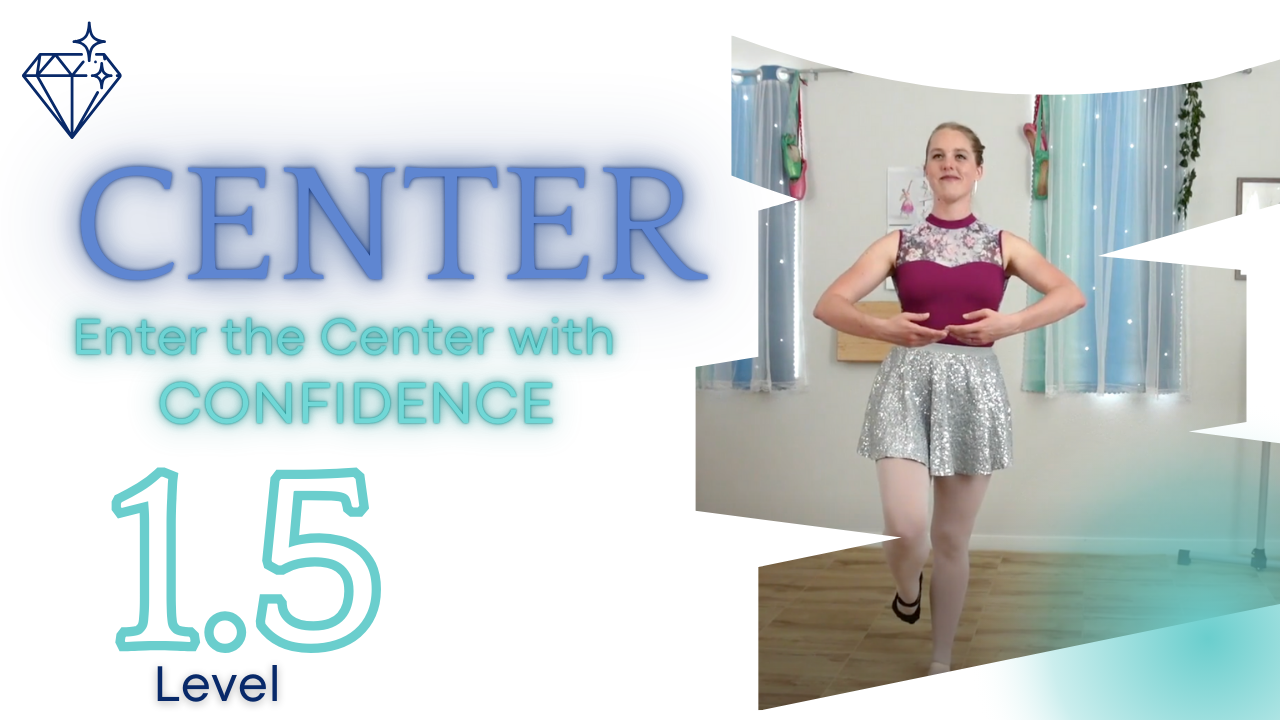
Many adult dancers feel confident at the barre but experience a surge of self-consciousness when moving to the center. Without the physical support of the barre, you may feel 'on display.' This is exactly why we created From Fear to Fun - Enter the Center with Confidence. This program (part of our 7,200+ video library) specifically addresses 'center panic' by building the stability and trust you need to step away from the barre with poise. By practicing these transitions in a low-pressure environment, you build the 'muscle memory' of confidence that carries over into a live class.
Embrace the "Sticky Buns" Phase
Every dancer, regardless of skill level, has days where they feel uncoordinated. If you are a total beginner, lean into that status. Our Absolute Beginners "Sticky Buns" Program is designed specifically to help you navigate the intimidating early days of ballet. It acknowledges that being a beginner is a brave act. Mistakes aren't failures; they are the mechanism through which you learn. If you mess up a combination, simply find the rhythm and rejoin. No one is keeping score.
Set Micro-Goals for Each Class
Instead of aiming for 'perfection,' which is an impossible standard in ballet, set one small, achievable goal for each class. Perhaps your goal is to keep your shoulders down during adagio, or to remember the sequence of a specific petit allegro. When you achieve these micro-goals, you build a sense of mastery that gradually replaces self-consciousness.
Ballet is a lifelong journey of refinement. By prioritizing your own progress over the perceived judgment of others, you allow yourself to experience the true joy of movement. You belong in the studio exactly as you are today.
Next step
Related Videos
Watch classes and tutorials related to this topic
 48:44
48:44 Broche Banter Podcast, Season 3 Episode 3 - Chelsea - Dancewear for Adults, Self-Consciousness in Studio, and Starting Pointe as an Adult with Chelsea from Dianne Dancewear
 46:08
46:08 Overcome Mental and Physical Barriers in Ballet with Rosy Pigott | Broche Banter - Season 3 Ep 7
 15:29
15:29 I saw myself on video and wanted to quit! Broche Banter Season 3 Episode 53
 0:27
0:27 Quicktip: Your job in ballet class is to remember. Improving technique is a continual forgetting-and-remembering cycle
More Programs
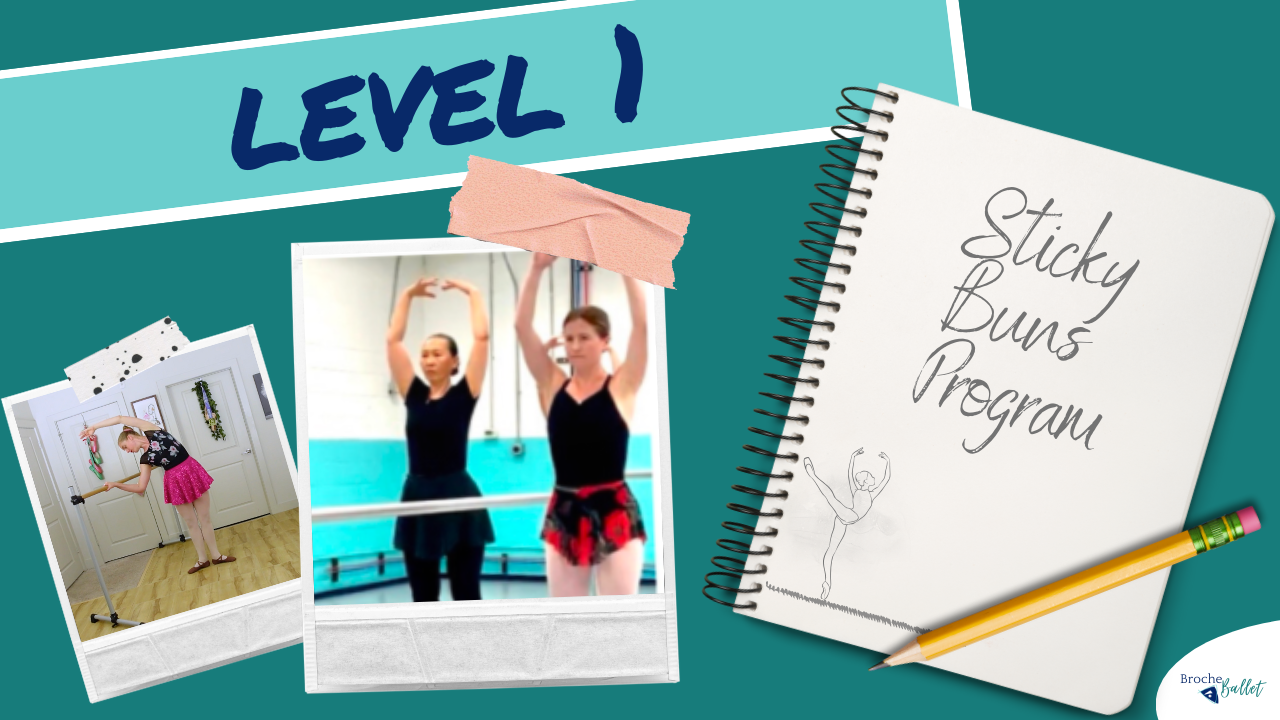
Absolute Beginners "Sticky Buns" Program
Beginner ballet classes can be intimidating! Whether your bun is sticky with hairspray or your buns are sticky with sweat, the our Sticky Buns Beginner Program is designed to get you studio-ready and actually "stick" with it!
115 classes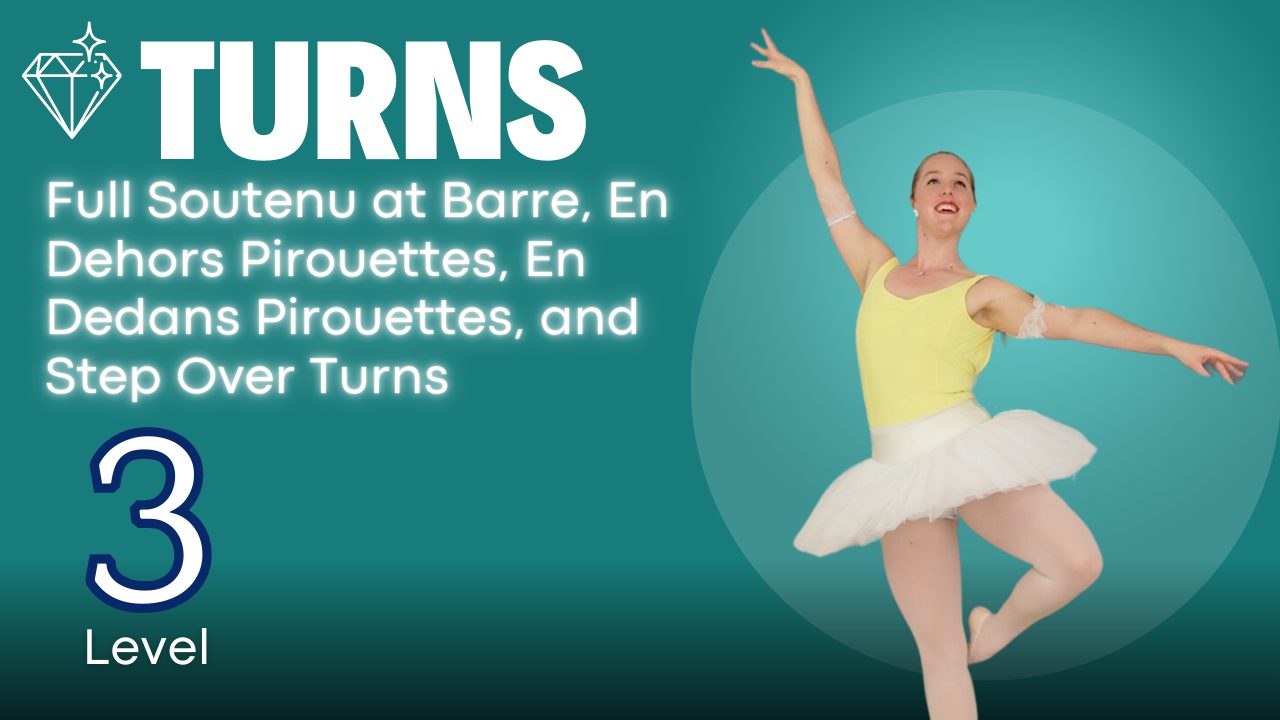
Your first Pirouettes
Full Soutenu at Barre, En Dehors Pirouettes, En Dedans Pirouettes, and Step Over Turns
93 classes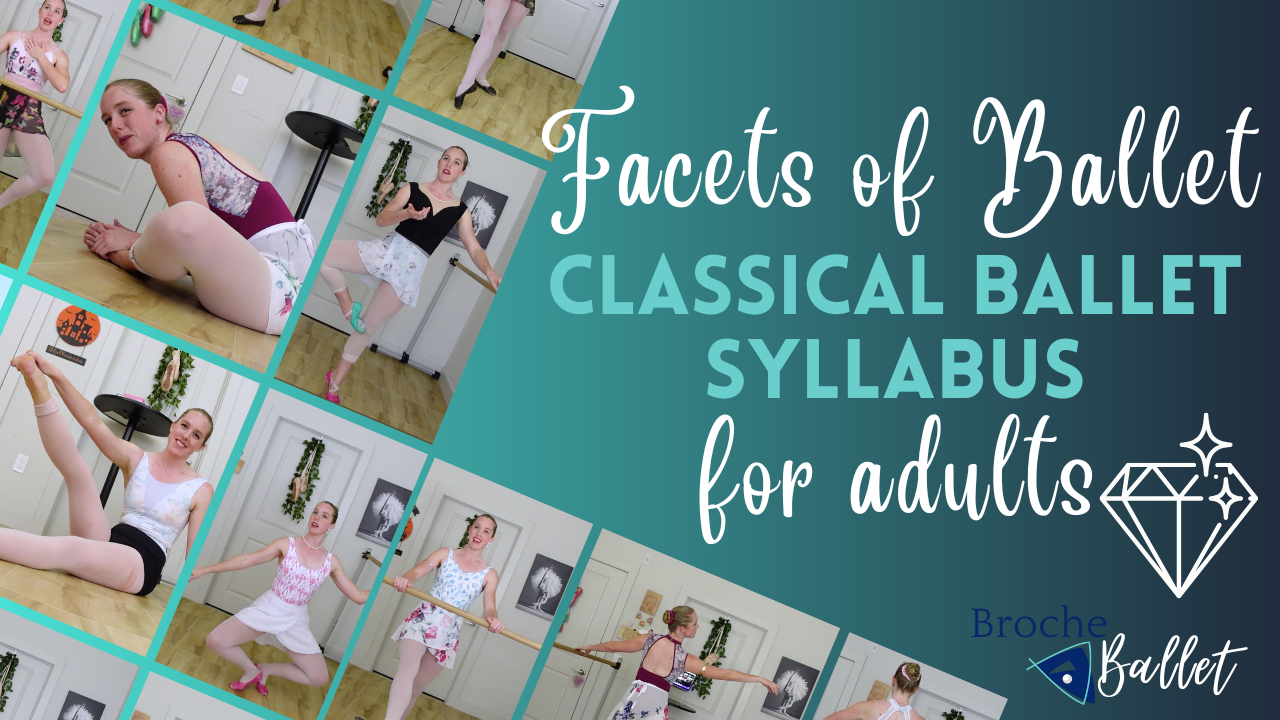
✨ The Facets of Ballet: A Complete Adult Ballet Curriculum ✨
At Broche Ballet, we know you don’t just want a quick challenge—you want a structured roadmap to becoming the dancer of your dreams. The Facets of Ballet is not just a collection of classes—it’s a progressive, modular training system that puts YOU in control of your ballet journey. With The Facets of Ballet Basics to Brilliance Program, you choose the skills you want to focus on and train at your own pace—whether you follow the full sequential roadmap or go deep in the areas you love most.
28 classes