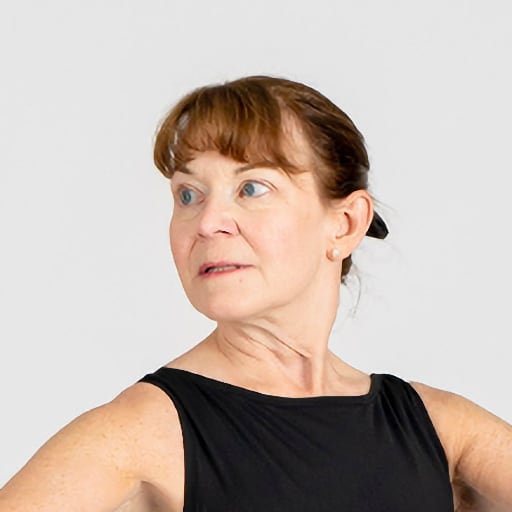
What You'll Learn
- How to apply "animated ease" to create fluid, professional-level transitions.
- Advanced stabilization techniques for promenades in attitude using head anchors.
- Refining the coordination between the chin and hands in arabesque and ton lié.
- Maintaining arm height and line integrity during tombé and rond de jambe.
- Strategic weight placement using the "tuck under" method for seamless flow.
About This Video
Elevate your classical technique from mere execution to sophisticated artistry with this Broche Ballet advanced center class. In this 21-minute session, we focus on the subtle, often overlooked details that define professional-level performance: the intricate coordination of head and arm movements, also known as épaulement. " We explore how to create a fluid, natural aesthetic by manipulating the timing of your movements.
Rather than arriving at a position simultaneously, students learn the art of delaying the head's arrival, particularly during piqué bourrée sequences. This technique prevents stiffness and breathes life into your dancing, making every transition appear effortless yet intentional. Throughout the class, we dive deep into complex center combinations involving pas de cheval, piqué sous-sous, and promenades in attitude.
You will learn how to use specific focal points to act as an anchor, providing the stability necessary to maintain a perfect line during slow rotations. We also address common technical pitfalls, such as the tendency for the port de bras to drop during tombé movements. By keeping the arm high near the ear while directing the gaze toward the floor, you maintain a continuous, elongated silhouette.
Weight transfer is another critical focus. The instructor introduces a strategic "tuck under" technique during ton lié transitions to ensure proper alignment and a seamless flow of energy. We also refine the coordination of the chin and hands; by matching the chin's path to the downward motion of the hand when transitioning into arabesque, you create a more harmonious and classical connection between your upper and lower body.
Whether you are practicing fondu, soutenu, or rond de jambe, this class challenges you to integrate technical precision with artistic nuance.