Can Ballet Improve my Aerial Arts (Silks, Lyra, Pole)?
Yes, ballet is an exceptional cross-training tool for aerialists. It develops the 'ballet line'—specifically pointed toes and stretched knees—while building the active flexibility and core stability required for advanced shapes on silks, lyra, or pole. Ballet’s focus on internal body awareness and controlled transitions translates directly to more fluid, professional-looking aerial sequences.
Yes, ballet is a powerful secret weapon for aerialists. Whether you spend your time on silks, lyra, or a pole, the technical foundations of ballet provide the 'polish' that separates a good performance from a breathtaking one. While aerial arts build incredible upper body and grip strength, ballet complements this by focusing on the lower body, core stability, and the aesthetic 'lines' that define high-level movement.
Perfecting the 'Aerial Line'
One of the most common critiques aerialists receive is 'soft' knees or 'sickled' feet. In ballet, these are foundational deal-breakers. By practicing ballet, you train your brain to maintain a fully stretched leg and a pointed toe automatically, even when your focus is on a complex wrap or a high-climb. Programs like Beauty and Grace: 12-weeks of Posture & Elegance are designed to help adult dancers build these beautiful movement patterns from the ground up, ensuring that every time you extend your leg in the air, it is energized and aesthetically pleasing.
Developing Active Flexibility
Aerialists often have great passive flexibility (the ability to do splits on the ground), but struggle with active flexibility (the ability to lift and hold the leg high in the air). Ballet is almost entirely an exercise in active flexibility.
If you find your 'Meathook' or 'Bird of Paradise' lacks the height you want, programs like Extensions Foundations for Higher Legs and Higher Legs Front and Side - Extensions focus on the deep hip flexor and quad strength needed to move your legs through space without the help of gravity. With over 180 videos dedicated to extensions in our library, you can specifically target the muscles required to sustain beautiful, high lines while suspended.
Core Stability and Spatial Awareness
When you are spinning on a lyra or inverted on a pole, your center of gravity is constantly shifting. Ballet teaches a specific type of 'internal body awareness' that is invaluable here. Because ballet requires you to find your balance on a tiny platform (the ball of the foot), you learn to engage your deep stabilizing muscles instantly.
Our Advanced Ballet Barre for Core & Balance focuses on this exact skill. This translates to the air by helping you maintain a 'hollow body' position or a controlled arch without losing your orientation.
Artistry and Transitions
Aerial arts are often a series of 'tricks' connected by transitions. Ballet excels at teaching the 'in-between.' It teaches you how to use your breath, your eye line, and your port de bras (arm movements) to make difficult moves look effortless.
Adult learners often worry that they lack the childhood training to look 'graceful.' However, as we discuss in our video Is Ballet Possible for Me?, ballet technique is a mechanical system that can be learned at any age. By understanding the 'why' behind the movement—something we prioritize at Broche Ballet—you can apply those same mechanical principles to your transitions on the apparatus, making your entire routine look like a seamless dance rather than a climb.
How to Integrate Ballet
You don’t need to spend 20 hours a week at the barre to see results. Even one or two targeted sessions a week can change how you hold your body in the air. Focus on barre work to improve your footwork and knee extension, and center work to improve your balance and core.
Ballet provides the discipline and the vocabulary that will make your aerial practice safer, stronger, and significantly more beautiful. We invite you to explore our foundations programs to start building the lines you've always wanted for your aerial journey.
Next step
Related Videos
Watch classes and tutorials related to this topic


More Programs
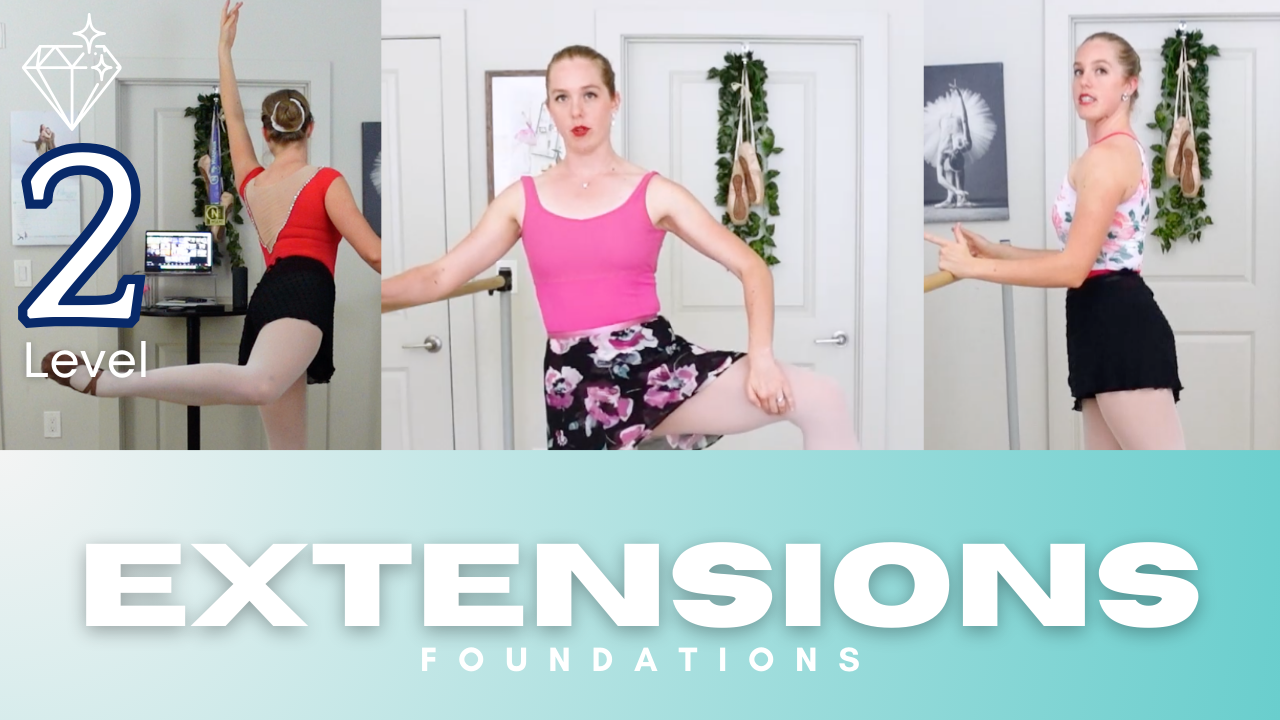
Extensions Foundations for Higher Legs
Dreaming of a higher développé, and higher legs in arabesque? Extensions, Level 2 lays the essential foundation for building the strength, flexibility, and technique needed to lift up those legs.
32 classes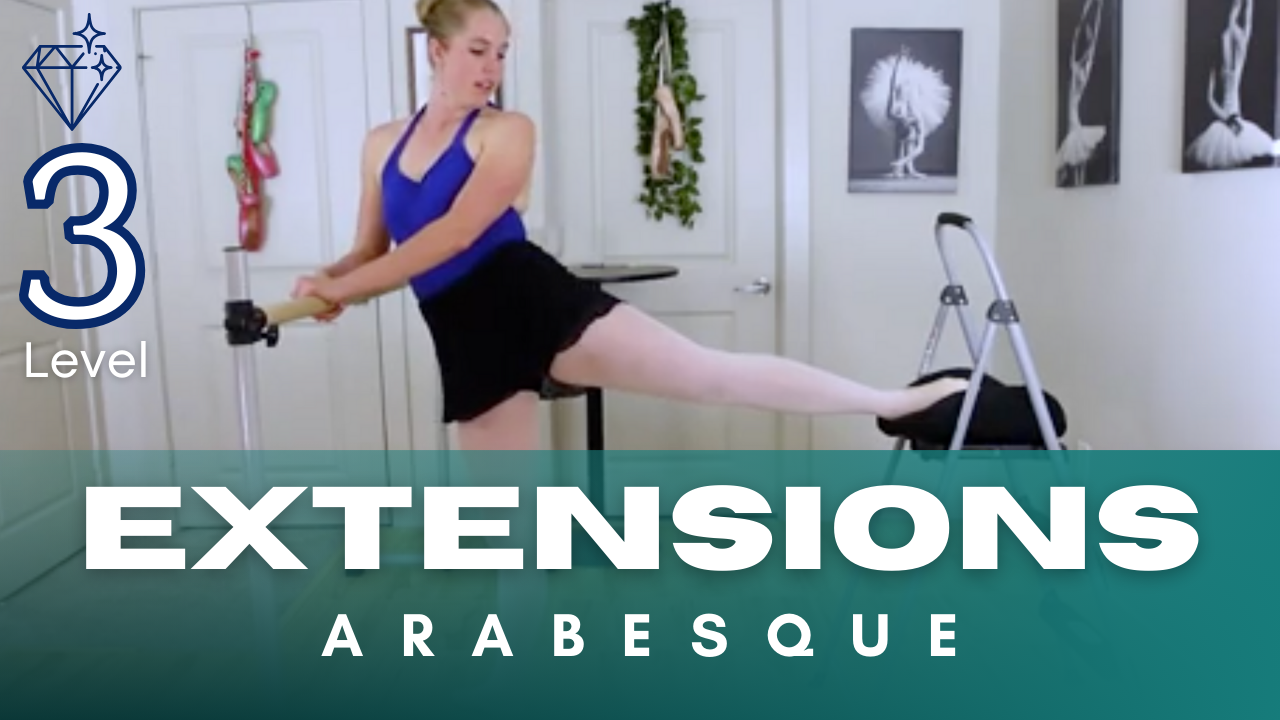
Higher Arabesque Program
Take your arabesque to soaring new heights with Extensions, Level 3 - Arabesque. This advanced program focuses on building the strength, flexibility, and technique required to achieve a higher, more elegant arabesque line. With an emphasis on alignment, turnout, and balance, you’ll refine your artistry and power in this iconic ballet pose.
157 classes