Is Ballet Good for Preventing Falls in Older Adults and Seniors?
Yes, ballet is exceptionally effective for fall prevention. It targets the three critical areas of stability: ankle strength, core control, and proprioception. By training your body to navigate off-balance positions in a controlled environment, you develop the neurological and physical resilience necessary to maintain upright posture and recover safely from slips in daily life.
Ballet is one of the most comprehensive forms of physical training for older adults seeking to maintain their independence and mobility. Unlike linear exercises like walking or cycling, ballet requires multi-planar movement, constant weight shifting, and a high degree of body awareness. At Broche Ballet, our library of over 7,200 videos includes specific sequences designed to address the physical changes that occur with age, directly counteracting the factors that lead to falls.
Strengthening the Foundation: Ankle and Foot Stability
Falls often occur because of weak ankles or a lack of articulation in the feet. In ballet, every movement begins and ends with the feet. Exercises like relevé (rising onto the balls of the feet) and plié (bending the knees) build functional strength in the intrinsic muscles of the foot and the stabilizers of the ankle. Our Proprioception & Ankle Stability video (17:34) specifically focuses on these areas, teaching you how to maintain an even pathway of movement and a controlled descent. This strength is vital for navigating uneven sidewalks or recovering your balance if you trip.

The Power of Proprioception
Proprioception is your body’s ability to sense where it is in space without looking. As we age, this sense can dull, leading to hesitance in movement. Ballet restores this by demanding precise placement of the limbs. Our Fun & Flowing Balancing and Proprioception Drills use cues for eyes open or closed to challenge your internal mapping. By practicing these drills in the center, you teach your nervous system to rely on internal feedback rather than just visual cues, which is a key factor in preventing falls in low-light or crowded environments.
Learning to "Fall" Correcting the Crisis Response
One of the most unique aspects of ballet training is learning how to react when a balance fails. As noted in our video "Falling out of a balance is the time to train your body," we teach students to use these moments as data. Instead of panicking, you train your body to lift through the back and engage the core to stabilize. This "crisis response" training means that if you do lose your balance in the real world, your body has a rehearsed, athletic response to regain its center rather than collapsing.
Developing Dynamic Balance through Turns and Weight Shifts
Static balance (standing still) is only half the battle. Real-world falls happen during movement. Programs like our Turns Foundations Program and Your First Pirouettes are not just about spinning; they are about mastered weight shifts. Learning movements like the Soutenu or Piqué teaches you how to move your center of gravity from one leg to another with grace and control. This dynamic stability is exactly what is needed to navigate stairs or step over obstacles safely.
Structured Progression for Adult Dancers
If you are returning to exercise after a break or are worried about your current limitations, a structured approach is essential. The 12-Week Ballet Reset offers a full-body re-tuning that cleans up technique and rebuilds strength progressively. For those who want a long-term roadmap, The Facets of Ballet: A Complete Adult Ballet Curriculum allows you to choose the skills you want to focus on—such as balance or leg strength—and train at your own pace.
Starting ballet as a senior isn't about achieving a perfect stage performance; it's about building a body that is resilient, coordinated, and strong. Whether you are working through our Extensions Foundations for Higher Legs to improve hip mobility or practicing Beginner Ballet Center with Slow Combinations, you are investing in your future mobility. Each class you take is a step toward a more confident, stable version of yourself.
Next step
Related Videos
Watch classes and tutorials related to this topic
 1:23
1:23 Quicktip: Balancing as an adult
 22:18
22:18 Beginner Ballet Center with Slow Combinations for Improving your Balance
 0:55
0:55 Falling out of a balance is the time to train your body HOW to react to different situations -- Feb 3
 15:09
15:09 Fun & Flowing Balancing and Proprioception Drills in the Center
 25:27
25:27 Beginner Ballet Center for Balance and Coordination (aka Looking more Graceful)
 17:34
17:34 Proprioception & Ankle Stability
 39:31
39:31 Center Barre for All - Classic barre exercises, without the barre. Improve your Balance
 37:40
37:40 Advanced Center Barre for Stability & Balance
More Programs

Stand Like a Ballerina: A Masterclass in Elegant Posture
Improving posture is one of the most transformative things we can do for our confidence and physical health. Stand Like a Ballerina is a comprehensive masterclass designed specifically for adults who want to trade daily tension for effortless elegance. Through a targeted blend of technical alignment, foundational strength, and stretching, you will learn the secrets to a tall, proud, and elegant posture that lasts long after you leave the barre.
63 classes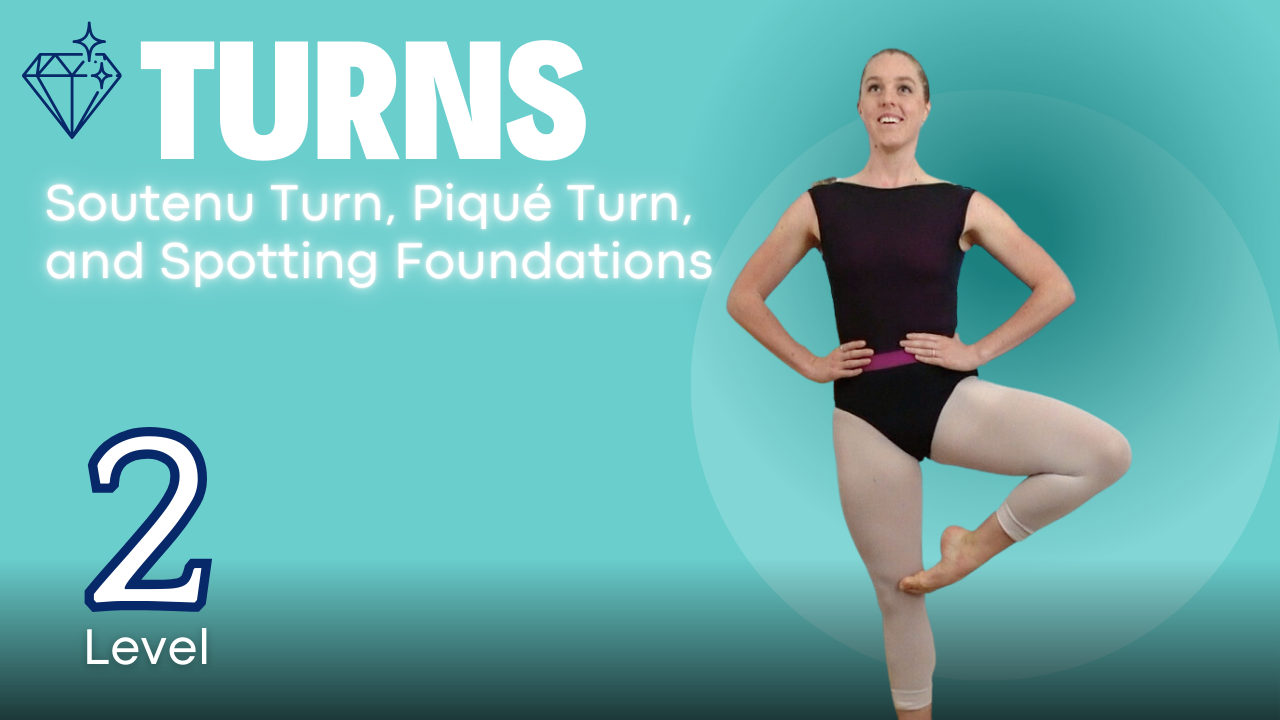
Turns Foundations Program
Soutenu Turn, Piqué Turn, and Spotting Foundations
25 classes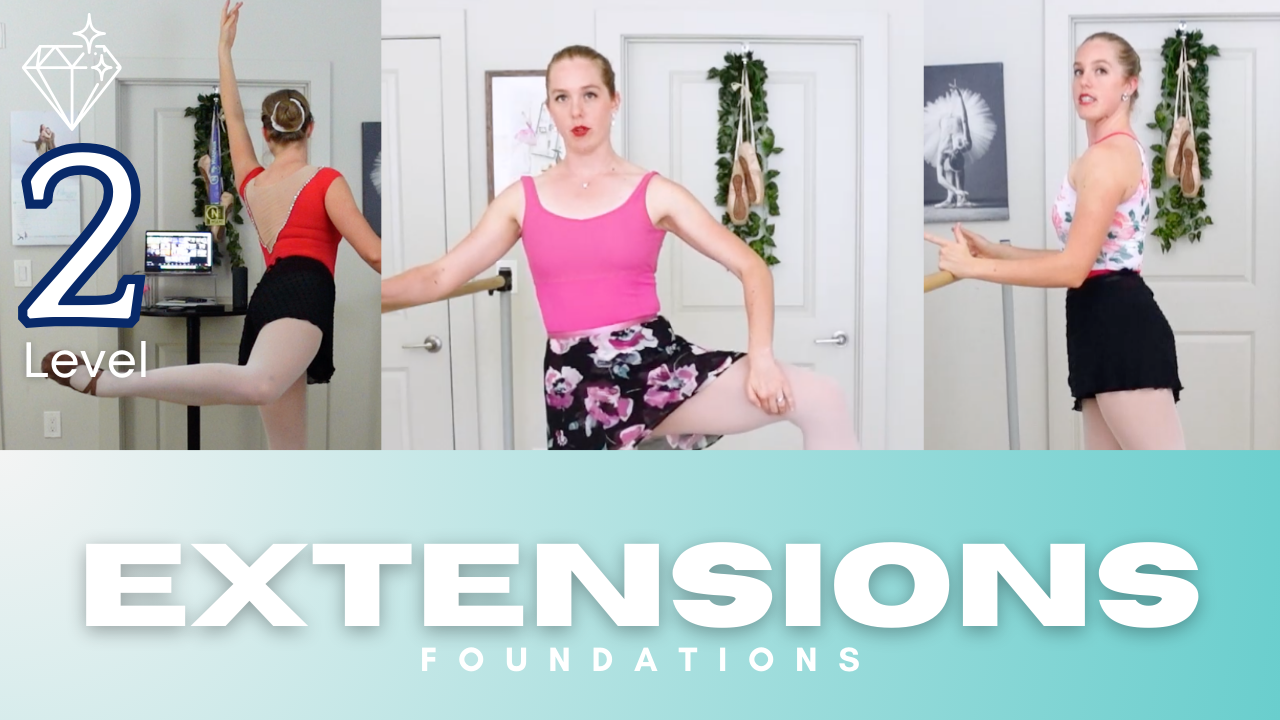
Extensions Foundations for Higher Legs
Dreaming of a higher développé, and higher legs in arabesque? Extensions, Level 2 lays the essential foundation for building the strength, flexibility, and technique needed to lift up those legs.
32 classes