What You'll Learn
- How to identify and correct a rolling arch by grounding the pinky toe
- The relationship between a vertical Achilles tendon and your range of motion
- Methods to use mirrors for self-correcting your foot and ankle alignment
- Why grounding the pinky toe edge is essential for safe and effective turnout
About This Video
At Broche Ballet, we believe that a strong foundation is the key to effortless movement. One of the most common technical errors in ballet is "rolling in" or pronating the feet, which often manifests as the pinky toe lifting off the floor. In this quick technical tidbit, we explore why keeping all five toes—especially the pinky toe—firmly planted on the ground is essential for your long-term progress and injury prevention.
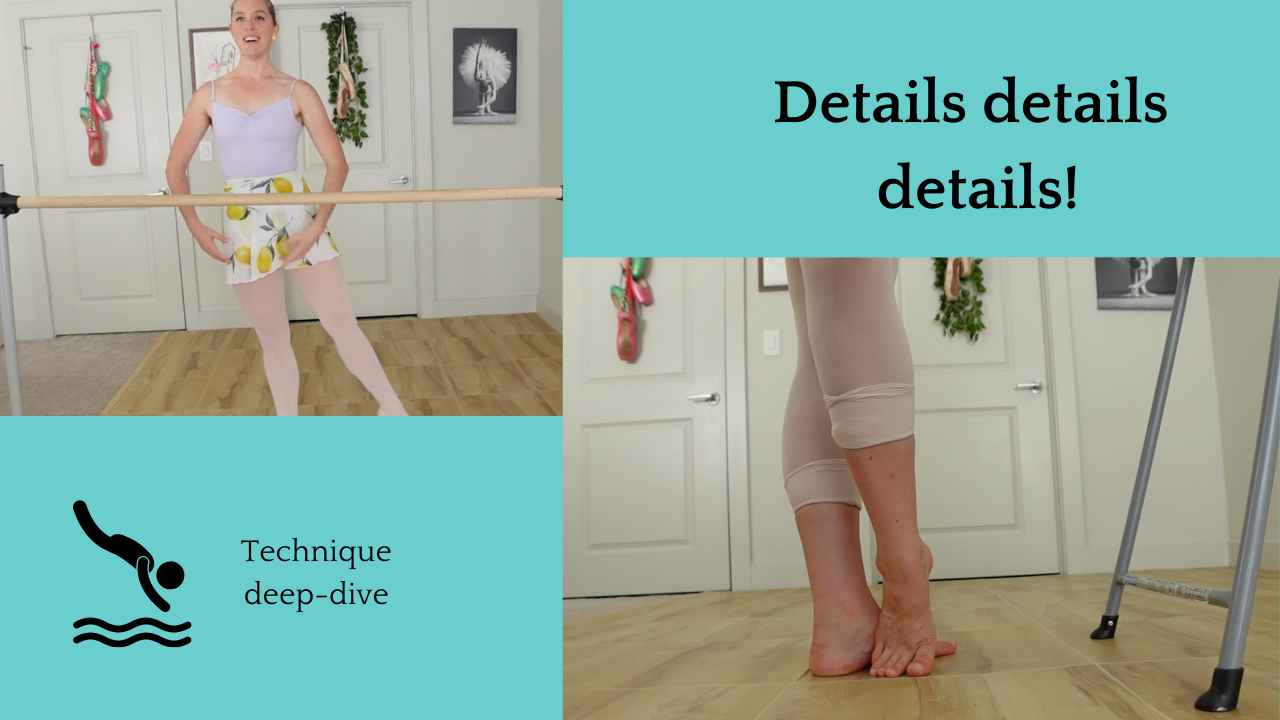
When you stand in any position, from first to fifth, your weight should be distributed evenly across the tripod of your foot: the big toe, the pinky toe, and the center of the heel. If you lose contact with the pinky toe edge, your arch collapses and your ankle rolls inward. This misalignment doesn't just affect your feet; it travels up the chain, putting unnecessary strain on your knees and hips. By focusing on planting the pinky toe, you engage the muscles under the arch and stabilize the entire lower leg.
A critical indicator of proper foot alignment is the Achilles tendon. When you are standing flat or performing a plié, your Achilles tendon should appear vertical and straight when viewed from behind. If you are rolling in, the tendon will curve or tilt. This misalignment significantly limits your range of motion and can lead to tendonitis. To ensure your alignment is correct, we recommend setting up a mirror to observe the back of your feet. If you see your tendons bowing, focus on grounding the outside edge of your foot and lifting through your arches.
Proper turnout also relies on this stability. It is tempting to force turnout from the feet, but this often causes the pinky toe to lift. Real, functional turnout comes from the rotation of the legs in the hip sockets. By keeping your pinky toes grounded, you ensure that your turnout is honest and that your joints are protected. Join us as we dive into these small but transformative adjustments to elevate your ballet practice.