
What You'll Learn
- How to identify musical structures and their relationship to dance phrasing.
- The difference between strict choreographic adherence and personal expression.
- Techniques for analyzing video examples to understand diverse choreographic styles.
- Strategies for creating original ballet sequences using music theory principles.
- The role of choreography as notation for movement and spatial positioning.
About This Video
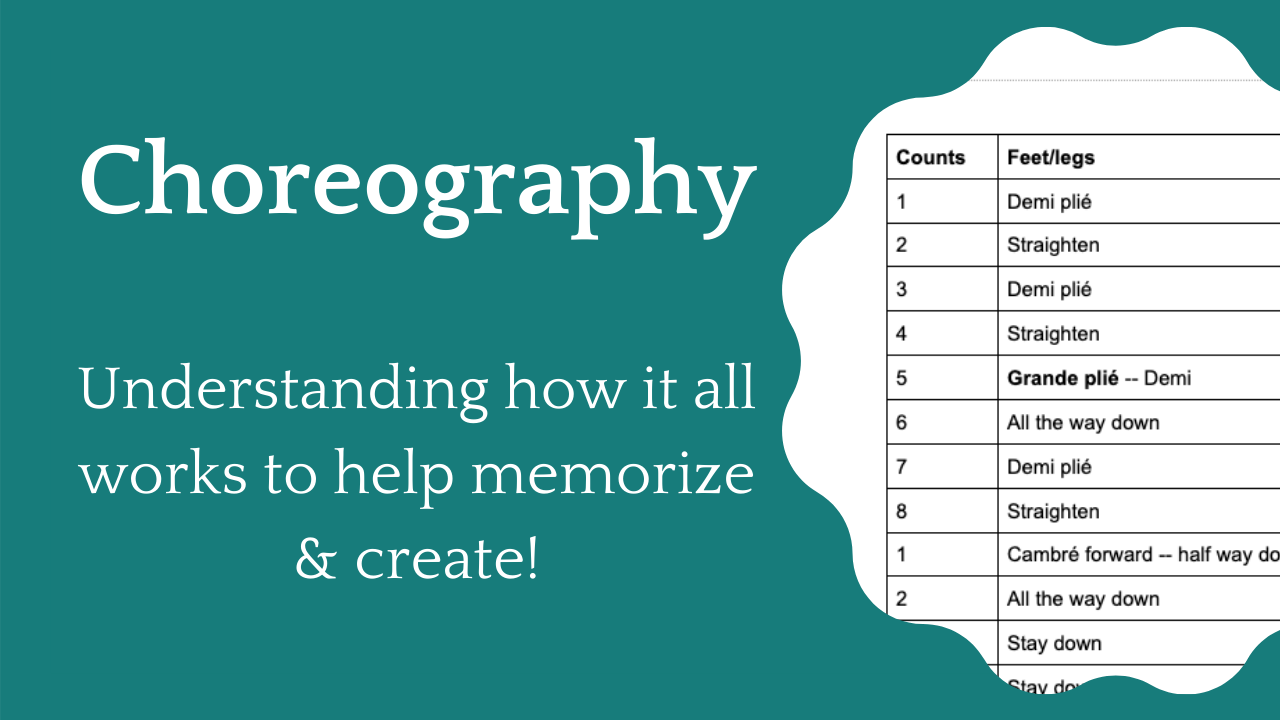
Unlock the secrets of ballet composition in this insightful guide to choreography and music. For many dancers, choreography often feels like a sequence of memorized steps, but at its heart, it is a sophisticated form of dance notation that maps movement and position within a space. In this Broche Ballet lesson, we dive deep into the theory behind the art, teaching you how to analyze musical structures to better inform your performance.
Understanding music theory—including counts, rhythm, and phrasing—allows a dancer to move beyond simply keeping time and start truly performing. We explore how principal dancers and soloists in professional classical ballet environments must balance technical precision with the choreographer’s specific vision. While professional companies often demand strict adherence to every nuance, adult dancers are in a unique position to enjoy more creative freedom.
Here, you have the flexibility to blend technical mastery with personal expression, allowing your personality to shine through every plié and port de bras. Throughout this class, we examine various choreographic styles and the importance of learning through observation. By watching and analyzing video examples of others, you can begin to identify the distinct 'voice' of different creators.
This isn't just about following along; it is about empowering you to create your own work. You will be encouraged to apply these concepts by developing your own original choreography, learning to partner with the music rather than just dancing to it. Whether you are working at the barre or in the center, mastering these concepts will elevate your artistry and provide a deeper appreciation for the complex relationship between sound and movement.
From understanding the geometry of the stage to the timing of a grand plié, you will gain the tools needed to express yourself more fully as a dancer.