Can Ballet Improve My Posture and Reduce Back Pain?
Yes, ballet is exceptionally effective for improving posture and reducing back pain. By strengthening the deep core, stabilizing the pelvis, and elongating the spine through 'upward' energy, ballet counters the compressive effects of sitting. It focuses on functional alignment and muscle balance, helping you carry your body with more ease both on and off the dance floor.
Yes, ballet is one of the most effective disciplines for transforming your posture and alleviating chronic back pain. Unlike many fitness regimens that focus on 'crunching' or shortening muscles, ballet is built on the principle of elongation. For adult dancers who spend hours at desks or commuting, ballet serves as the ultimate 'counter-sitting' practice, re-training the body to find its natural, healthy alignment.
The Ballet 'Lift': Decompressing the Spine
At the heart of ballet technique is the concept of the 'lift.' This isn't just a metaphor; it involves engaging the deep transverse abdominis and the musculature along the spine to create space between the vertebrae. In our Technique Foundations, Basics, and Fundamentals, we focus heavily on rebuilding this internal support system. By learning to lift 'out' of your hips rather than collapsing into them, you reduce the vertical pressure on your lower back, which is a often a cause of non-specific back pain in adults.
Correcting Pelvic Alignment and Glute Weakness
Many adults suffer from an anterior pelvic tilt (where the pelvis tips forward, arching the low back) or weak glutes from prolonged sitting. These imbalances are major contributors to lower back strain. Our Posture Movement Session with Jessica Maddox, PT, DPT specifically addresses this from a physical therapy perspective, teaching you how to use glute strengthening and core control to find a neutral pelvis. Programs like Total Turnout Transformation further this by teaching you to rotate from the hip socket rather than twisting the lower back, ensuring that your quest for 'ballet lines' actually protects your spine rather than straining it.
Countering 'Tech Neck' with Épaulement
In the modern world, 'tech neck'—a forward-leaning head and rounded shoulders—is nearly universal. Ballet addresses this through the study of épaulement (the movement of the head and shoulders) and port de bras (carriage of the arms). Our program Beauty and Grace: 12-weeks of Posture and Elegance focuses on the delicate alignment of the neck and head. By strengthening the mid-back (thoracic spine) and opening the chest, you can reverse the 'slouch' and move with a sense of quiet confidence and poise.
Why Ballet Differs from Other Workouts
While Pilates and yoga offer excellent core benefits, ballet is unique because it challenges your alignment while you are in motion and standing. Our video 'What makes it Classical Ballet?' explains how the specific requirements of turnout and verticality force a level of neuromuscular control that few other exercises provide. You aren't just holding a pose; you are maintaining a 'long' spine while balancing, turning, and jumping. This functional strength translates directly to how you walk, stand, and reach for items in daily life.
Actionable Advice for Adult Dancers
If you are returning to dance after a break or starting for the first time with back concerns, keep these tips in mind:
- Don't force turnout: Pushing your feet into too much rotation can cause your pelvis to tilt and your back to arch. Focus on rotation from the hip.
- Release the hip flexors: As taught in our Barre Stretches & Extensions sessions, releasing the hip flexors is often the key to reducing tension the lower back.
- Prioritize the upper back: In movements like arabesque or penché, focus on engaging the muscles between your shoulder blades to support the weight of your torso, as discussed in our specialized Upper Back Control videos.
With over 7,200 videos in our library, we provide the tools to help you navigate these corrections safely. Improving your posture is a journey of awareness, not a quick fix. As you build the strength to support your frame, you'll likely find that the back pain which once felt permanent begins to fade, replaced by a sense of length, strength, and grace that stays with you long after you've left the barre.
Next step
Related Videos
Watch classes and tutorials related to this topic
 46:50
46:50 Posture Movement Session -- Understanding upper back & lower back alignment from a Physical Therapist's Perspective with Jessica Maddox PT, DPT
 23:12
23:12 Deep Dive into Posture, Pelvis, and Hip Placement at the Barre
 12:03
12:03 Technique Deep Dive - Focus on hip placement & alignment for strong 5th position
 15:28
15:28 Beginner Flexibility and Stretching for Lower Back and Hamstrings
 22:35
22:35 Deep Dive Barre for Flat Lower Back Pelvic Alignment Keeping Tailbone Down
 7:08
7:08 How to get more lower back flexibility for a better cambré and arabesque? | Clip from Jan 28, 2024 Q&A
 11:34
11:34 Activating Upper Back and Shoulder Blades
 13:37
13:37 Beginner Flexibility and Stretching for Outside of Hips, Modified Pigeon Pose and Happy Lower Back
More Programs

Stand Like a Ballerina: A Masterclass in Elegant Posture
Improving posture is one of the most transformative things we can do for our confidence and physical health. Stand Like a Ballerina is a comprehensive masterclass designed specifically for adults who want to trade daily tension for effortless elegance. Through a targeted blend of technical alignment, foundational strength, and stretching, you will learn the secrets to a tall, proud, and elegant posture that lasts long after you leave the barre.
63 classes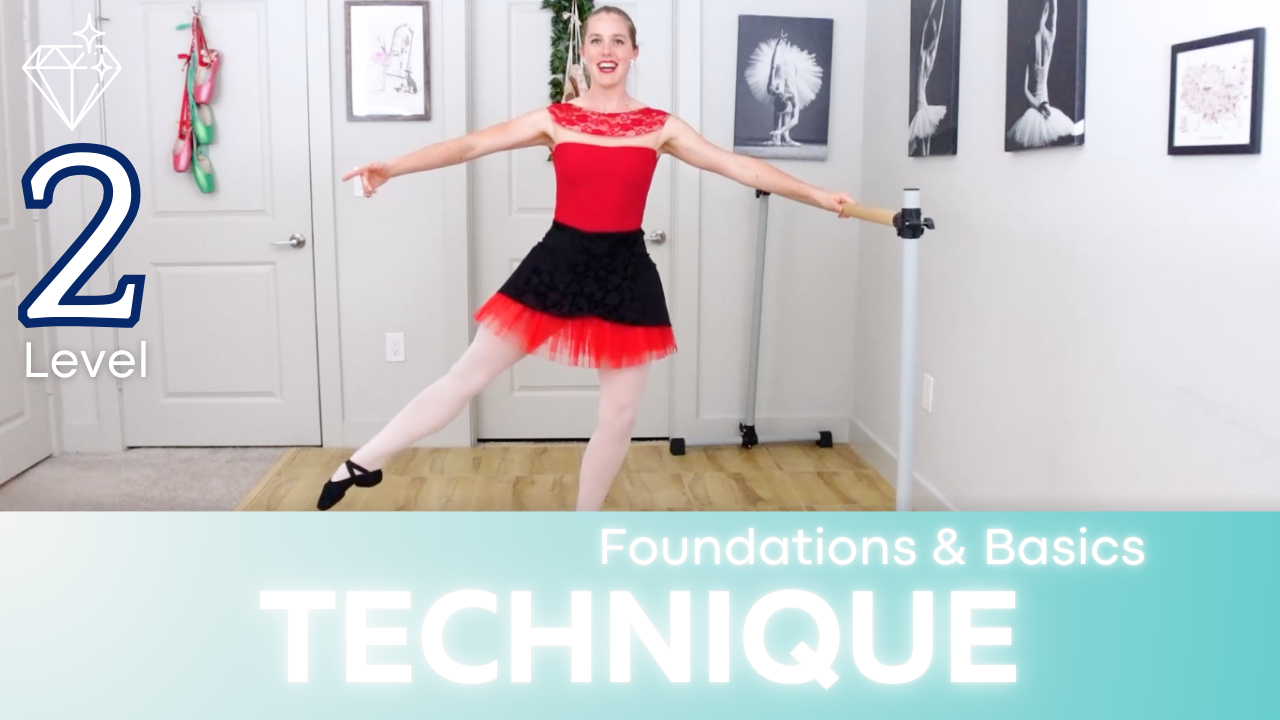
Technique Foundations, Basics, and Fundamentals
Vocabulary: 4th Position, 5th Position, Tendu Front (Devant), Tendu Side (à la Seconde), Tendu Back (Derrière or Arabesque), Cou-de-pied, Retiré (Passé), Posture, Positions of the Arms, Cambres
104 classes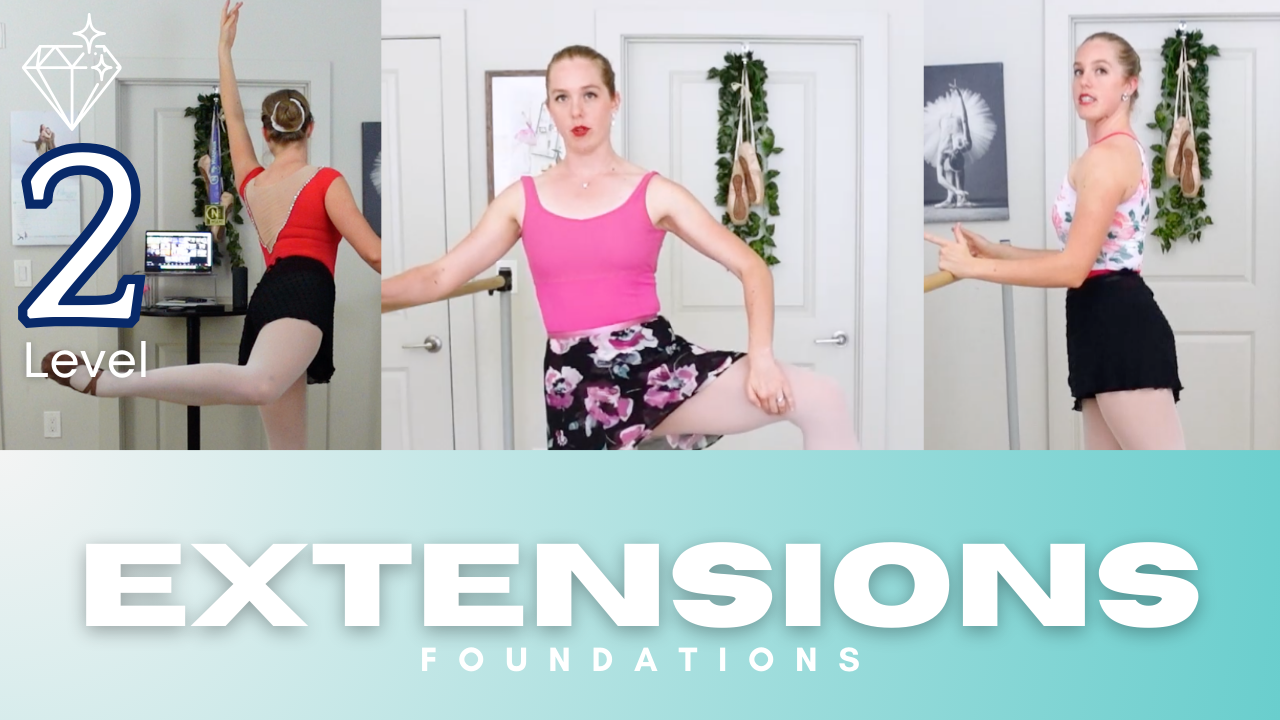
Extensions Foundations for Higher Legs
Dreaming of a higher développé, and higher legs in arabesque? Extensions, Level 2 lays the essential foundation for building the strength, flexibility, and technique needed to lift up those legs.
32 classes