Can I do ballet if I have bad knees?
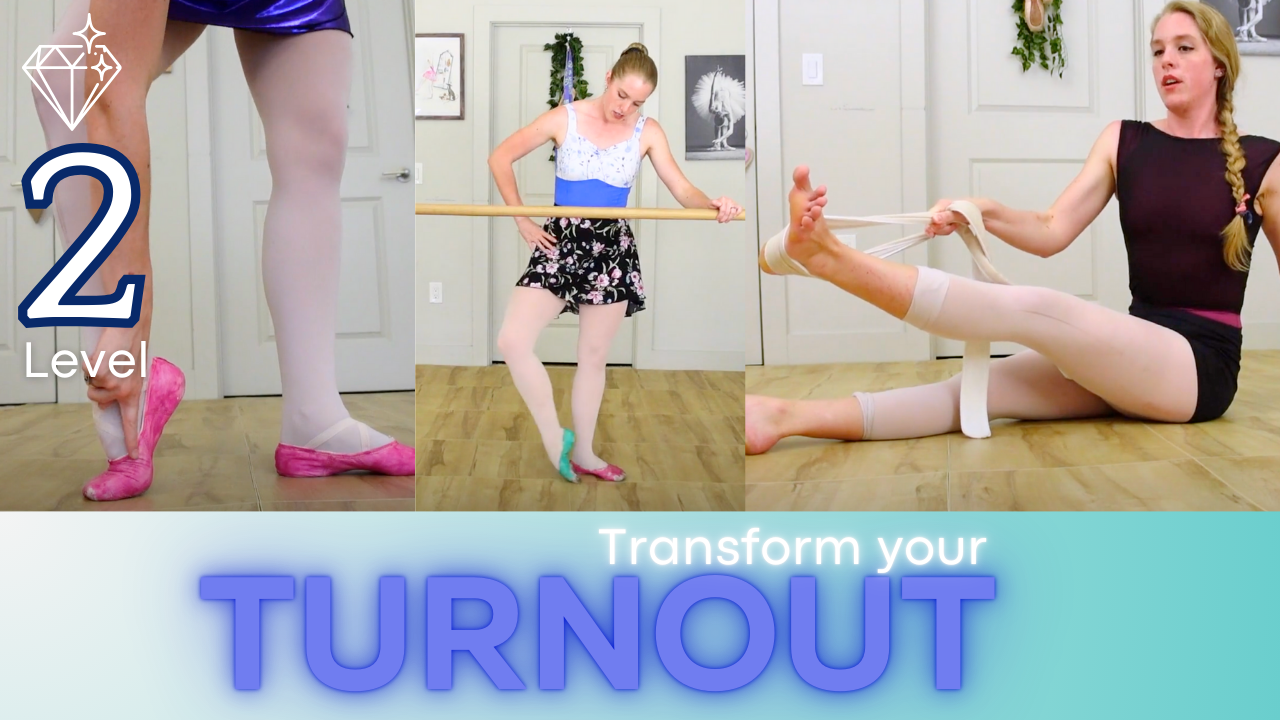
Yes, you can do ballet with "bad" knees. In fact, ballet’s focus on alignment and eccentric strengthening can often improve knee stability. By prioritizing proper tracking, engaging your glutes for turnout, and avoiding forced rotation, you can enjoy a fulfilling practice while protecting your joints. Our *Total Turnout Transformation* program is a perfect place to start safely.
Yes, you can practice ballet even if you have "bad" knees. Note this is not a substitute for medical advice and we do not recommend doing ballet if your doctor has advised you not to.
Whether you are dealing with past injuries, arthritis, or general joint sensitivity, ballet offers a unique way to strengthen the supporting structures of the leg. However, the key to dancing safely as an adult lies in technique, modification, and listening to your body’s signals.
The Truth About Ballet and Knee Health
Many people assume ballet is inherently hard on the knees because of the turnout and jumping. In reality, correct ballet technique is designed to protect the joints. Most knee issues in dance arise from "forcing" turnout: twisting the feet out further than the hips allow—which puts torsional stress on the knee. By learning to rotate from the hip sockets using your deep external rotators, you actually build a corset of muscle that supports the knee.
Broche Ballet offers over 7,200 on-demand videos that emphasize these biomechanical foundations. If you are returning to the studio with concerns, our Total Turnout Transformation program is specifically designed to help your body learn the proper rotation to these movements without the pressure of a high-impact class.
Prioritize Proper Tracking
The most important rule for knee safety in ballet is "tracking." In every plié (bend of the knees), your kneecap must stay aligned directly over your second and third toes. If your knees cave inward, you are placing undue strain on the medial ligaments.
In our The 12-Week Ballet Reset (105 videos), we focus heavily on rebuilding these technical habits from the ground up. By slowing down and ensuring your knees always track over your feet, you turn the plié from a potential source of pain into a strengthening exercise for the quads and glutes.
Strengthen the Support System
Knee pain often stems from weaknesses elsewhere—specifically the hips and feet. If your glutes are weak, your legs may collapse inward. If your feet are weak, your arches may roll, twisting the shin bone and the knee above it.
To address this, consider incorporating floor-based conditioning. We recommend our Leg conditioning routine, which includes floor-lying exercises like clamshells to target the turnout muscles without the stress of weight-bearing. This allows you to build the necessary strength to support your knees before you even stand up at the barre.
Know When to Modify
As an adult dancer, you have the agency to modify any movement that causes "sharp" or "stinging" pain. Here are common modifications for those with knee concerns:
- Reduce the Depth of Plié: You do not need a deep grand plié to get the benefits of the movement. A well-aligned demi-plié is far more effective than a deep, painful one.
- Limit Jumps: If impact is an issue, focus on the "push-off" and "landing" mechanics while staying on the floor. Our Foundations for Jumps and Petite Allegro (52 videos) provides a structured way to build up to jumps by first mastering the foot and ankle strength needed to absorb impact.
- Use a Smaller Turnout: It is always better to have a 90-degree turnout that is correctly supported by the hips than a 180-degree turnout that causes the knees to twist.
The Role of Hip and Ankle Mobility
Your knees are the "middlemen" between your hips and ankles. If your ankles are stiff or your hips are tight, the knee often compensates. Improving your range of motion in these areas can offload the stress on your knees. For example, our Standing Pre-pointe Stretch & Strength video focuses on ankle flexibility, which helps you achieve a deeper, safer plié.
Ballet is a lifelong journey, and your body will have different needs in different seasons. By focusing on alignment, strengthening the surrounding muscles, and using programs like The Facets of Ballet to build a structured roadmap, you can continue to dance beautifully for years to come. Your knees don't have to stop you; they just require you to be a more mindful, technical dancer.
Next step
Related Videos
Watch classes and tutorials related to this topic
 14:20
14:20 Standing Pre-pointe Stretch & Strength for Higher Demi-pointe Rélevé
 8:14
8:14 Leg conditioning (7 mins, floor-lying turnout conditioning routine) -- Feb 1
 46:22
46:22 Technique Barre - Learn to Correctly Straighten your Knees for Beautiful Legs
 14:43
14:43 Floor Exercises for Core Strength & Glute Activation
 47:37
47:37 Int Barre for Glute Activation & Hip Mobility
 27:33
27:33 Technical Pointe Barre for Correct Knees & Ankles
 41:29
41:29 Technique Barre - Slow combos for Beautiful Straight Long Legs and Straight Knees
 20:22
20:22 Turnout Follow-along WorkoutAllie-5 Turnout Workout
More Programs
The 12-Week Ballet Reset
Clean your technique. Rebuild your artistry. Return stronger. A full-body re-tuning for adult dancers.
105 classes
Gentle Return to Ballet after a Break
This program is for if you are not a beginner, but you are beginning ballet again. After taking a break from ballet, your body needs some time to re-adjust. Gentle stretch, strength, and dusting off the cobwebs. This program is perfect for you if you want to ease your body and mind back into ballet, but you don't necessarily need to re-learn the vocabulary words. You brain remembers, but your body needs time to get re-acquainted.
24 classes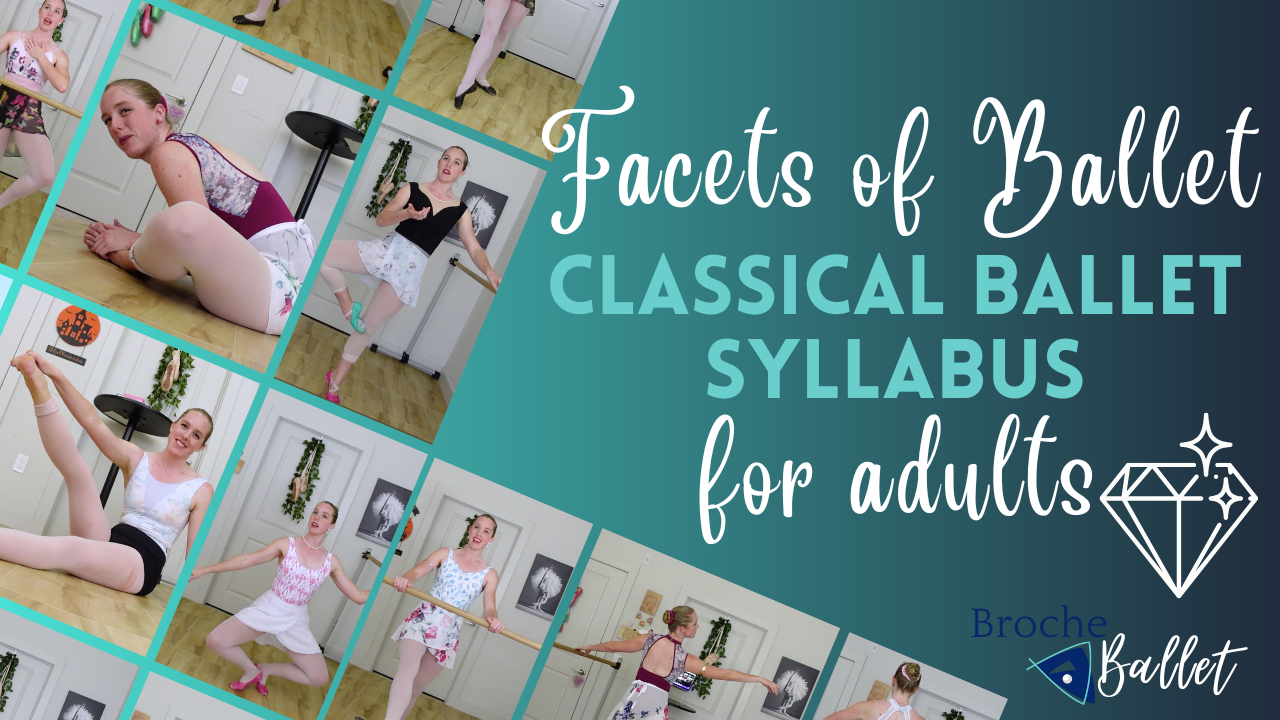
✨ The Facets of Ballet: A Complete Adult Ballet Curriculum ✨
At Broche Ballet, we know you don’t just want a quick challenge—you want a structured roadmap to becoming the dancer of your dreams. The Facets of Ballet is not just a collection of classes—it’s a progressive, modular training system that puts YOU in control of your ballet journey. With The Facets of Ballet Basics to Brilliance Program, you choose the skills you want to focus on and train at your own pace—whether you follow the full sequential roadmap or go deep in the areas you love most.
28 classes