What is Epaulement in Ballet and Why is it Important?
Épaulement, meaning "shouldering," is the stylized placement of the head, neck, and shoulders in relation to the rest of the body. It is vital because it transforms mechanical movements into three-dimensional artistry, provides essential counter-balance for stability, and allows dancers to communicate emotion and intent through subtle shifts in focus and line.
Épaulement is often called the "secret sauce" of ballet. While beginners often focus exclusively on what their feet and legs are doing, épaulement is what elevates a student from simply executing steps to truly dancing. In French, the word literally translates to "shouldering," referring to the way a dancer positions their upper body to create a more dynamic, three-dimensional silhouette.
The Anatomy of Épaulement
To understand épaulement, think of it as a gentle twist of the spine that begins at the waist. It isn't just about moving your head; it is the relationship between your shoulders and your hips. When you stand in a position like croisé (crossed) or effacé (shaded), your hips may face a diagonal, but your shoulders rotate slightly toward the audience. This creates a spiraling line through the torso that is both aesthetically pleasing and functionally powerful.
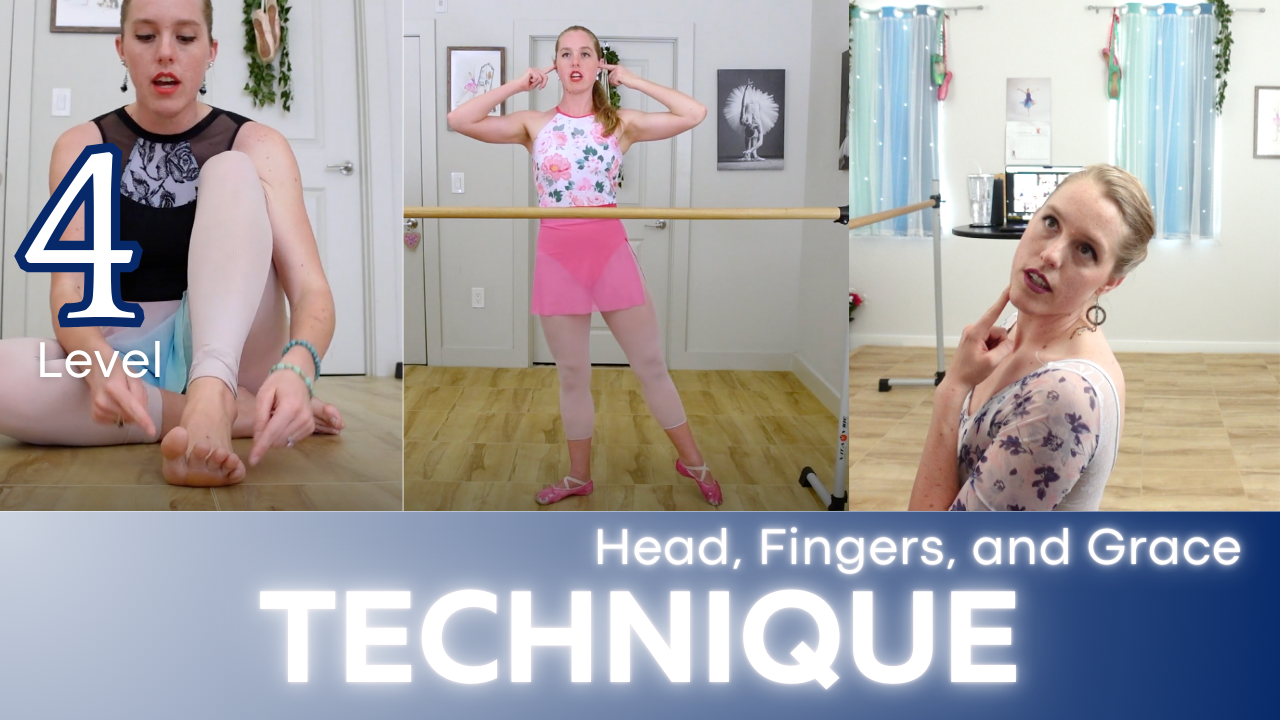
Our program, Head, Épaulement, Fingers and Beautiful Ballet Lines, includes 72 videos specifically designed to help you break down these movements. We focus on the coordination of the neck and shoulders to ensure your épaulement looks organic rather than forced. For adult dancers, this is particularly important because we often carry stress in our upper traps and necks from desk work, which can make these movements feel stiff at first.
Why It Matters for Your Technique
Beyond looking beautiful, épaulement serves several technical purposes:
- Balance and Counter-Rotation: By shifting the weight of the head and the direction of the shoulders, you create a counter-balance for the legs. This is essential in programs like our Turns Foundations Program, where the coordination of the head (spotting) and shoulders determines the success of a piqué or pirouette.
- Creating Three-Dimensionality: On stage, a flat, square-to-the-front position can look two-dimensional. Épaulement adds depth, making the dancer appear more expressive and graceful from every angle.
- Hiding Technical Effort: A well-placed head and a relaxed shoulder line can mask the intense effort happening in the legs. This is a key focus in our Advancing Technique with Posture, Turnout and Ballet Lines program, which helps Level 3 dancers harmonize their full body movement.
Practicing with an Adult Body
Many adult dancers struggle with "tech neck" or restricted thoracic mobility, which can make the spiral of épaulement feel elusive. If you find your shoulders creeping up toward your ears or your neck feels jammed, start small. In our Technique Foundations, Basics, and Fundamentals program, we introduce these concepts early through simple port de bras (carriage of the arms) and cambré (arching of the body).
Instead of forcing a deep twist, focus on the "eye line." Your focus (gaze) often leads the épaulement. If your eyes follow the palm of your hand as it moves through second position, your head and neck will naturally follow, initiating that beautiful balletic line without creating unnecessary tension.
Integrating Artistry into Practice
We believe artistry shouldn't wait until you are a professional. You can begin practicing épaulement from your very first tendu. In classes from our Artistry Port de Bras series, we explore how to use the upper body to express musicality. By coordinating the breath with the movement of the head and shoulders, you start to feel the flow of the movement rather than just the mechanics.
Our library features over 100 videos dedicated specifically to upper body coordination and artistry because we know this is where the joy of ballet truly lives. Whether you are working through a beautiful Artistry in the Center Combination or refining your Beautiful Head Movements in Center Combinations, remember that épaulement is a lifelong study. It is the nuance that makes your ballet unique to you. Don't be afraid to experiment with the tilt of your head or the depth of your gaze; these small choices are what turn a series of exercises into a performance.
Next step
Related Videos
Watch classes and tutorials related to this topic
 14:05
14:05 Beautiful Arms and Head Artistry
 28:32
28:32 Edelweiss Artistry in the Center Combination
 19:00
19:00 Center Adagio Combination with Head & Arm Coordination
 42:41
42:41 Head Placement and Upper Body Coordination
 17:57
17:57 Upper Back & Chest Stretch and Strength -- Bring a Strong Theraband or a Belt/Bathrobe Tie
 21:43
21:43 Thoracic Mobility and Stretch - Grab a Foam Roller - Includes Light Weight-bearing on Wrists
 20:12
20:12 A Study of Poses and Positions: Croisé, Éffacé, Écarte and all 6 Arabesques
 18:14
18:14 Exploring Cecchetti Épaulé & Torso-Driven Movement
More Programs
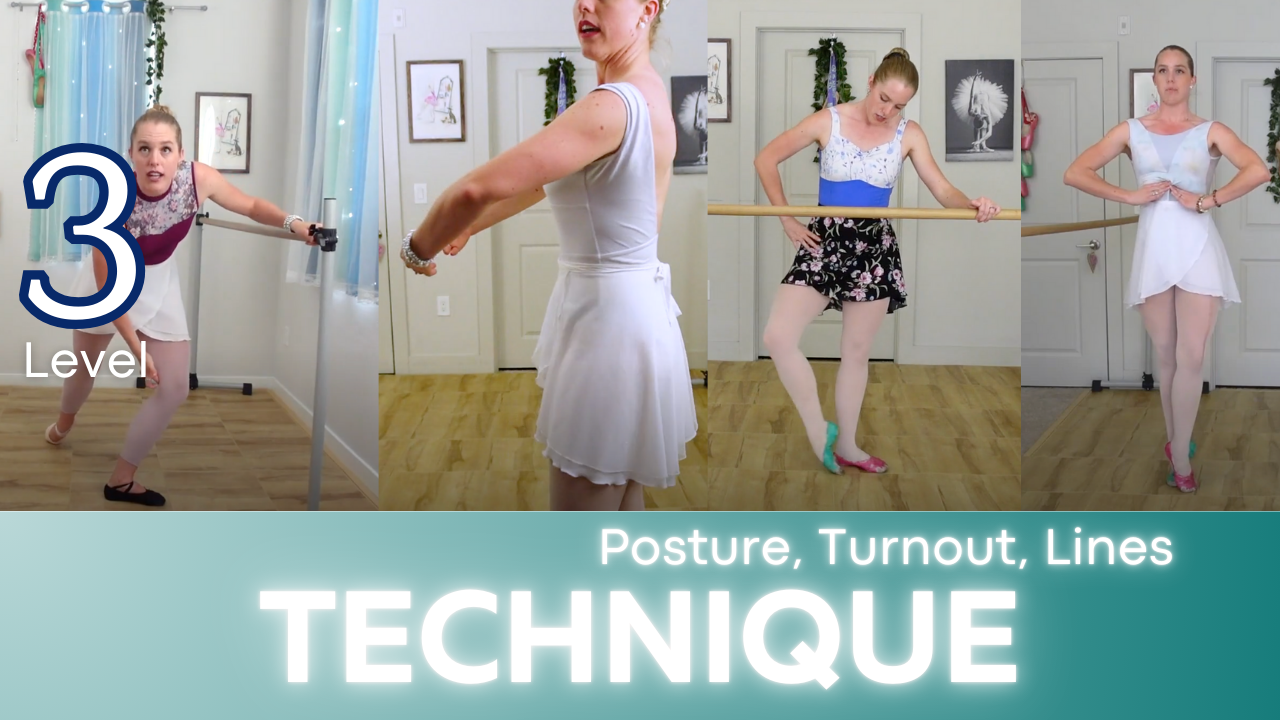
Advancing Technique with Posture, Turnout and Ballet Lines
Advancing Technique: From Head-to-Toe. Take your technique to the next level with a comprehensive, full-body approach designed to bring each part of your body into harmony. Level 3 addresses proper usage of hips, spine, Turnout, Feet, Knees, Elbows
75 classes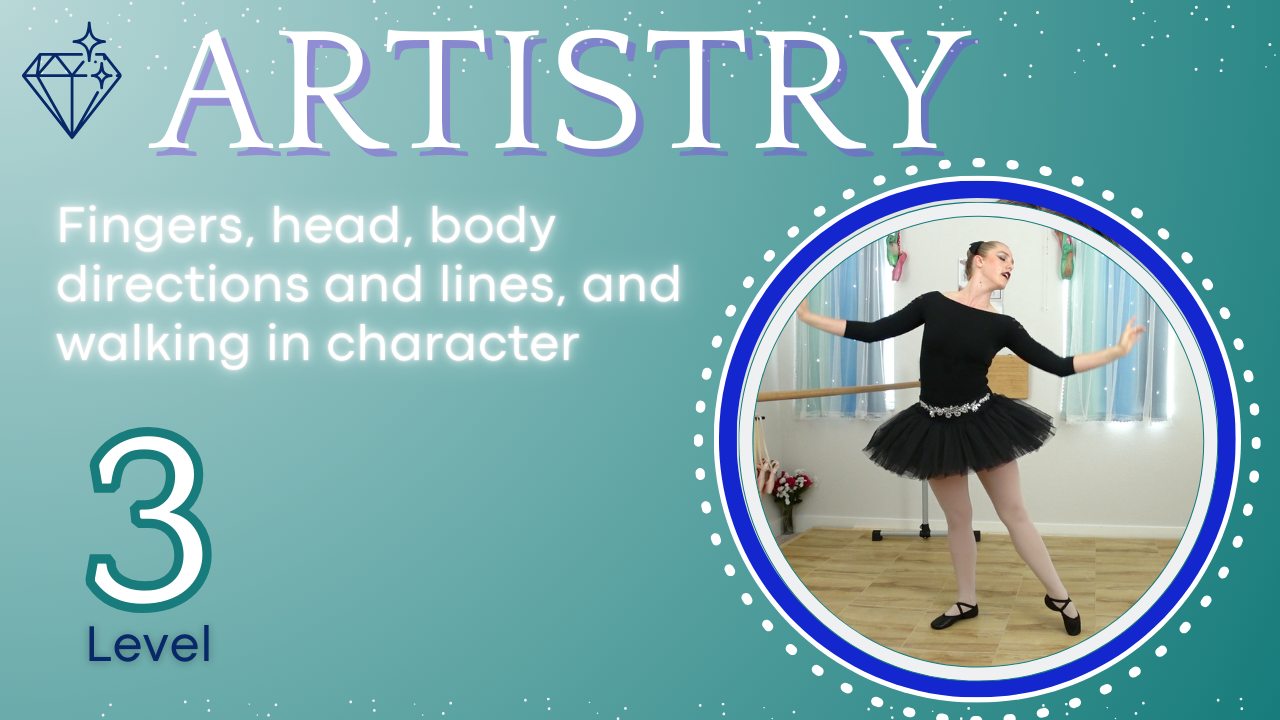
Mastering Character: Expressive Hands, Head, and Eyes
Learn the details of your fingers, head, body directions and lines, and walking in character.
65 classes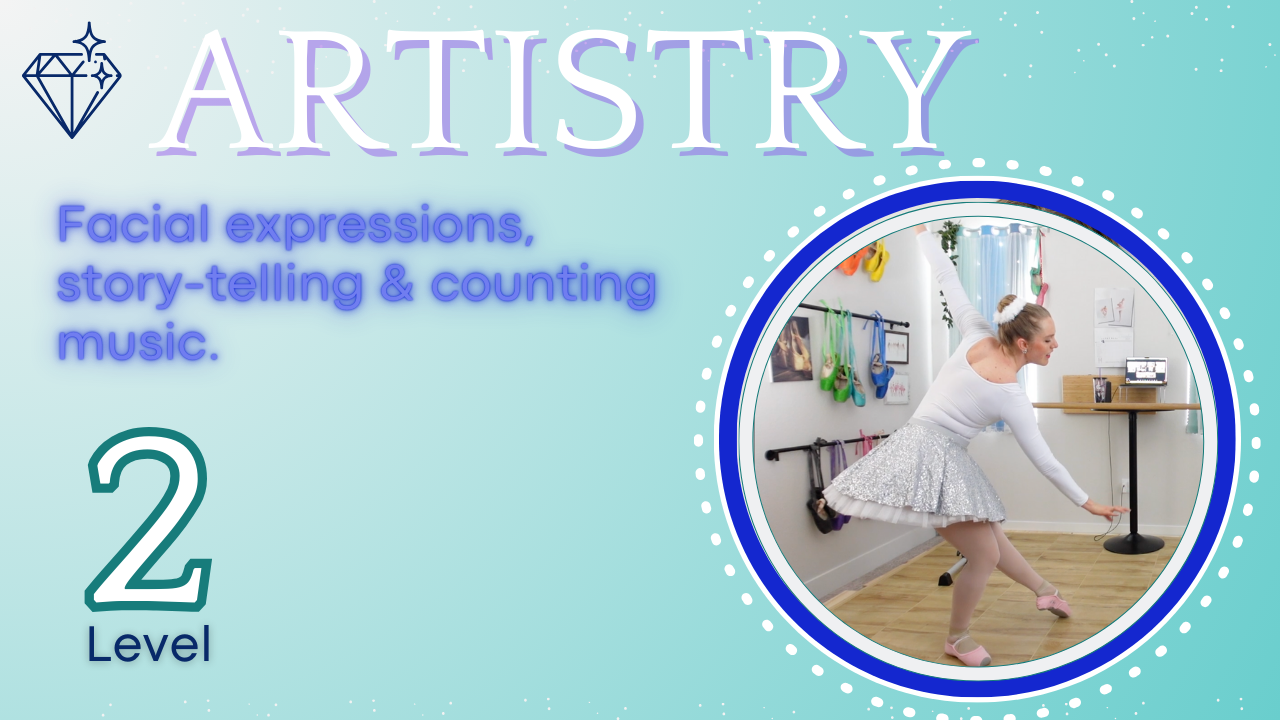
Artistry Foundations: Expressions & Storytelling Through Music
Port de bras, arm movements with legs, pantomime, easy artistry center, counting music
64 classes