How Do I Get Better at Petit Allegro?
To improve petit allegro, focus on 'no-jump' mechanics at the barre to build muscle memory before moving to the center. Emphasize a sharp, elastic plié and quick foot articulation. Mastering the brush and landing through the feet is more critical for speed than jump height. Consistency in practicing footwork transitions is key.
To get better at petit allegro, you must shift your focus from jumping high to moving fast. For many adult dancers, petit allegro can feel overwhelming because it requires a combination of explosive power, lightning-fast coordination, memorization, and precise musicality. However, the secret to mastering these 'small, brisk' movements lies in what you do before your feet even leave the floor. Reassuringly, petit allegro is less about innate athleticism and more about refined mechanics and muscle memory—skills that any adult dancer can develop with the right approach.
Master 'No-Jump' Mechanics First
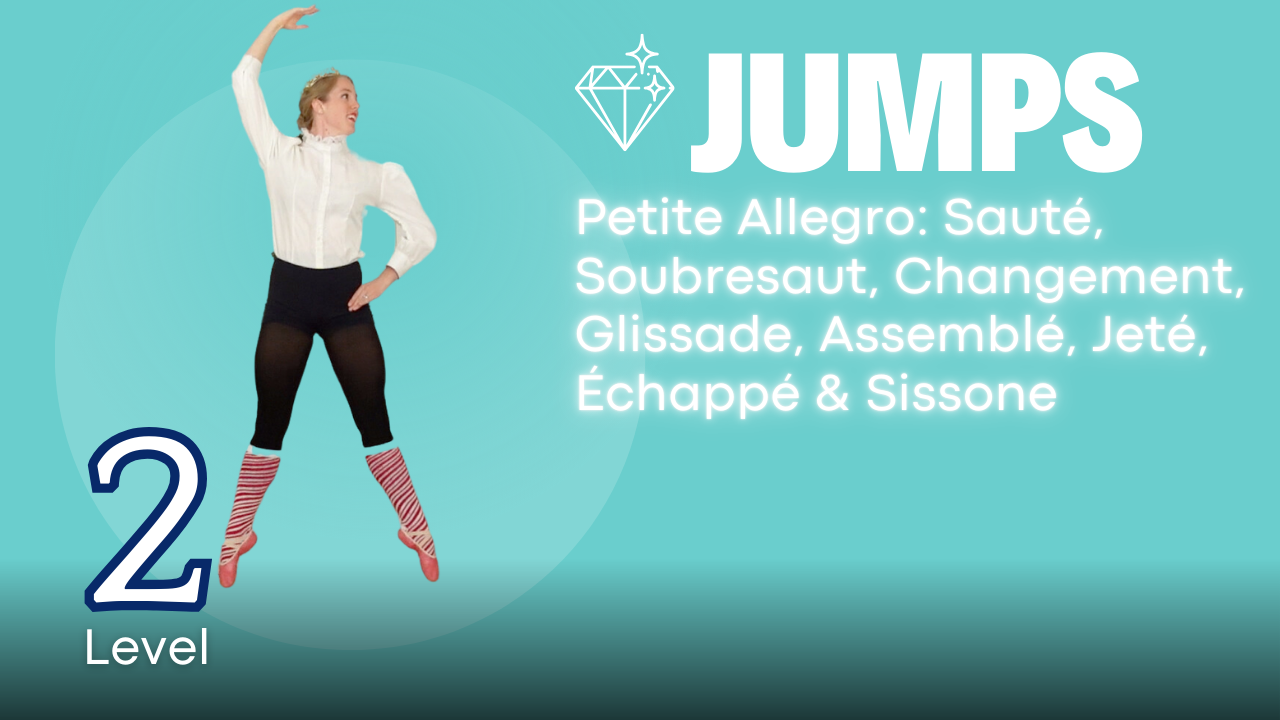
One of the most effective ways to improve is to practice the mechanics of jumps without actually leaving the ground. This is a core philosophy in our Foundations for Jumps and Petite Allegro program. By performing movements like glissade, assemblé, and jeté as 'no-jump' exercises at the barre, you can focus on the correct pathway of the feet and the specific weight transfers required. Our Beginner Jumps Series is specifically designed to practice these mechanics at the barre. This removes the impact on your joints and the cardiovascular strain, allowing your brain to map out the 'brush and land' sequence. Once the mechanics are second nature, adding the spring becomes much easier.
The Power of the Elastic Plié
Your plié is the engine for every jump. In petit allegro, your plié must be elastic and 'juicy' rather than deep and slow. If you sink too deep into your heels, you won't be able to recover in time for the next jump. Focus on using the floor like a trampoline. Our The 12-Week Ballet Reset program emphasizes this 're-tuning' of the body, helping you find the right depth of plié that provides power without sacrificing speed. Think of the floor as hot lava; you want to spend as little time as possible on the ground.
Sharpen Your Foot Articulation
The clarity of petit allegro comes from the feet, not the legs. You need to articulate through the metatarsals and toes every single time you leave the floor. This requires significant foot strength. If your feet feel 'clunky,' it’s often because they aren't fully pointing in the air or rolling through the floor on the landing. To improve this, focus on the 'brush' action in steps like glissade and jeté. You can find targeted drills for this in our Adv Beginner - Intermediate Petite Allegro & Grande Allegro program, which breaks down complex steps like ballonné and balloté into manageable pieces.
Coordination and Épaulement
Speed in petit allegro is often hindered by 'heavy' arms or a rigid torso. When your upper body is stiff, it acts as dead weight that your legs have to work harder to lift. Learning to coordinate your port de bras (arm movements) and épaulement (head and shoulder placement) can actually make you feel lighter. Our program Head, Épaulement, Fingers and Beautiful Ballet Lines focuses on these finer details. By learning to use your upper body to assist your momentum, you'll find that fast combinations feel less like a workout and more like a dance.
Progressing to Beats (Battu)
Once you have a stable jump, you can begin adding beats, such as entrechat quatre or royale. This requires even faster footwork and a strong sense of 'turnout from the hips' to ensure the legs can cross and re-open quickly. Our Beats, Battu, and Fancy Feet in Jumps program offers 23 specialized videos to help you understand the timing and physics of hitting those beats without losing the rhythm of the combination. Remember, for an adult dancer, safety is paramount—ensure your landings are always through the heels to protect your knees and ankles.
Improving at petit allegro is a journey of refining the relationship between your mind and your muscles. By slowing down to learn the mechanics and then gradually increasing the tempo, you will find a new sense of freedom and lightness in your dancing. Keep showing up to the floor, and soon those fast combinations will feel like second nature.
Next step
Related Videos
Watch classes and tutorials related to this topic
 9:38
9:38 Petite Allegro Jumps Combo with Glissade, Sissone, Entrechat Quatre, Changement - Slow Medium & Fast
 18:04
18:04 Jumps (20 mins, quick petite allegro + sissone pas de chat grande allegro) -- July 26
 24:42
24:42 Beginner Jumps Series | Class #4 of 8 | NO JUMP mechanics for speed and coordination off the barre
 7:43
7:43 Standing Balancing Drills for Holding Turnout More effectively in Jumps (this class has no jumps)
 9:38
9:38 10-min Jumps Conditioning at Barre (no jumps, but building power, control and strength) -- Dec 14
 27:09
27:09 Understand Sauté de Chat Mechanics -- Grand Allegro Fundamentals
 15:00
15:00 George Ou
 9:11
9:11 Pre-pointe for Fast Feet - Strengthening Feet for Pointe, Jumps and Frappes
More Programs
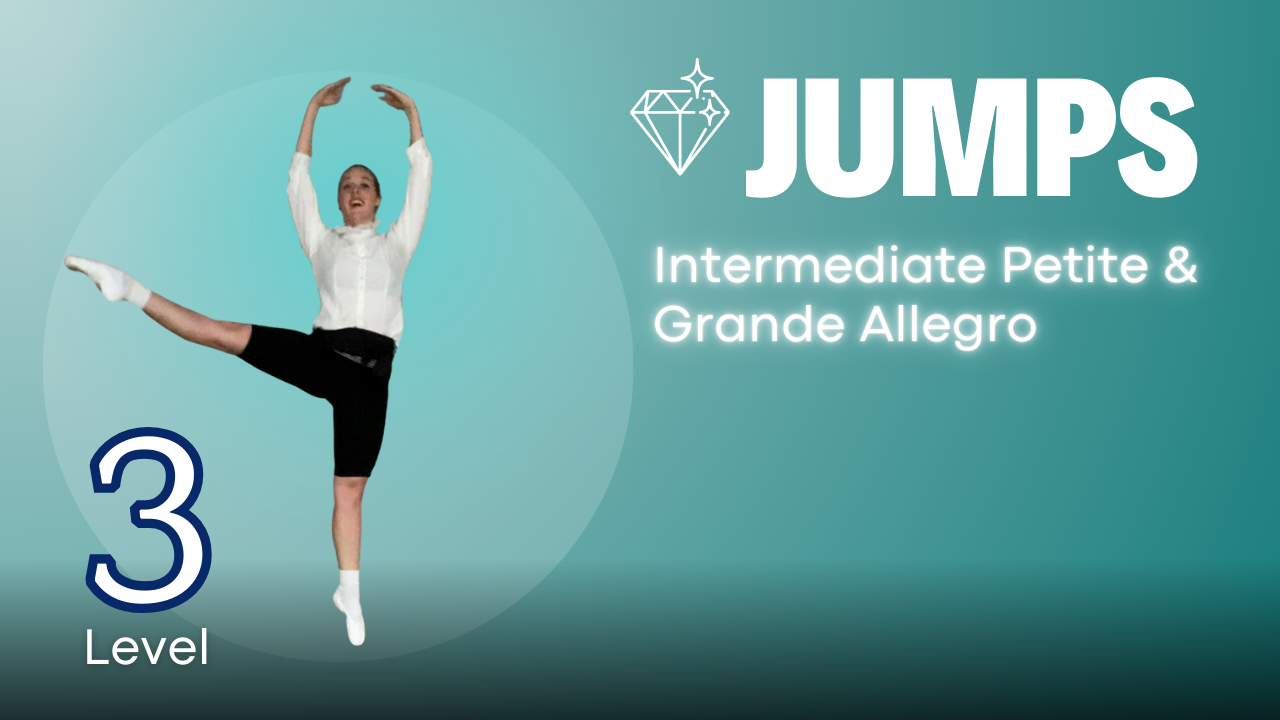
Adv Beginner - Intermediate Petite Allegro & Grande Allegro
Petite Allegro & Grande Allegro: Ballonné, Temps du Fleche, Balloté, Tours en L'air, Faille, Emboîté, Fouetté Sauté, Tour Jeté, Saute de Chat, Saute De Basque, Contratemps
48 classes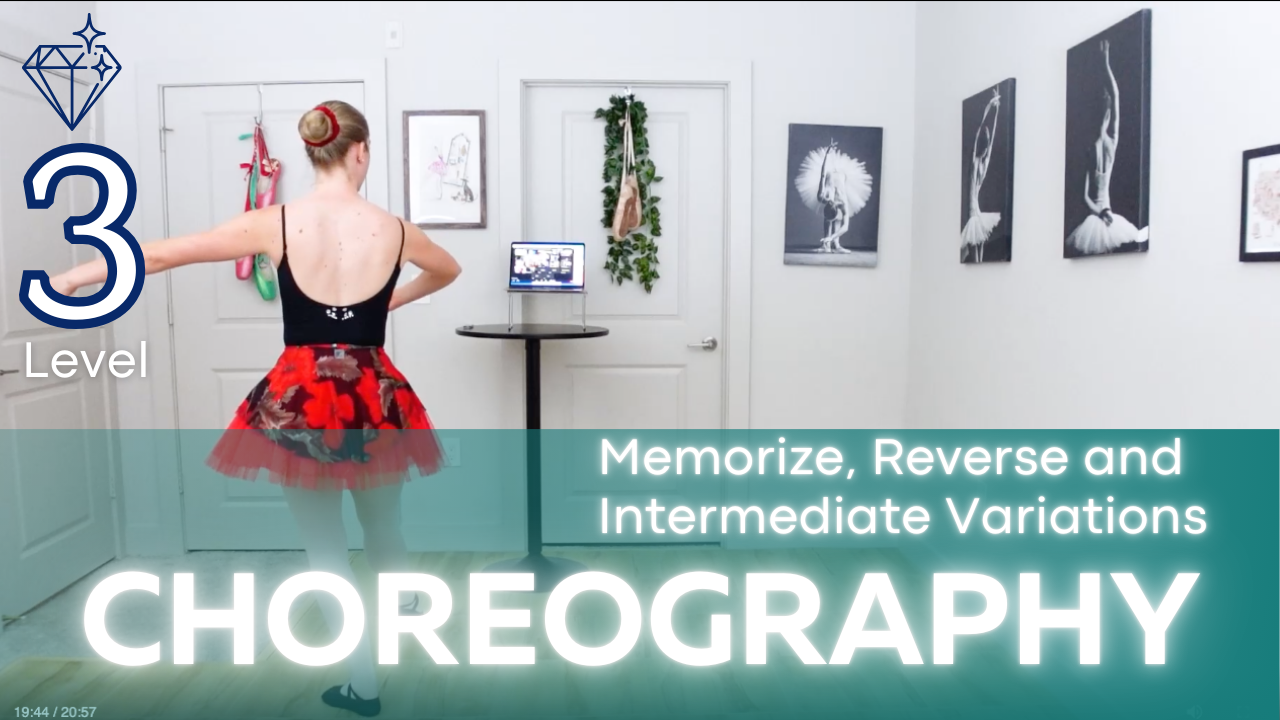
Reverse and Memorize with Ease
Enhance your choreography skills by memorizing, reversing, and executing more intricate sequences. Explore advanced variations to deepen your artistry and technical expertise.
52 classes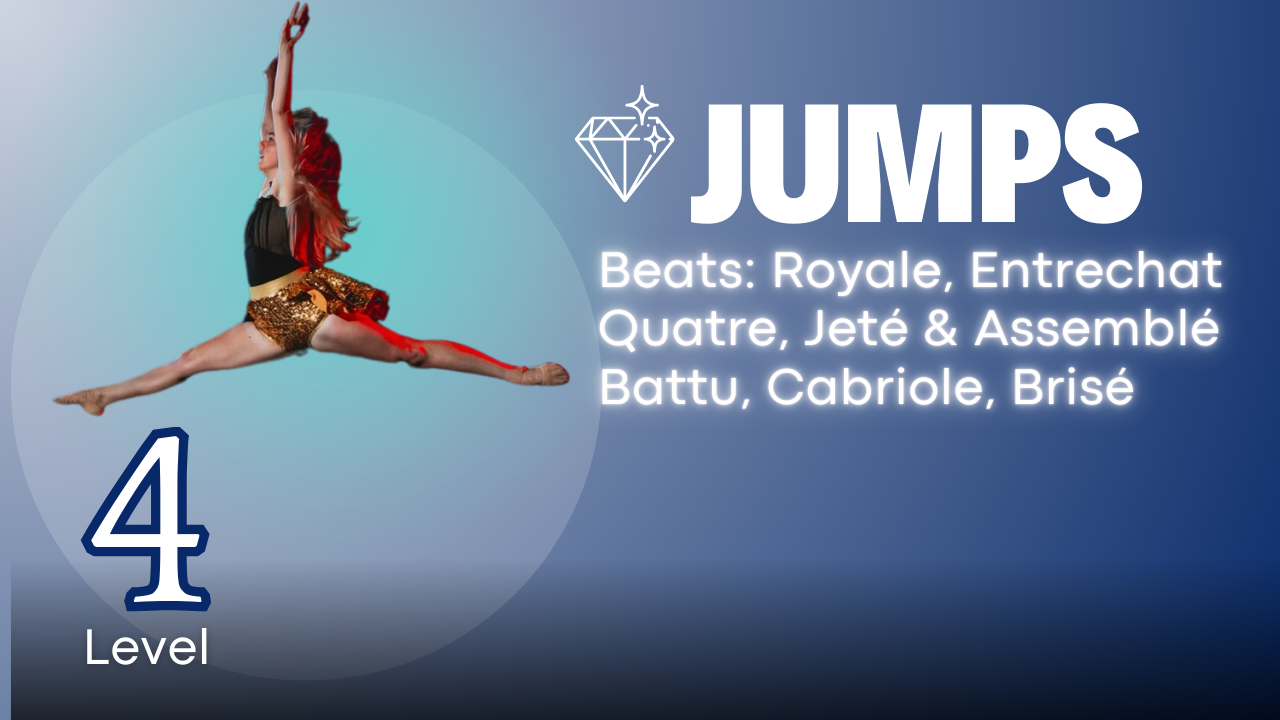
Beats, Battu, and Fancy Feet in Jumps
Jumps with Beats: Royale, Entrechat Quatre, Jeté & Assemblé Battu, Cabriole, Brisé
23 classes