How do I improve my ballet extensions?
Improving ballet extensions requires a three-pronged approach: active flexibility, core and hip strength, and precise pelvic alignment. Focus on proper alignment of the femur head in the hip socket, engaging the deep rotators for turnout, and building the functional strength to hold the leg's weight without sacrificing posture, especially as an adult dancer.
Improving your extensions is one of the most rewarding yet challenging journeys in ballet. For adult dancers, this process isn't just about 'stretching more'; it's about the sophisticated coordination of strength, flexibility, and anatomical awareness. Whether you are aiming for a 90-degree devant extension or a soaring arabesque, the key lies in working with your body's mechanics rather than against them.
The Foundation: Alignment Over Height
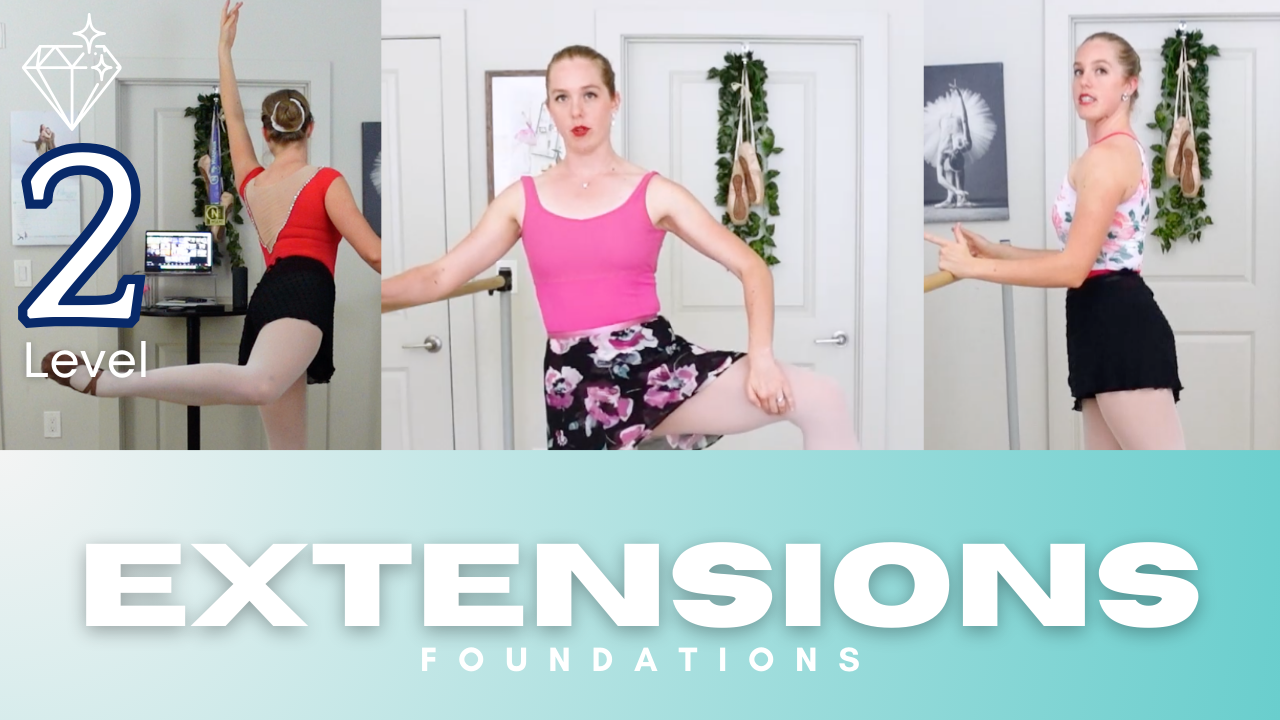
The most common mistake is sacrificing alignment for height. If you hike your hip to get your leg higher, you actually lose the muscular leverage needed to sustain the extension. In our Extensions Foundations for Higher Legs program, we emphasize that the standing leg is just as important as the working leg. You must lift out of the standing hip to create space in the pelvic bowl for the working femur to rotate and lift.
Adult bodies often carry tension in the hip flexors from sitting at desks. This tension can lead to a 'clunking' sensation or a feeling that the leg is 'stuck.' Learning to 'manual release' or soften the hip socket—a technique we explore in our Hip Alignment & Á la Seconde Extension videos—allows the leg to move more freely within the joint.
Active vs. Passive Flexibility
You may be able to pull your leg into a high stretch while sitting on the floor (passive flexibility), but holding it there in the center (active flexibility) is a different skill. To bridge this gap, you must strengthen the iliopsoas (the deep hip flexors) and the abdominal wall.
Our Higher Legs Front and Side program, which includes over 180 targeted videos, focuses on 'functional' height. This involves drills like 'pumping' the leg at its highest point or practicing slow développés at the barre to build the endurance of the quads and rotators. Remember: a leg is factually heavy. You are essentially weight-lifting your own limb, which requires consistent conditioning.
The Art of the Arabesque
Extensions to the back (arabesque) require a completely different muscular engagement than devant (front) or á la seconde (side). A high arabesque depends on the flexibility of the hip flexors and the strength of the glutes and back extensors.
In the Higher Arabesque Program, we guide you through 157 videos that break down how to shorten the muscles of the back while lengthening the front of the body. For adults, spinal mobility can be a limiting factor. It is vital to find a 'diagonal' line that distributes the curve throughout the upper and middle back rather than crunching into the lumbar spine. This not only looks more elegant but protects your body from injury.
Utilizing the Barre for Progress
Use it to perform barre stretches where you focus on the 'turnout' and proper placement to train your hips for the correct feeling. Our library contains hundreds of specialized barre stretch sessions, such as the Barre Stretch for Devant and Foot in Hand, which teach you how to maintain rotation as the leg ascends. When the leg is turned out, the greater trochanter of the femur clears the edge of the pelvis, literally 'unlocking' more height.
Consistency and Patience for the Adult Learner
With over 300 specialized videos in our Extensions category, Broche Ballet provides the structured path you need. By combining manual releases to reduce 'gripping,' targeted strengthening to support the weight of the leg, and the anatomical precision of our Advancing Technique programs, you will see your lines transform over time. Stay patient, keep your hips level, and celebrate the small wins in your range of motion.
Next step
Related Videos
Watch classes and tutorials related to this topic
 12:47
12:47 Barre stretch for A La Seconde
 16:13
16:13 Middle Splits & Straddle Stretches + Hamstring Stretch
 17:31
17:31 Dynamic Front Splits Flow (Bring pillows & yoga blocks if you are not yet in your splits)
 14:51
14:51 Challenging Flexibility and Stretching for Hamstrings in Turnout
 4:40
4:40 Arabesque Barre Stretch & Extensions to focus on Straight Leg in Arabesque
 16:30
16:30 Deepen Your Hip Flexor and Hamstring Stretches
 11:34
11:34 Activating Upper Back and Shoulder Blades
 17:57
17:57 Upper Back & Chest Stretch and Strength -- Bring a Strong Theraband or a Belt/Bathrobe Tie
More Programs
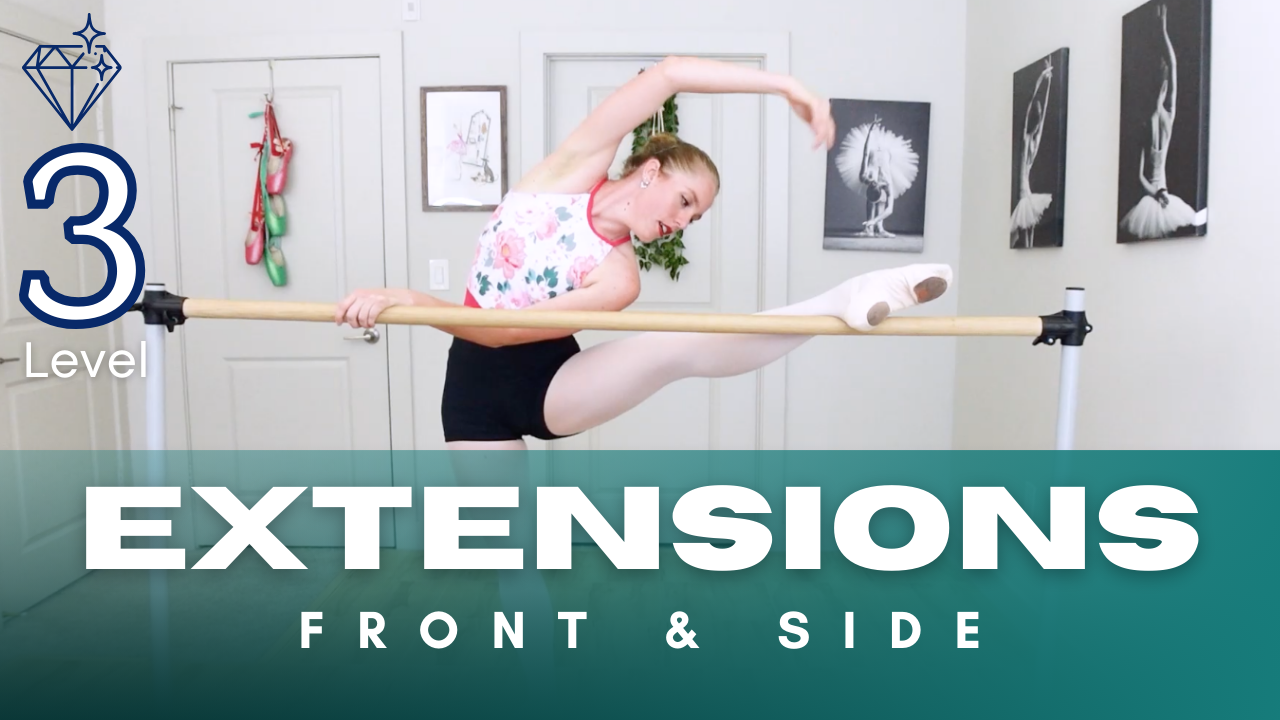
Higher Legs Front and Side - Extensions
Ready to get those legs up to the front (devant) and side (a la seconde)? Extensions, Level 3 builds on your foundational understanding of hip placement and turnout, shifting focus to achieving and maintaining greater height with strength, control, and precision.
180 classes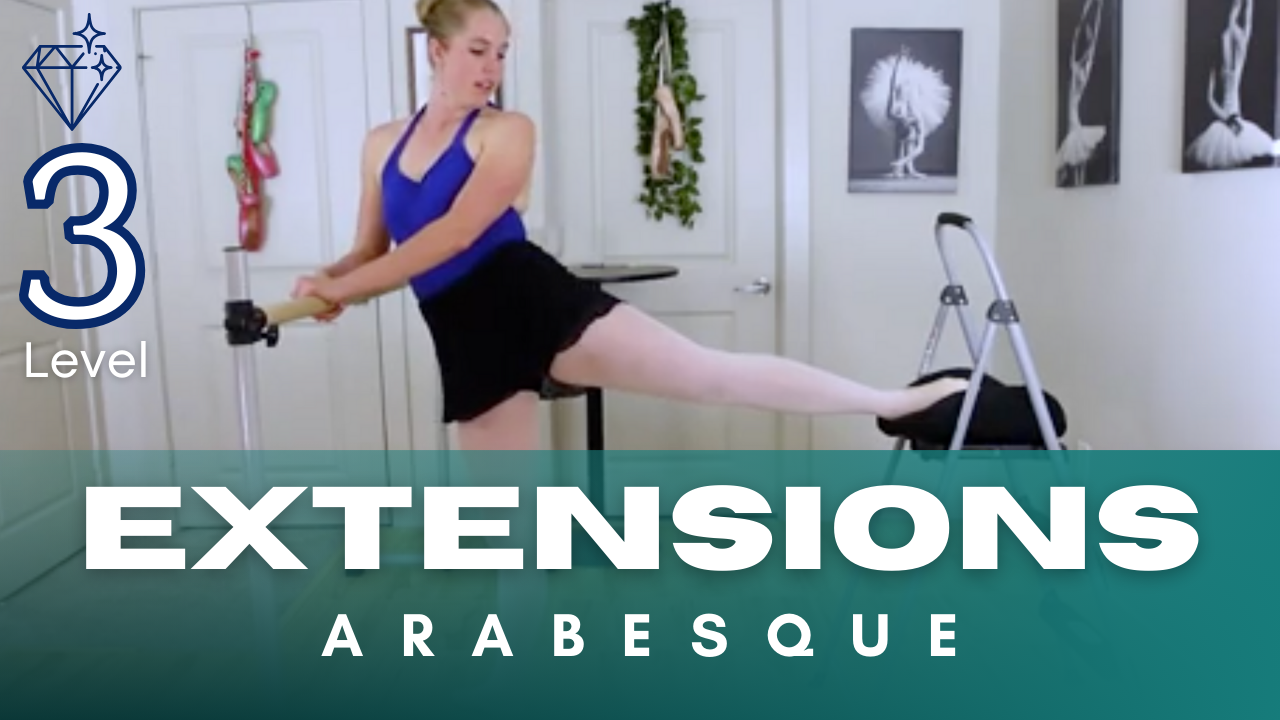
Higher Arabesque Program
Take your arabesque to soaring new heights with Extensions, Level 3 - Arabesque. This advanced program focuses on building the strength, flexibility, and technique required to achieve a higher, more elegant arabesque line. With an emphasis on alignment, turnout, and balance, you’ll refine your artistry and power in this iconic ballet pose.
157 classes
4-month Splits Program for Adults who are New to Splits
Whether you’re new to flexibility training or looking to deepen your practice, this program provides all the tools and guidance you need to achieve your goal.
130 classes