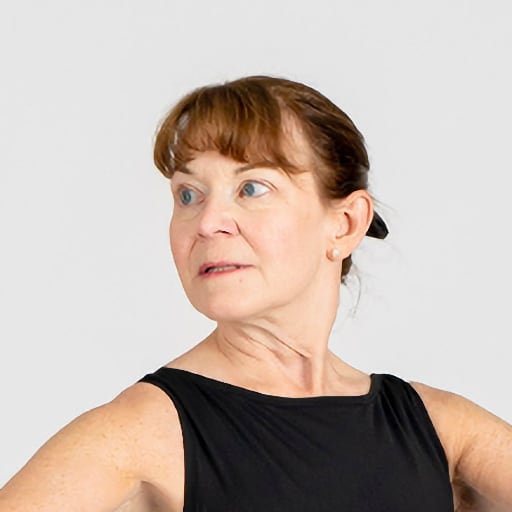
What You'll Learn
- Master the mechanics of piqué turns by initiating rotation from the hip for better stability.
- Improve weight transitions in tombé by pushing high onto the leg to ensure soft landings.
- Refine foot placement in pas de bourrée to improve alignment and balance en pointe.
- Use core control in the ribs and spine to stabilize the upper body during complex transitions.
- Enhance artistic expression in adagio through specific chin lines and finger placement.
About This Video
Take your training away from the barre with this focused intermediate session at Broche Ballet. Mastering center pointe work requires a unique blend of core stability, precise weight distribution, and artistic nuance. In this 12-minute class, we dive deep into the mechanics of movement en pointe, ensuring you feel confident and secure in the center.
A primary focus of this lesson is the mechanics of the piqué turn. Often, dancers struggle with rotation because the hip remains square or lags behind. You will learn how to consciously send the hip around the base foot to ensure a successful and fluid rotation.
This technique, combined with a strong passé and sharp relevé, transforms your turns from shaky to stable. We also explore the intricacies of weight transfer through tendu and tombé pas de bourrée sequences. One of the most common mistakes in center work is a heavy landing.
By pushing high onto the leg during the tombé, you learn to control your descent, ensuring that the knees are the first point of contact when closing. This prevents the jarring sensation often felt in pointe shoes and promotes a long, elegant line. Throughout these floor patterns, maintaining a quiet upper body is essential.
We focus on the core—specifically the ribs and spine—to provide a stable anchor for the legs. Beyond the technical drills, this class emphasizes the performance aspect of ballet. The concluding adagio section challenges you to blend technical precision with artistic expression.
We refine the line of the chin, the shape of the hands, and the delicate placement of the fingers. Moving through positions like fondu, susu, and allonger, you will learn how to make your pointe work look effortless and expressive. Whether you are preparing for a performance or simply want to feel more graceful in your shoes, these artistic details make all the difference.