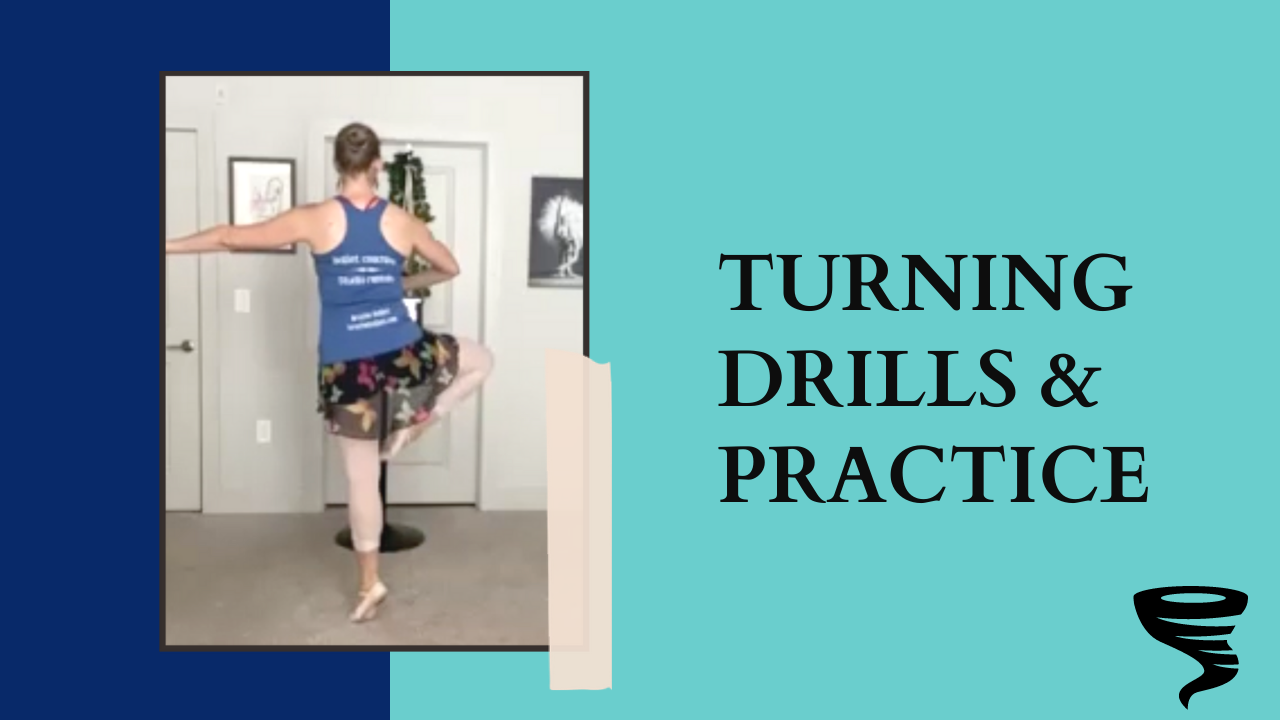

What You'll Learn
- Techniques to maintain a consistent vertical axis over the standing leg.
- How to use a spiral arm motion to integrate momentum without losing control.
- Progressive drills for quarter, half, and whole pirouettes.
- The secret to 'waiting to come down' to improve the duration of your turns.
- Methods for using a deep plié to generate controlled power and lift.
About This Video
Welcome to this focused practice session at Broche Ballet, specifically designed to demystify the complex mechanics of rotation. Mastering pirouettes is often one of the most challenging hurdles in a dancer's journey, but by breaking down the relationship between your vertical axis and momentum, you can achieve greater stability and consistency in every turn. In this class, we move beyond the idea of simply 'spinning' and instead focus on the intentional physics of movement that allows for professional-level control.
A central theme of this lesson is the precise placement of your axis. Many dancers struggle with balance because their weight unintentionally shifts away from the standing leg during the preparation or the turn itself. We explore how to maintain a solid vertical line directly over the supporting foot, ensuring that every plié serves as a powerful, grounded foundation. By understanding that momentum is generated through a coordinated push from the floor and a strong engagement of the core—rather than a wild swing of the arms—you will find it significantly easier to stay centered and calm.
We also delve into the 'spiral' motion of the arms, a technique that prevents the common mistake of pushing sideways and pulling yourself off-balance. You will learn to integrate your arm movement back into the body's center of gravity, which is essential for smooth transitions through quarter, half, and whole turns. Perhaps most importantly, we discuss the transformative sensation of 'waiting to come down.' This mental shift encourages you to find the peak of your pirouette and maintain the lift through your relevé until the very last second. Whether you are working on your first clean single or looking to stabilize your doubles, these drills provide the technical framework needed to build confidence and trust in your technique. Join us as we turn theory into graceful, balanced practice.