Do I Need a Certain Body Type for Ballet?
No, you do not need a specific body type for ballet. While professional companies historically favored a specific aesthetic, ballet as an art form and discipline is for every body. Success in ballet depends on functional alignment, strength, and consistent practice rather than height, weight, or natural flexibility.
You absolutely do not need a specific body type to study, enjoy, and excel in ballet. The idea that you must be tall, thin, and naturally hypermobile is a persistent myth rooted in the hyper-competitive world of professional ballet companies. For the adult dancer, ballet is about the relationship between your mind and your unique body. Whether you are starting for the first time or returning after years away, your body is already the perfect "ballet body" because it is the one you have to dance with.
Moving Beyond the Professional Aesthetic
In the professional world, a specific aesthetic is often sought for visual uniformity on stage. However, this represents a tiny fraction of the global ballet community. As an adult dancer, your goals are likely different: improving posture, gaining strength, expressing artistry, or mastering a difficult skill. None of these goals require a specific limb length or a certain number on a scale. At Broche Ballet, we focus on the mechanics of movement. Programs like The Facets of Ballet: A Complete Adult Ballet Curriculum are designed to be modular and progressive, allowing you to tailor your training to your specific physical needs rather than trying to force your body into a pre-conceived mold.
Functional Alignment Over Fixed Positions
One of the most common concerns for adults is turnout—the outward rotation of the legs from the hip sockets. Many believe you need a specific hip structure to do ballet. While bone structure does play a role, ballet technique is actually about maximizing your individual range safely. Our Total Turnout Transformation program (featuring 146 videos) emphasizes that turnout is a balance of strength, flexibility, and alignment of the lower back and pelvis. It's not about hitting a 180-degree line; it's about finding the functionality required for balance and opposition in your own body.
Strength is the Foundation, Not Thinness
Ballet is an incredibly athletic pursuit. It requires deep core stability and explosive power. Instead of focusing on being "light," ballet training focuses on being strong. Our Advancing Technique with Posture, Turnout and Ballet Lines program helps you bring your body into harmony, addressing how the hips, spine, and knees work together. When you focus on muscle activation and proper usage of the joints, you'll find that ballet technique becomes accessible regardless of your size. You are building a functional machine capable of incredible precision.
Flexibility is a Skill You Develop
Many adults hesitate to start because they "aren't flexible." Flexibility is not a prerequisite for ballet; it is a result of it. Even if you feel stiff today, you can build the necessary range of motion over time. Even if you can't touch your toes, beginners are welcome in our [12-weeks Beginner Flexibility
](/programs/12-weeks-beginner-flexibility) program. For those dreaming of higher legs, our Extensions Foundations for Higher Legs program provides a structured roadmap to build the specific strength and active flexibility needed to lift the legs, proving that these skills are earned through technique, not granted by birth.
Starting Where You Are
If you are worried about how you look in a leotard or feel intimidated by the studio environment, our Absolute Beginners "Sticky Buns" Program is the perfect entry point. It's designed specifically to get you "studio-ready" in a supportive, low-pressure way. For those whose bodies have changed over the years and are returning to the barre, the Gentle Return to Ballet after a Break program offers a way to re-acquaint your current body with the movements your brain still remembers.
Ultimately, ballet is a language of movement. Just as you don't need a specific type of voice to speak a new language, you don't need a specific body to speak through dance. Your journey is about discovering what your body can do through the 8,000+ videos and structured programs available here. Embrace your unique frame, focus on the technical details, and let the artistry follow.
Next step
Related Videos
Watch classes and tutorials related to this topic
 18:09
18:09 Q&A - How can I get more flexible? -- Dec 12
 67:19
67:19 Ballet Wisdom: Julie Answers Burning Questions
 48:20
48:20 Philosophy: How to practice ballet at home to reach your goals?
 48:20
48:20 How Ballet Training is Structured
 2:59
2:59 Welcome to the Facets of Ballet Adult Ballet Curriculum Program
 71:56
71:56 Taking Up Space & being Unapologetically Yourself: Ballet, Body Image, and Embracing Your Worth
 11:48
11:48 Well-rounded Beginner Flexibility and Stretching for Hips and Hamstrings
 19:22
19:22 Absolute Beginner Ballet Warmup - Plié, Tendu, Rond de Jambe
More Programs
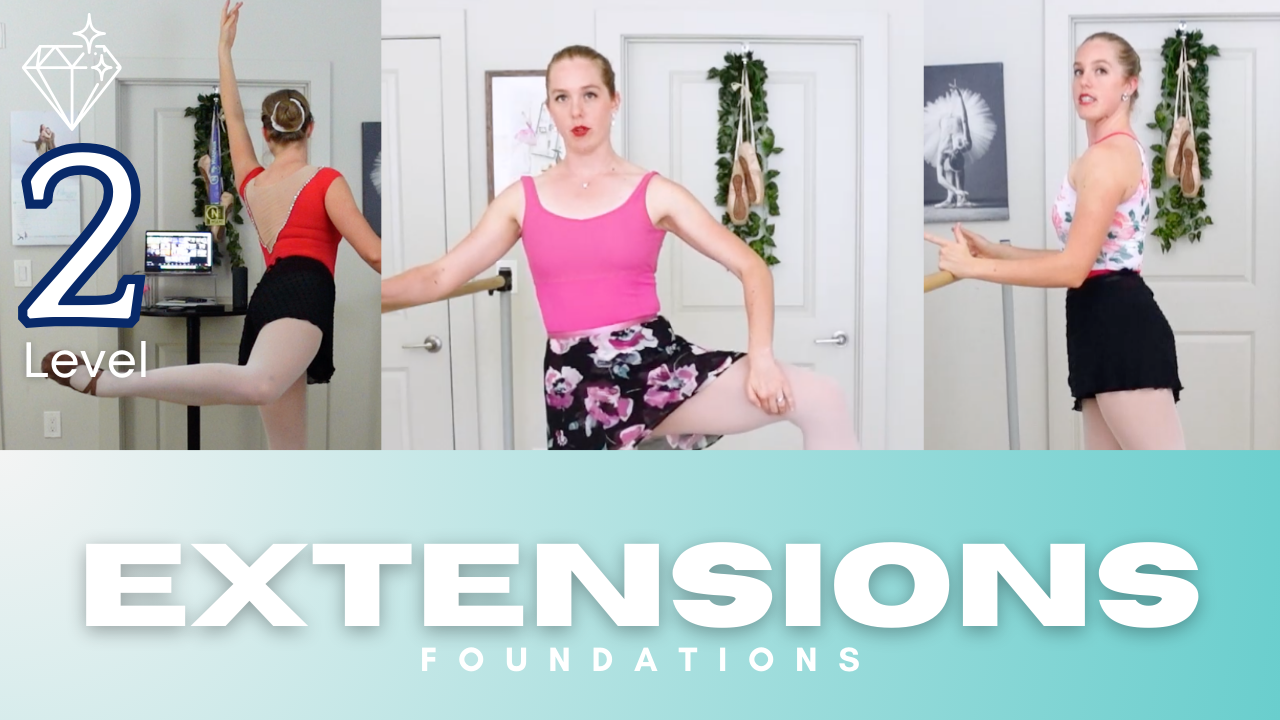
Extensions Foundations for Higher Legs
Dreaming of a higher développé, and higher legs in arabesque? Extensions, Level 2 lays the essential foundation for building the strength, flexibility, and technique needed to lift up those legs.
32 classes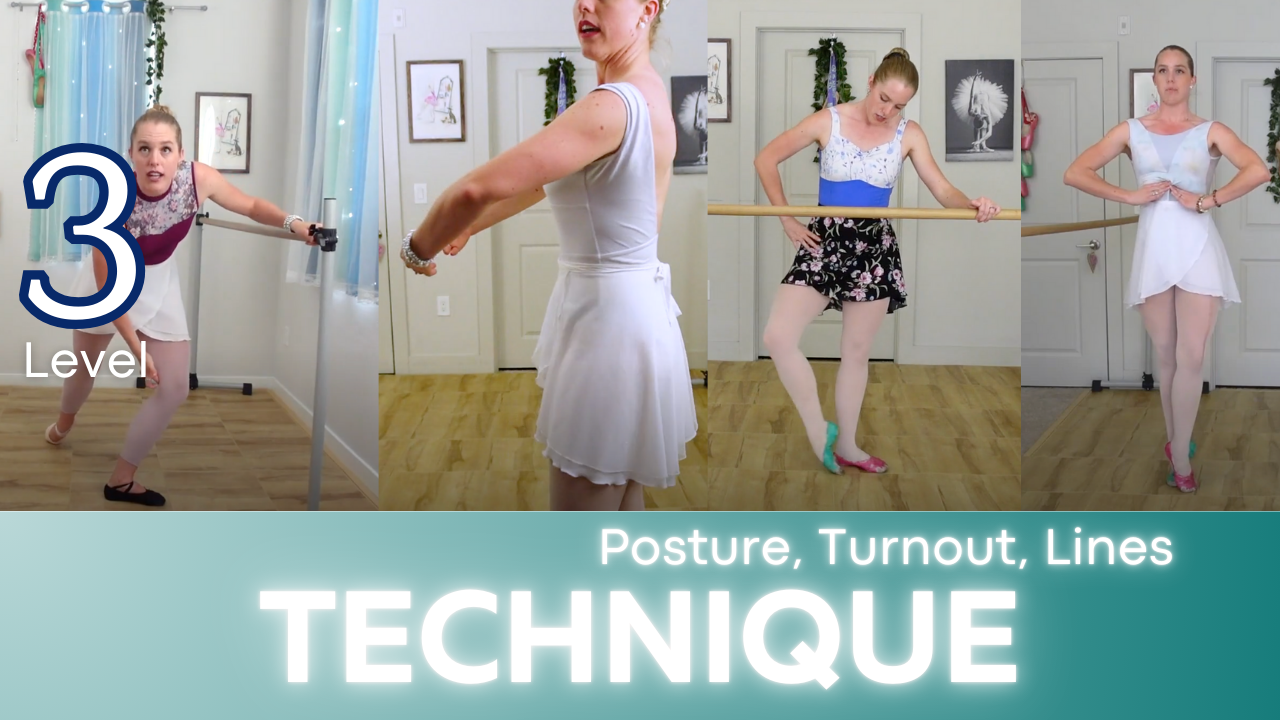
Advancing Technique with Posture, Turnout and Ballet Lines
Advancing Technique: From Head-to-Toe. Take your technique to the next level with a comprehensive, full-body approach designed to bring each part of your body into harmony. Level 3 addresses proper usage of hips, spine, Turnout, Feet, Knees, Elbows
75 classes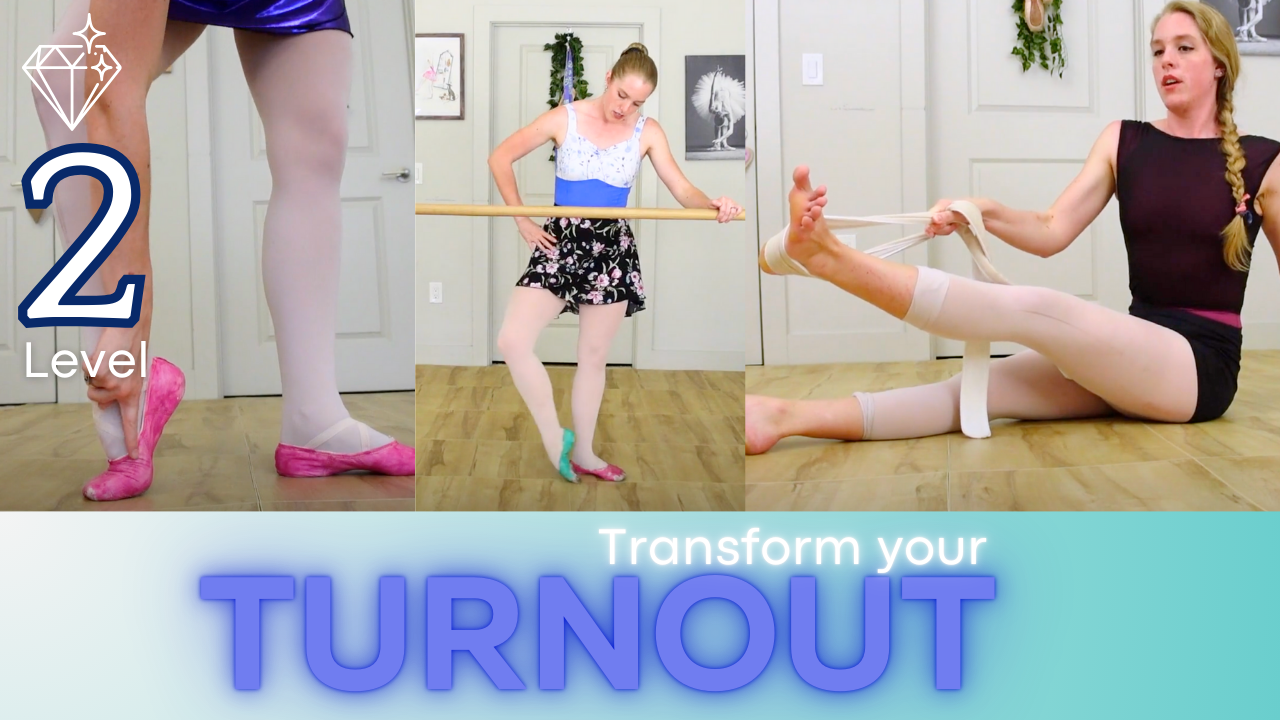
Total Turnout Transformation
Turnout is much more than just flexibility or naturally perfect hips—it’s a harmonious balance of strength, flexibility, and proper alignment of your lower back, pelvis, knees, and ankles. This balance not only enhances the aesthetic of your dancing but also provides the functionality required for balance and opposition in movement.
146 classes