How do I know what level I am in ballet?
Ballet levels are determined by your comfort with vocabulary and coordination. If you're learning basic step names, you're at the Intro level. If you've mastered weight shifting and simple turns, you’re an Advanced Beginner. Use a modular curriculum like The Facets of Ballet to assess specific skills like turnout, extensions, or allegro independently.
Knowing your level in ballet can be tricky because, unlike martial arts with clear belt systems, ballet levels are not standardized globally. One studio's 'Intermediate' might be another's 'Advanced Beginner.' For adult dancers, this ambiguity can be frustrating, especially when navigating ballet classes across different studios. However, you can determine your level by looking at three main pillars: your vocabulary, your coordination, and your independence from the barre.
The Introductory and Beginner Stages
If you are currently learning the names of positions—first through fifth—and focusing on the difference between a tendu and a dégagé, you are in the Introductory or Absolute Beginner phase. At this stage, your brain is doing more work than your body as you translate French terminology into movement.
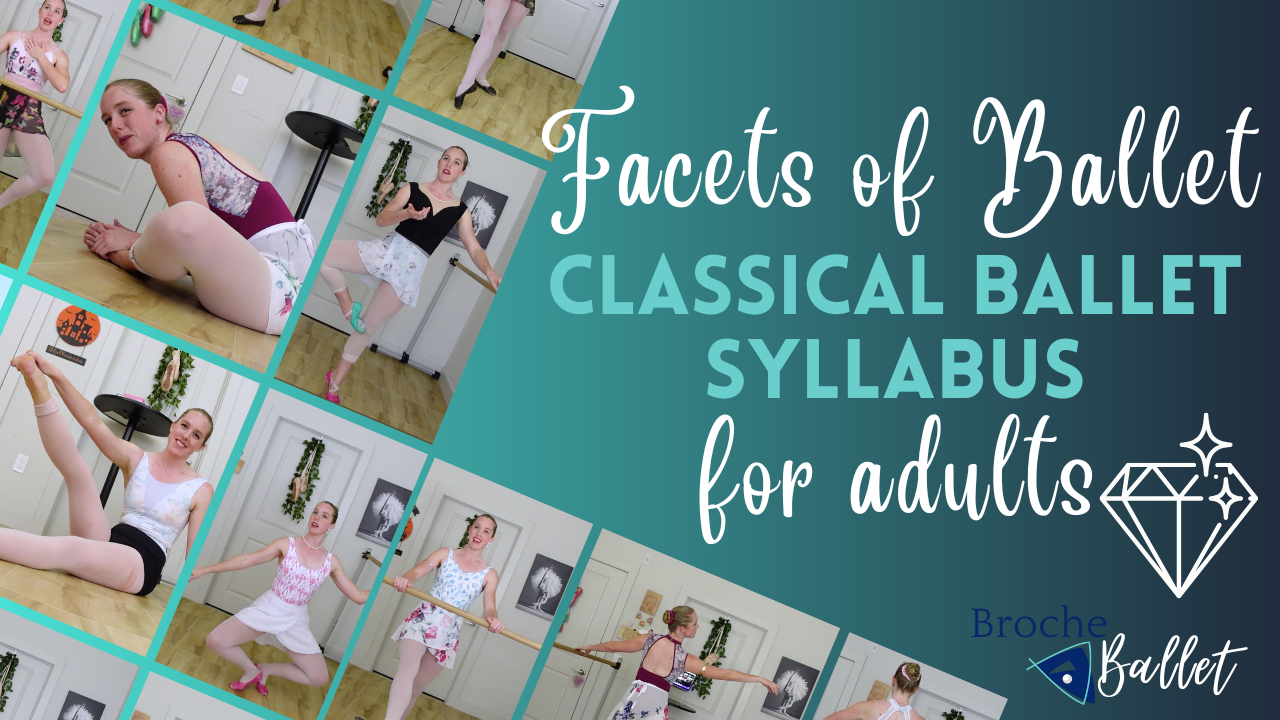
As you progress into the Beginner level, you should feel comfortable with the standard barre sequence (plié, tendu, dégagé, rond de jambe, frappé, and grand battement). You are a Beginner if you can follow these exercises with minimal demonstration but still require the barre for balance. Our Facets of Ballet: Basics to Brilliance Program (28 videos) is designed specifically for this stage, offering a structured roadmap to help you solidify these fundamentals before moving on.
Advancing to Beyond Beginner
The most common plateau for adult dancers is the 'Advanced Beginner' stage. You know you have reached this level when you can move away from the barre and maintain your balance in the center.
A key marker of this transition is coordination—specifically, the ability to move your arms (port de bras) and legs simultaneously without losing your technique. If you are working on combining a tombé pas de bourrée with a pirouette preparation, you are likely in this category. To help dancers navigate this specific transition, we created the Beyond Beginner - Essentials for Graduating the Beginner Level program. With 261 videos, it focuses on finding balance away from the barre and building comfort with turning.
Markers of an Intermediate Dancer
Intermediate ballet requires a significant jump in physical stamina and 'vocabulary density.' You are likely an Intermediate dancer if you can execute:
- Complex Adagio: Holding extensions (développé) and promenade (tours lent) with control. Our Extensions Foundations for Higher Legs (32 videos) helps build the specific strength needed for this level.
- Multiple Turns: Moving beyond a single pirouette to consistent doubles or complex turns like piqué turns and turns en dedans. Programs like Your First Pirouettes (93 videos) and the Turns Foundations Program (25 videos) provide the technical breakdown for these milestones.
- Petit and Grande Allegro: You can perform quick, intricate footwork and large, traveling jumps with the correct 'ballon' (bounce). If you are comfortable with steps like balloté, tours en l'air, and sauté de chat, you are working at an Adv Beginner - Intermediate level, which we cover in our specialized Allegro programs (48 videos).
The Modular Approach for Adults
One unique aspect of being an adult dancer is that your 'level' might vary across different facets of ballet. You might have the flexibility of an intermediate dancer in your extensions but still be a beginner in your jumping technique due to past injuries or challenges with balance.
Instead of trying to fit into a single box, we recommend a modular assessment. Use the 6-Week Well-rounded Level 2 Ballet Schedule (101 videos) to see where you feel challenged. You might find you are 'Level 3' in theory and 'Level 1' in pirouettes. This is normal and allowed! Adults often have 'asymmetric' progress, and identifying these gaps allows you to customize your training.
Considering Pointe Work
For many, a level indicator is the transition to pointe shoes. This is not just a 'level' but a physiological milestone. Our Journey to Pointe program (637 videos) guides you through the rigorous strength and alignment checks required.
Remember, your level is a tool for finding the right class, not a permanent label. Whether you are returning after a 20-year break or starting fresh at age 50, the goal is consistent, safe progression. Embrace where you are today, use our modular programs to fill in the gaps, and enjoy the process of becoming the dancer you've always dreamed of being.
Next step
Related Videos
Watch classes and tutorials related to this topic
 49:59
49:59 Why do Adults Love Ballet So Much? Ballet Teachers Discuss?
 10:33
10:33 How to use the 6-week program
 20:50
20:50 Bridging the Level Gap to Intermediate - Learning new center vocabulary - managing corners, body directions, port de bras, and transition steps
 48:20
48:20 Philosophy: How to practice ballet at home to reach your goals?
More Programs
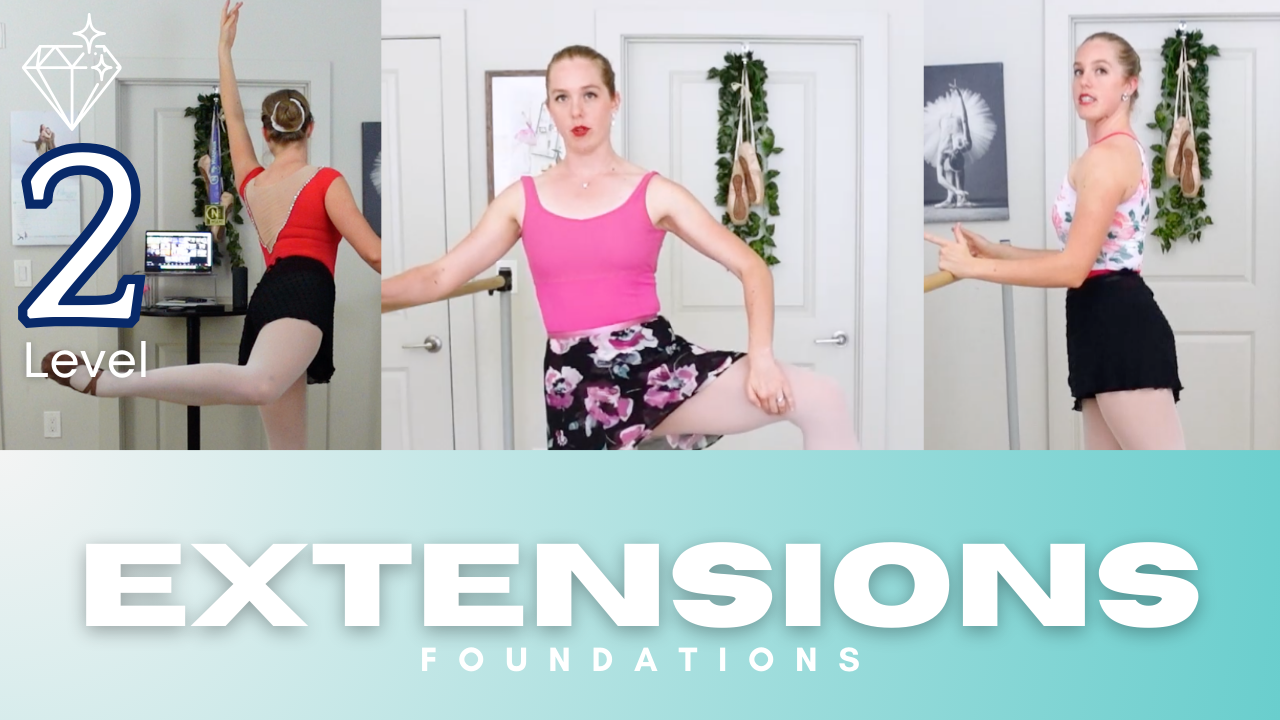
Extensions Foundations for Higher Legs
Dreaming of a higher développé, and higher legs in arabesque? Extensions, Level 2 lays the essential foundation for building the strength, flexibility, and technique needed to lift up those legs.
32 classes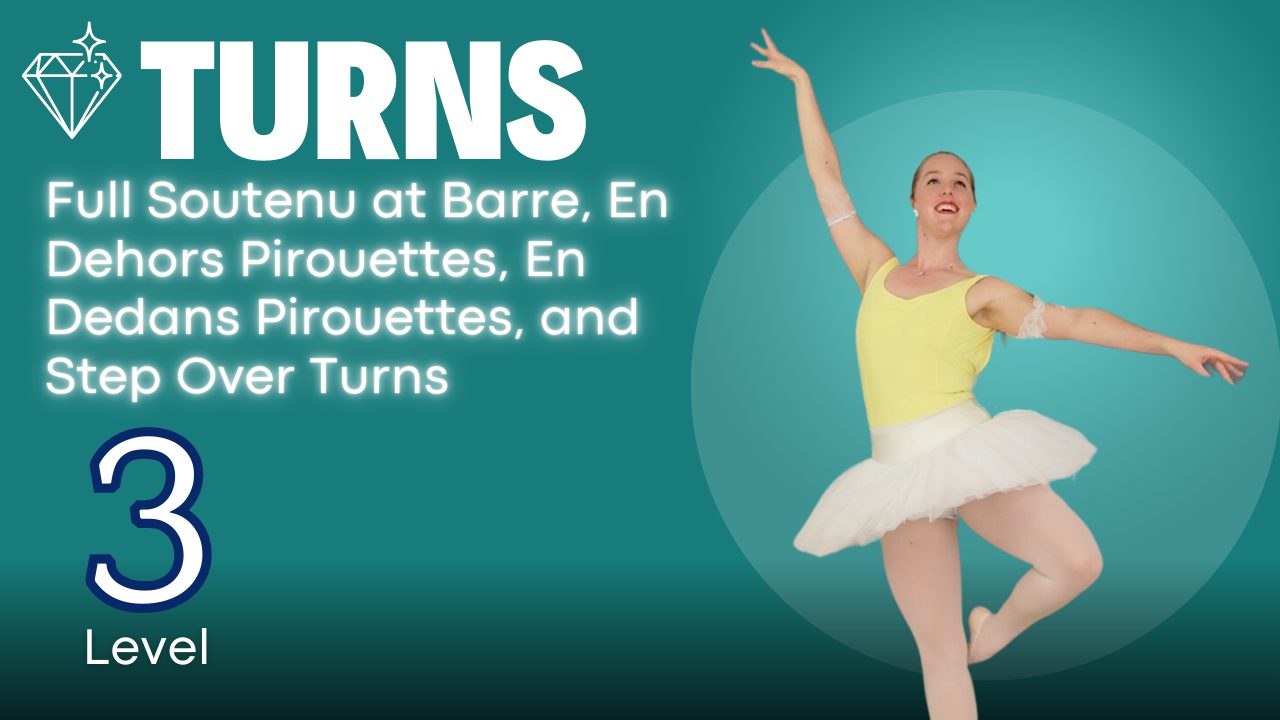
Your first Pirouettes
Full Soutenu at Barre, En Dehors Pirouettes, En Dedans Pirouettes, and Step Over Turns
93 classes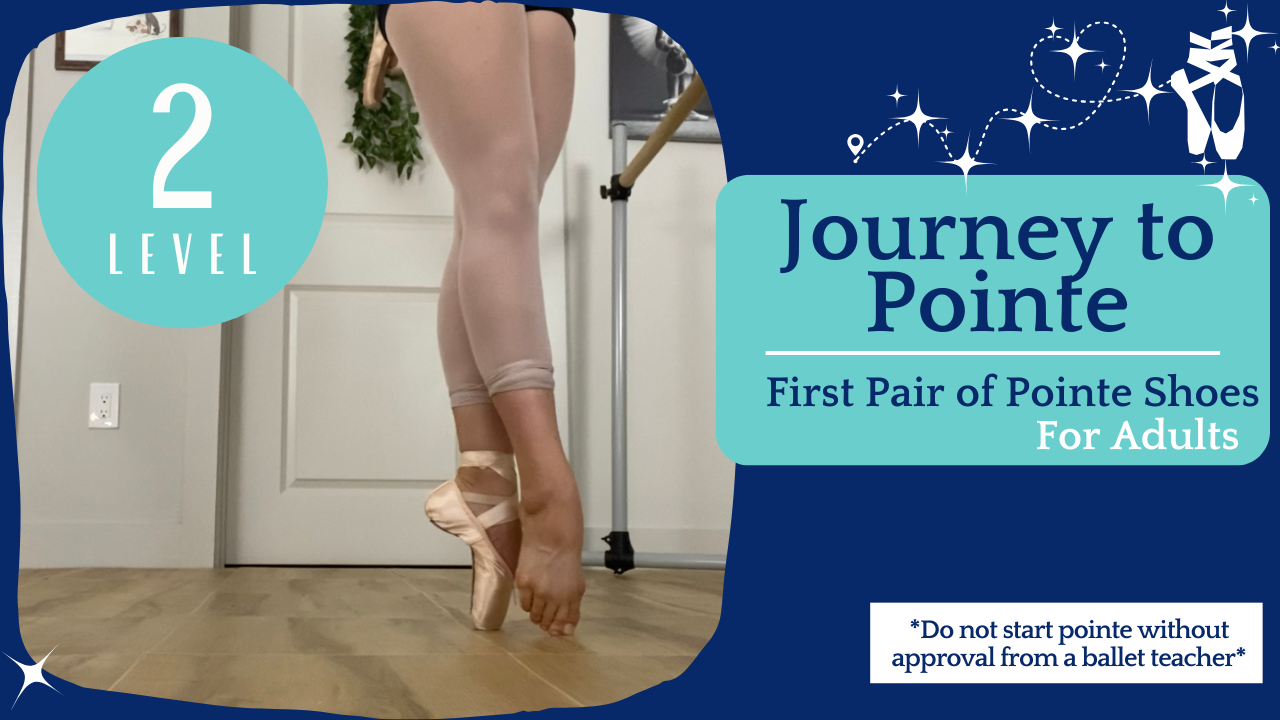
Journey to Pointe | First Pointe Shoes for Adults
The Broche Ballet Journey to Pointe will guide you every step of the way from your first day of ballet class to your first pair of pointe shoes.
637 classes