What You'll Learn
- Master the bear hover to establish a stable plank and active shoulder girdle.
- Improve trunk stability and minimize hip shifting with the plank buttress.
- Build the lateral strength necessary for a solid standing leg and cleaner pirouettes.
- Isolate the abdominals and protect the spine using the turtle plank method.
- Coordinate cross-body core engagement to maintain balance during limb movement.
About This Video
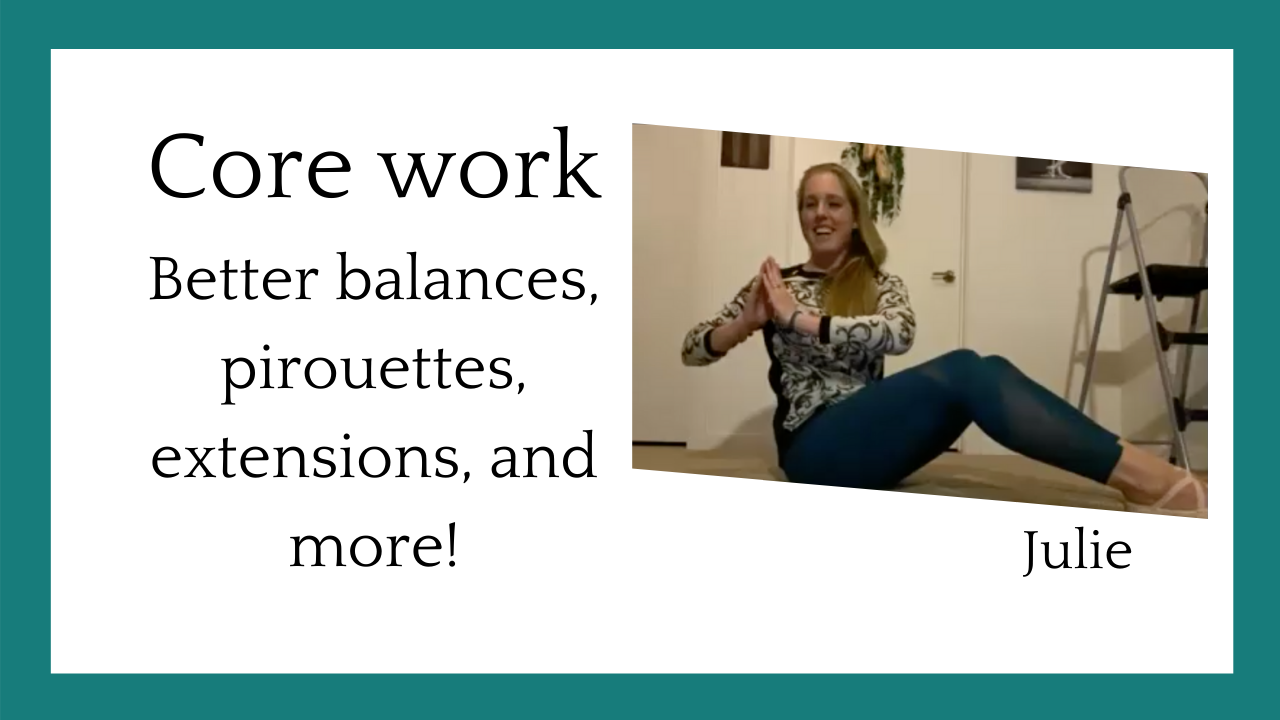
Core stability is the silent engine behind every graceful movement in ballet. While we often focus on the aesthetic lines of our extensions or the height of our relevé, the true power of a dancer comes from the inside out. This Level 1 core stability session at Broche Ballet is meticulously designed to help you transition from simply making shapes to finding functional, internal strength that supports your entire technical practice.
In this 10-minute follow-along workout, we dive deep into the mechanics of trunk stability. We begin with the bear hover, a fundamental exercise that teaches you how to properly engage the shoulder girdle and push the floor away. This establishes the correct alignment needed for any weight-bearing movement on the barre or in the center.
From there, we progress to the plank buttress, which challenges your ability to maintain a quiet, stable torso while your limbs move—an essential skill for preventing hip-shifting during complex footwork. Safety is paramount for dancers, particularly when it comes to the lower back. We introduce the turtle plank, a unique variation that uses a rounded spine to isolate the front abdominals effectively while keeping the spine protected.
This awareness carries over into every plié and tendu, ensuring your center stays connected throughout class. We also tackle lateral stability with side planks, which are crucial for maintaining a strong standing leg and finding the vertical axis required for successful pirouettes. Finally, the dead bug exercise introduces cross-body coordination, mimicking the oppositional forces we use in arabesque and other asymmetrical positions.
By the end of this session, you will have a clearer neurological map of how to engage your core to find better balance and control in your ballet practice. Whether you are a beginner or a seasoned dancer returning to basics, this foundational work is the key to unlocking more advanced movements with ease and precision.