
What You'll Learn
- Proper heel placement on PBT balls for à la seconde and arabesque
- Techniques for maintaining a strong port de bras during complex extensions
- How to execute controlled fouetté and promenade movements using ball resistance
- Strengthening the back leg and toes for improved ballet lines and stability
About This Video
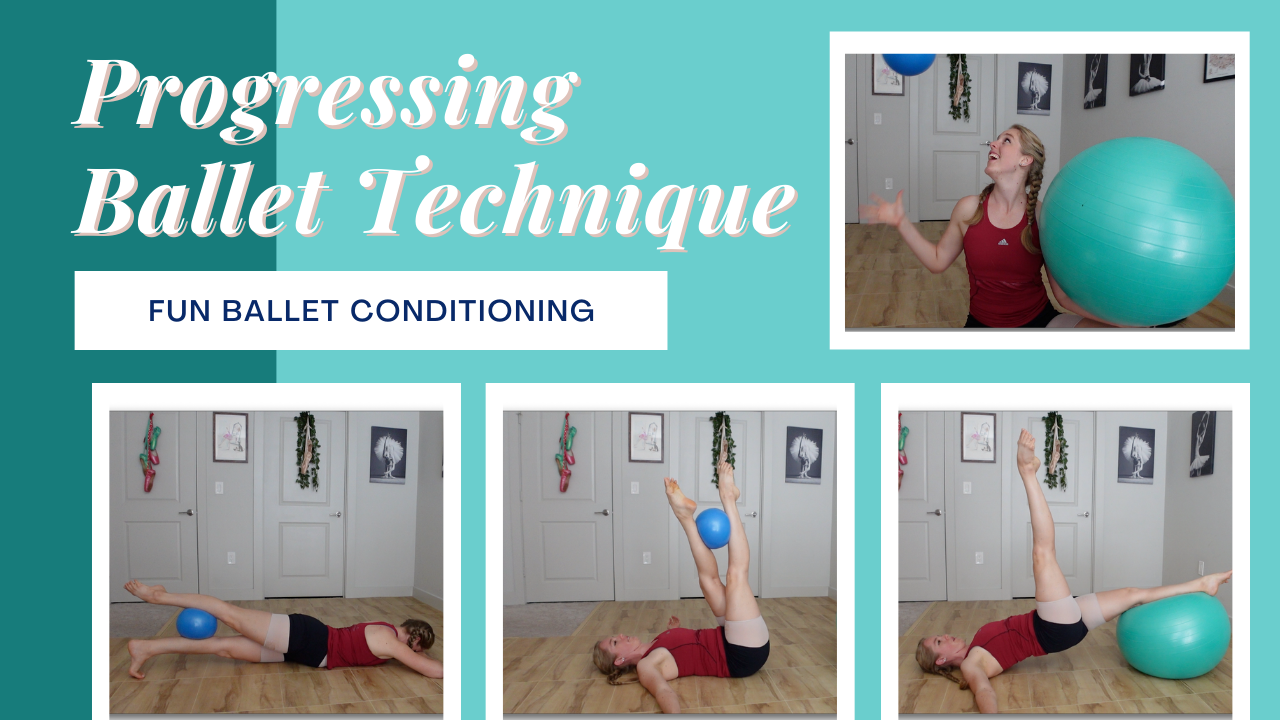
Elevate your ballet training with this specialized Progressing Ballet Technique (PBT) class focused specifically on extensions. In this 25-minute session, Broche Ballet guides you through a series of conditioning exercises designed to enhance your height, stability, and placement in movements like à la seconde and arabesque. By utilizing both a large exercise ball and a small fusion ball, you will receive immediate tactile feedback on your alignment, helping you find the deep muscle engagement necessary for professional-level lines.
The class begins by addressing the fundamentals of stability. You will learn the importance of keeping the ball centered in front of the belly button to maintain your turnout and core engagement. As you progress into extensions, the focus shifts to the correct positioning of the heel.
Whether you are working on a demi-plié or a full extension, keeping the heel securely on the ball is vital for developing the strength required for controlled leg movements. Special attention is given to the transition between positions. Dancers will practice the fouetté and promenade, using the ball to assist in finding the internal rotation and subsequent external rotation needed for fluid movement.
The instructor emphasizes a strong port de bras throughout, ensuring that your upper body remains graceful and supported even as the lower body works through intense conditioning. You will learn how to 'scoot' into an arabesque while maintaining a long, stretched back leg and pointed toes. Using PBT balls adds a layer of variety and challenge to your standard ballet practice.
These tools allow you to isolate specific muscle groups, such as the adductors and the deep rotators of the hip, which are often difficult to engage in a traditional center floor setting. By the end of this practice, you will have a better understanding of how to maintain your squareness and extension height without sacrificing form. This session is perfect for dancers looking to take their technique to the next level from the comfort of home.