What You'll Learn
- How to use isometric force to create stability through the ankles and feet
- Finding your center of gravity in first position versus sous-sus
- Techniques for shifting weight forward and back to test and refine balance
- The importance of vertical alignment and straight up-and-down posture in relevé
- How a narrow base of support affects your stability in fourth position
About This Video
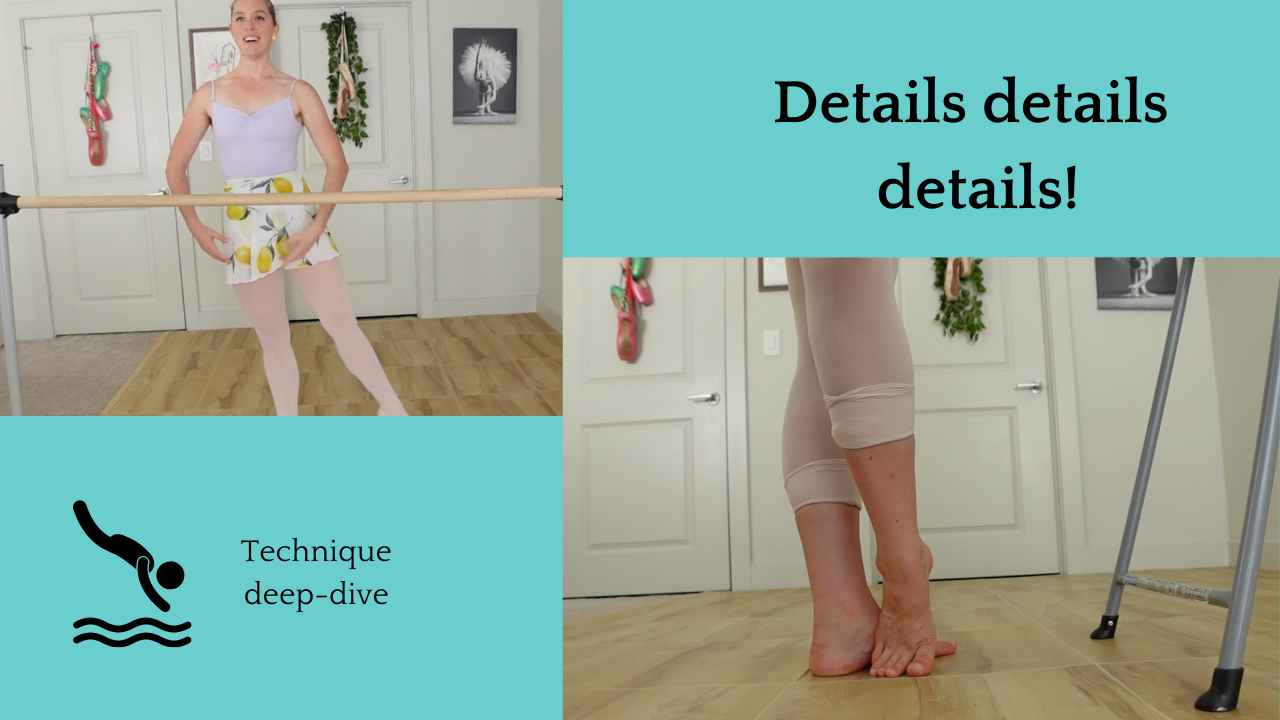
In this detailed 16-minute Q&A session with Broche Ballet, we dive deep into one of the most fundamental yet challenging aspects of ballet technique: finding and maintaining balance. Whether you are working at the barre or in the center, understanding the mechanics of your ankle position is key to achieving a stable sous-sus or a confident relevé. This class focuses on how weight distribution and isometric force play a vital role in your overall stability as a dancer.
We begin by exploring the specific alignment required for a proper sous-sus. Unlike the wider base of first position, sous-sus requires a tight crossing of the legs, which can make balance feel elusive. Our instructor demonstrates how to experiment with shifting your weight forward and backward.
This intentional exploration helps you identify exactly where your center of gravity lies, allowing you to catch yourself and make micro-adjustments before falling out of a position. A core concept introduced in this tutorial is the use of isometric force. By creating pressure through the ankles—acting as if you are pushing against a stable surface—you create a locked-in stability that supports the entire body.
You will learn how a small amount of isometric pressure can provide the necessary tension to keep your system from wobbling, making it significantly easier to move through complex transitions. Furthermore, the video addresses the nuances of balancing in first position versus fourth position relevé. While a wider base offers side-to-side stability, the vertical alignment remains paramount.
Leaning too far forward or back in first position can lead to immediate instability. By mastering these foundational concepts, you will gain a deeper awareness of your body mechanics, from your coupé de pied to full en pointe work. Understanding that balance is a dynamic series of tiny corrections rather than a static state will transform your approach to practice and help you dance with more grace and security.