

What You'll Learn
- The anatomical reasons why leg spacing affects hip rotation.
- The critical role of pelvic alignment in accessing turnout muscles.
- Why third position is often a more effective training tool than a forced fifth.
- How to improve control over the back leg in closed positions to aid transitions.
About This Video
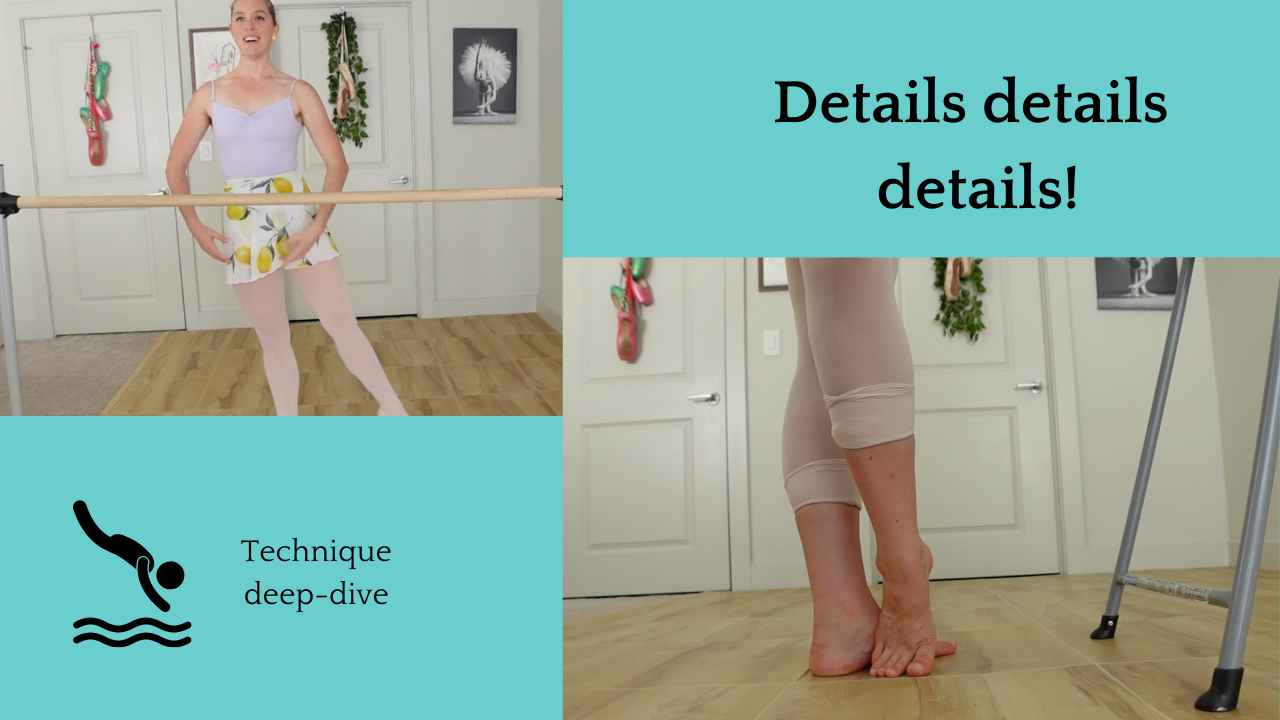
Have you ever noticed that your turnout feels effortless in première position but suddenly disappears the moment you close into cinquième position? You are not alone. In this Broche Ballet Q&A session, we dive deep into the biomechanics of why it is significantly harder to maintain rotation when the legs are crossed and closely aligned compared to open positions.
The primary reason for this struggle lies in the relationship between your leg spacing and your pelvis. In a wider stance like seconde position or even the heels-together stance of première, there is more physical room for the femur to rotate within the hip socket. As the legs move closer together, particularly when crossing into fifth, the space for the pelvis to remain neutral and level becomes restricted.
If your pelvis is tilted or tucked because the legs are too tightly crossed, you lose access to the deep external rotators—the muscles responsible for holding your turnout. At Broche Ballet, we emphasize that more open equals more turnout. This does not mean you should give up on fifth position, but rather that you should prioritize pelvic alignment over a forced crossing.
For many dancers, working in troisième position is actually more beneficial for long-term progress. It allows you to maintain a vertical pelvis and engage the correct muscles, building the strength needed to eventually master a true fifth. We also explore how turnout control in cinquième impacts your overall movement quality.
While a tight fifth can make weight shifts and quick allegro steps feel more restricted, gaining mastery over that back leg rotation makes transitions into coupé or retiré much more stable. Understanding these mechanical nuances allows you to work with your body's unique anatomy rather than against it. Join us at the barre as we break down these essential concepts to help you dance with more ease, grace, and technical precision.


.png)




