What You'll Learn
- How to develop foundational leg power and control for increased stability.
- Techniques for engaging the arch to generate more power in relevé and jumps.
- The importance of stretching the demi-plié to maintain proper form and elasticity.
- Mastering the circular mechanics of smooth and precise détourné movements.
- Strategies for maintaining upper body lift and avoiding a heavy center of gravity.
About This Video
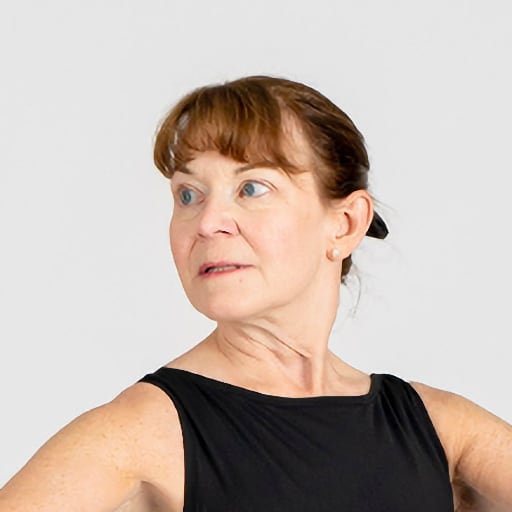
In this comprehensive private ballet lesson at Broche Ballet, instructor Katja Treger works one-on-one with Julie to refine the fundamental elements that lead to professional-level precision. This 101-minute session is an excellent resource for intermediate to advanced dancers who want to understand the mechanics behind specific technical corrections. The class focuses heavily on developing leg power and stability, starting with foundational exercises that challenge the dancer to maintain control throughout every phase of a movement.
One of the core themes of this lesson is maximizing the potential of the feet and arches. Katja provides detailed feedback on how to engage the arch to generate power, noting that while aesthetic perfection is a goal, the functional application of arch strength is what truly elevates a dancer's performance. By focusing on the mechanics of the foot, students can find more height in their relevé and more security in their landings.
The lesson also places a significant emphasis on the demi-plié. Often overlooked, the demi-plié is the engine of ballet technique. Julie and Katja explore how to properly stretch through the demi-plié to maintain form and build the necessary elasticity for allegro work.
Without a deep, functional plié, a dancer loses the ability to transition smoothly between steps. As the session moves into more complex patterns, you will see a focus on the détourné movement. Katja emphasizes a circular motion, teaching the dancer how to pivot with grace and efficiency.
A recurring correction throughout the lesson is the importance of body positioning—specifically keeping the upper body lifted and the center engaged. By avoiding the tendency to get too close to the floor or sink into the legs, the dancer maintains a sense of lightness and poise. Watching this private coaching session allows Broche Ballet students to see real-time corrections and the iterative process of improvement.
It is a perfect example of how small adjustments in the arch, the depth of a plié, or the lift of the chest can transform a movement from basic to breathtaking.