What is the Structure of a Ballet Class?
A traditional ballet class follows a three-part structure designed to safely warm up the body: the barre, the center, and the allegro. You begin with supported exercises at the barre to build technique, move to the center for balance and coordination, and finish with dynamic jumps and a final bow called a révérence.
Whether you are stepping into the studio for the first time or returning after years away, the structure of a ballet class remains remarkably consistent across the globe. This predictability is not just about tradition; it is a scientifically-backed progression designed to prepare the adult body for the physical demands of dance. At Broche Ballet, we use this same structure across our 8,000+ on-demand videos to ensure you build strength, flexibility, and coordination safely and effectively.
The Foundation: The Barre
Every traditional ballet class begins at the barre. This section typically lasts 30 to 45 minutes and focuses on warming up individual muscle groups and establishing proper alignment. We start with Pliés (bending of the knees) to lubricate the joints and activate the core. From there, the exercises increase in speed and complexity: Tendus and Jetés to warm up the feet, Ronds de Jambe to open the hip sockets, and eventually Grand Battements (large kicks) to find the full range of motion.
For those returning after a hiatus, our Gentle Return to Ballet after a Break program uses this familiar barre sequence to help your body re-adjust without the pressure of complex choreography. The barre serves as your training ground; it provides the stability needed to master the "grammar" of dance.
Transitioning to the Center
Once the body is sufficiently warm, we move to the center of the room, leaving the support of the barre behind. This is where your balance and core stability are truly tested. Center work typically begins with Adagio—slow, controlled movements that focus on beautiful lines and extensions. If you are working on leg height, our Extensions Foundations for Higher Legs program provides the specific strength work needed to sustain these positions without the barre to lean on.
Following Adagio, the class moves into Pirouettes and traveling steps. This is a great time to apply the technical focus of the Turns Foundations Program, which helps dancers master spotting and vertical axis alignment. Because there is no barre to hold onto, the center requires a much higher level of cognitive focus to remember combinations and maintain balance simultaneously.
The Peak: Allegro and Grand Allegro
The final portion of class is dedicated to jumps, known as Allegro. We begin with Petit Allegro (small, fast jumps) to build foot speed and cardiovascular endurance. As class reaches its peak, we move into Grand Allegro—large, sweeping jumps like Grand Jetés that travel across the floor. For many, this is the most exhilarating part of class, as it combines all the technical elements learned at the barre into a display of power and grace.
For adult dancers, this is often the most taxing part of class. Our 6-Week Well-rounded Level 2 Ballet Schedule helps you build the stamina required for these sequences. Safety is paramount here; if you are practicing at home, it is important to follow our guidance on Practice Safely at Home to ensure your flooring is appropriate for jumping, as landing on hard surfaces like concrete can lead to injury.
The Closing: Révérence
Every traditional class concludes with a Révérence, a choreographed bow or curtsy. This is a moment of gratitude to the instructor and the pianist, but also a moment for you to honor your own body's hard work. It marks the transition from the discipline of the ballet studio back into your daily life.
Why Structure Matters for Adults
For the adult dancer, this structure provides a mental roadmap. Knowing exactly what comes next helps reduce the anxiety of learning new vocabulary. If you ever feel your technique has become "muddy," The 12-Week Ballet Reset is an excellent way to revisit this structure and clean up your alignment. By following a structured curriculum like The Facets of Ballet, you ensure that no part of your training—from the first Plié to the final bow—is left to chance. Ballet is a discipline built on layers, and the structure of class ensures every layer is addressed in every session.
Next step
Related Videos
Watch classes and tutorials related to this topic
 20:21
20:21 Understanding Choreography — Class #3 Rond de jambe combination Structure
 9:11
9:11 Practice Safely at Home
25:37 Understanding Choreography — Class #7 - The “grammar” of combinations and how to pick which step would come next
 3:23
3:23 Tidbit: What is the order of exercises in the center?
 25:51
25:51 Absolute Beginner Ballet - Center Class #1 of 6
 40:23
40:23 Structure of Classical Ballet - Codas, Pas de Deux, Pantomime, and More!
 13:42
13:42 Jumps (15 mins focus on échappé battú) -- Aug 11
 58:39
58:39 Winter 2024 Beginner Pointe Class #6 of 16 - Stamina and Refinement Checkpoint
More Programs
The 12-Week Ballet Reset
Clean your technique. Rebuild your artistry. Return stronger. A full-body re-tuning for adult dancers.
105 classes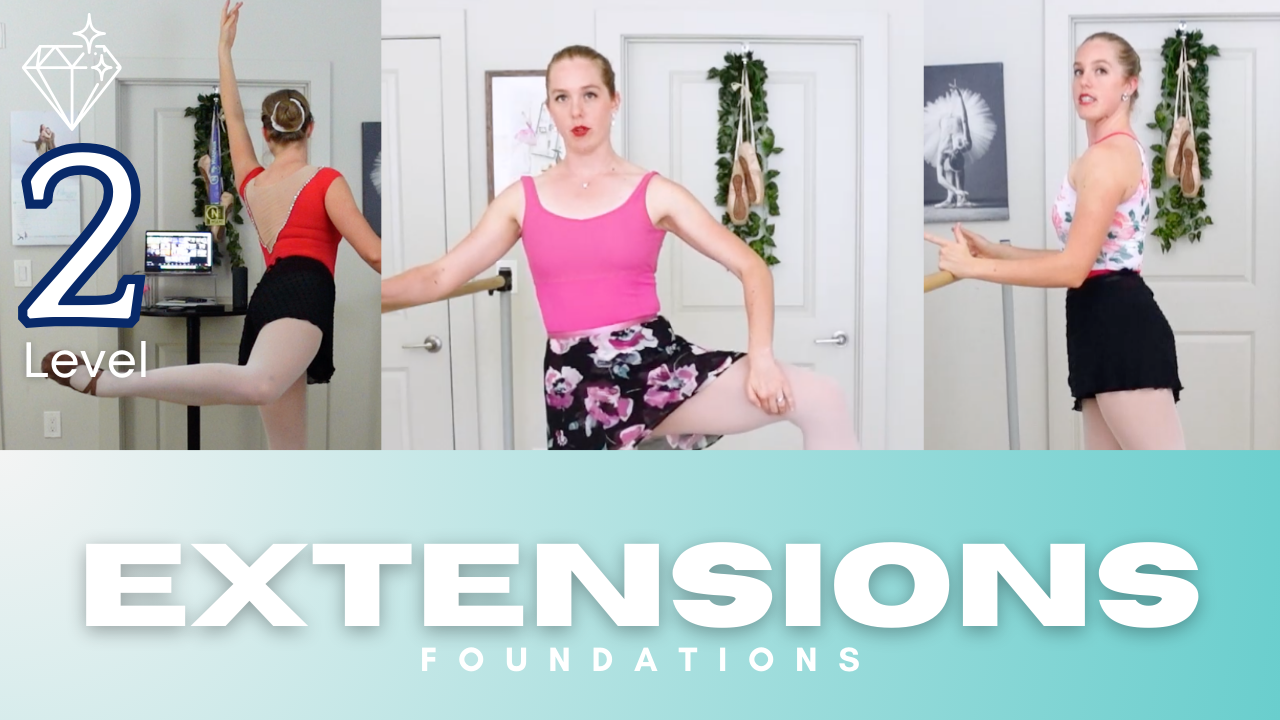
Extensions Foundations for Higher Legs
Dreaming of a higher développé, and higher legs in arabesque? Extensions, Level 2 lays the essential foundation for building the strength, flexibility, and technique needed to lift up those legs.
32 classes
✨ The Facets of Ballet: A Complete Adult Ballet Curriculum ✨
At Broche Ballet, we know you don’t just want a quick challenge—you want a structured roadmap to becoming the dancer of your dreams. The Facets of Ballet is not just a collection of classes—it’s a progressive, modular training system that puts YOU in control of your ballet journey. With The Facets of Ballet Basics to Brilliance Program, you choose the skills you want to focus on and train at your own pace—whether you follow the full sequential roadmap or go deep in the areas you love most.
28 classes