What should I practice between ballet classes?
Focus on consistency over intensity by targeting 'micro-skills' like foot articulation, core stability, and balance. Instead of full-length classes, use 15–20 minutes to work through structured drills. Programs like '90 Days of Daily Practice' or 'Beyond Beginner' provide the framework to refine technique safely and effectively between your scheduled studio sessions.
Between your scheduled ballet classes, the most effective way to progress as an adult dancer is to focus on targeted, consistent refinement rather than trying to replicate a full 90-minute studio experience every day. At Broche Ballet, we believe that 'micro-skills'—the individual technical variables like foot speed, weight placement, and port de bras coordination—are the building blocks of mastery. With a library of over 7,200 on-demand videos, you have the tools to turn your home into a laboratory for technical growth.
Prioritize Foot and Ankle Conditioning
One of the most valuable uses of your time between classes is developing foot strength and articulation. Adult bodies often need more repetitions than a standard class provides to build the necessary 'muscle memory' in the feet. You can practice rhythmic TheraBand exercises to isolate the toes and improve ankle stability. Programs like our 'Journey to Pointe' offer hundreds of videos focusing on these foundational mechanics. Even if you aren't planning to dance on pointe, these drills—such as the 'Tango & Rumba Pre-Pointe Speed Exercises'—improve your balance and clarity in every jump and relevé.

Refine Technical Micro-Skills
In a live class, the teacher moves quickly from one exercise to the next. Home practice is your opportunity to slow down and 'debug' specific movements. If you are working on graduating the beginner level, the 'Beyond Beginner' program is an excellent resource. It focuses on coordinating arms and legs and finding your balance away from the barre. You might spend ten minutes just practicing the transition from a plié to a passé, focusing entirely on your hip alignment and core engagement. This level of focus is rarely possible in a crowded classroom but is where real breakthroughs happen.
Follow a Structured Schedule
Adult dancers often struggle with 'decision fatigue'—knowing you should practice but not knowing where to start. To eliminate the guesswork, follow a structured plan like the 'Level 2 - 90 Days of Daily Practice.' This program provides a clear, day-by-day roadmap that balances strength, flexibility, and technique. By following a schedule designed by experts, you ensure that you aren't overworking one area of the body while neglecting another, leading to a more well-rounded and safer progression.
Focus on Artistry and Port de Bras
We often focus so much on our legs that we forget the upper body. Practicing your port de bras (carriage of the arms) and épaulement (positioning of the head and shoulders) can be done in a very small space without a barre. Our 'Level 4 - 90 Days of Daily Practice' emphasizes these nuances, helping you develop elegance and control. Working on your 'artistry bar' between classes ensures that when you return to the studio, your dancing looks cohesive and expressive, not just mechanical.
Practice Safely at Home
Safety is paramount when practicing outside the studio. As discussed in our 'Practice Safely at Home' resources, you must consider your flooring. If you are on carpet, avoid repetitive jumping or pivoting to protect your knees and ankles. If you are on a hard surface like tile or concrete, focus on slow, controlled movements rather than high-impact jumps. If you are returning after a break, use the 'Gentle Return to Ballet after a Break' program to ease your body back into the vocabulary without risking injury.
Ultimately, the best thing to practice between classes is whatever keeps you engaged and curious. Whether it is a 10-minute stretching session from the '12-Week Ballet Reset' or a deep dive into extensions with 'Extensions Foundations,' consistency is your greatest ally. By showing up for your practice in small, manageable increments, you will build the strength and confidence needed to shine in your next class.
Next step
Related Videos
Watch classes and tutorials related to this topic
 7:26
7:26 What's Live on Zoom This Week at Broche? | Feb 5 - 10, 2024 Preview!
 79:25
79:25 The truth behind the hustle | Grace interviews Julie about building Broche
 9:56
9:56 Fun Tango & Rumba Pre-Pointe Speed Exercises - Fast Toes
 9:11
9:11 Practice Safely at Home
 10:02
10:02 How To Migrate Your Account
 7:32
7:32 New Features & New Content This Week!
 10:26
10:26 Upcoming Zoom Schedule | Join Us!
 16:20
16:20 From Overwhelm to Progress: The Building Blocks of Ballet Progress | Broche Banter Season 3 Episode 49
More Programs
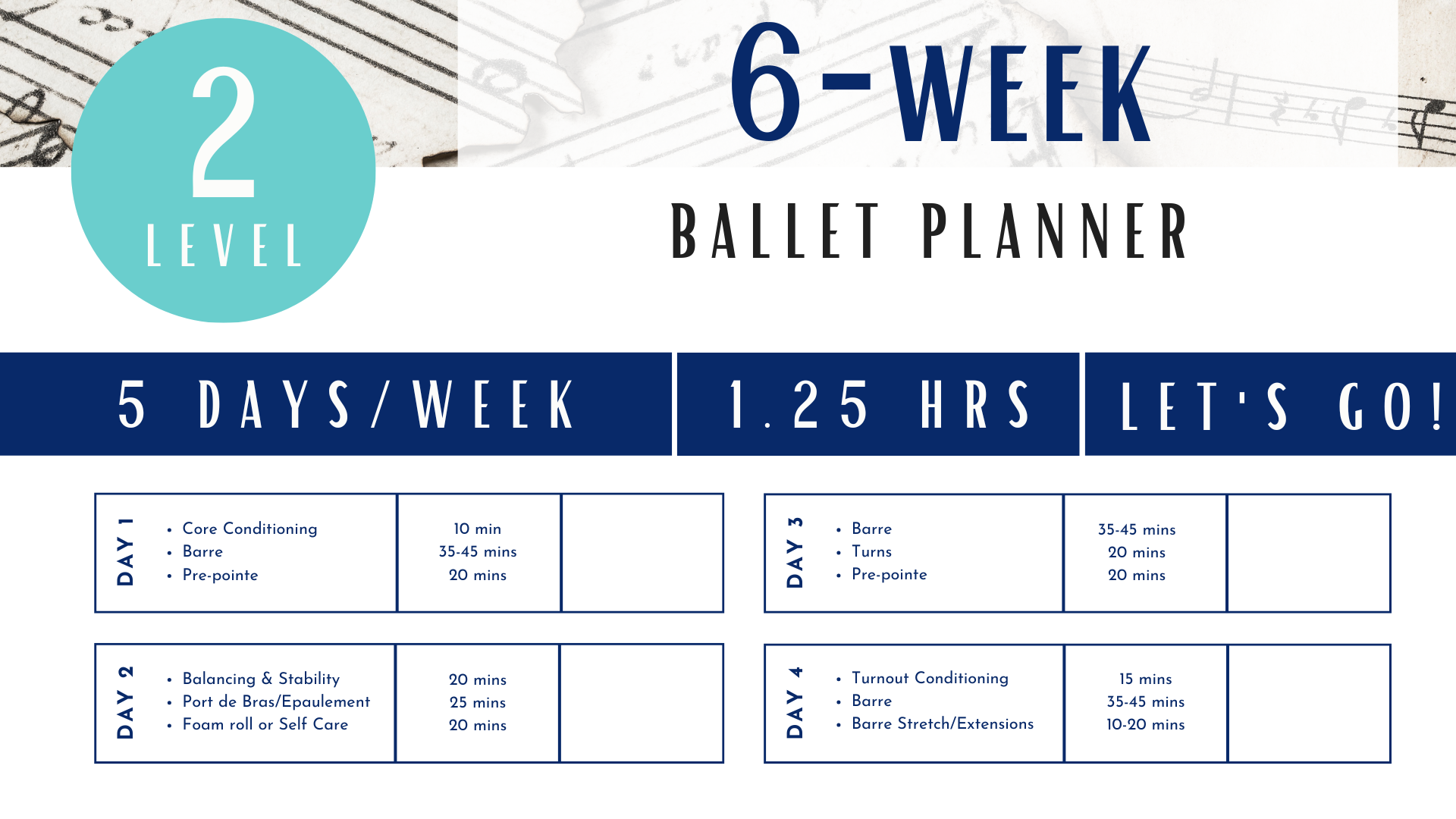
6-Week Well-rounded Level 2 Ballet Schedule
Learn how to structure your home practice to make the most of your time and reach your goals! Ballet is a huge discipline with many facets to learn and it can be overwhelming to think about what to practice to reach your individual goals. Let’s break it down and focus on the individual parts! Learn how to structure your home practice to make the most of your time and reach your goals!
101 classes
The 12-Week Ballet Reset
Clean your technique. Rebuild your artistry. Return stronger. A full-body re-tuning for adult dancers.
105 classes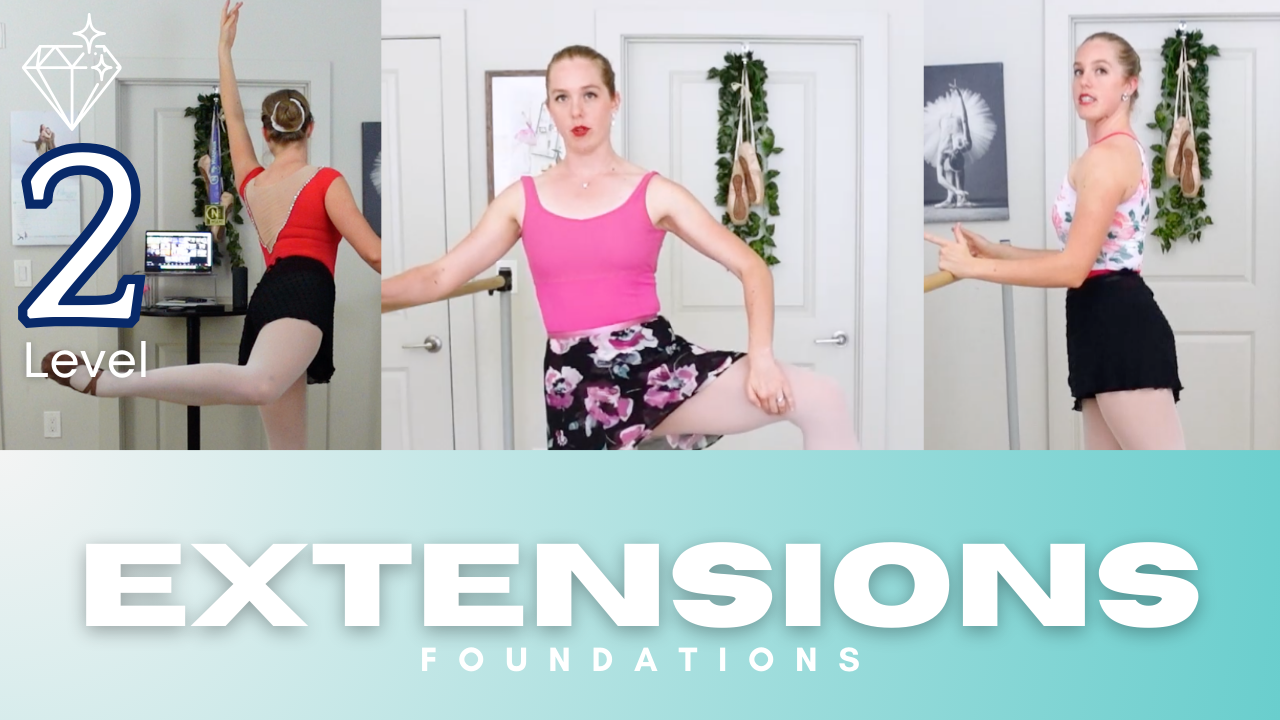
Extensions Foundations for Higher Legs
Dreaming of a higher développé, and higher legs in arabesque? Extensions, Level 2 lays the essential foundation for building the strength, flexibility, and technique needed to lift up those legs.
32 classes