How Often Should I Practice Ballet?
For steady progress, aim to practice ballet 3–5 times per week. Consistency is more impactful than duration; 15–20 minutes of daily focused work often builds more muscle memory than a single long weekly class. Adjust your frequency based on your goals, ensuring you include at least one full rest day to allow for adult muscle recovery.
Determining how often to practice ballet as an adult is a balance between your personal goals, your physical recovery needs, and the realities of a busy life. Unlike professional tracks where dancers train six days a week for several hours, adult dancers find the most success through "effective frequency"—the sweet spot where you are training enough to build muscle memory without causing burnout or overuse injuries.
The Golden Rule: Consistency Over Intensity
If you have to choose between one three-hour marathon session on a Saturday or fifteen minutes of barre work every morning, choose the fifteen minutes. Adult bodies require frequent repetition to "wire" new neurological pathways and maintain flexibility. When you go a full week between classes, your body often spends the first half of the next class simply remembering where it left off.
By utilizing programs like Level 2 - 90 Days of Daily Practice, you can eliminate the guesswork of what to do each day. These short, structured sessions ensure that you are touching on technique frequently enough to see real transformation in your coordination and strength.
Tailoring Frequency to Your Goals
Your ideal schedule depends heavily on what you want to achieve:
- Maintenance and Joy: If you dance primarily for mental health and light movement, 1–2 times per week is sufficient. However, you may find that progress feels slow.
- Technical Improvement: To see noticeable shifts in your turnout, balance, and vocabulary, aim for 3–4 days per week. This allows for two days of technique and two days of specific supplemental work, such as the Extensions Foundations for Higher Legs program.
- The Journey to Pointe: Aspiring to dance en pointe requires a higher commitment. To build the necessary ankle stability and intrinsic foot strength found in our Journey to Pointe program, you should aim for 5–6 days of engagement. This doesn't mean six full classes; it means a mix of full classes, foot strengthening drills, and calf conditioning.
Managing Time Constraints and "Habit Stacking"
Many adults feel they are "too busy for ballet," but practice doesn't always require a studio and a leotard. You can utilize "habit stacking" to integrate ballet into your existing routine. This might mean doing relevés while brushing your teeth or practicing your épaulement (head and shoulder placement) during a quick work break.
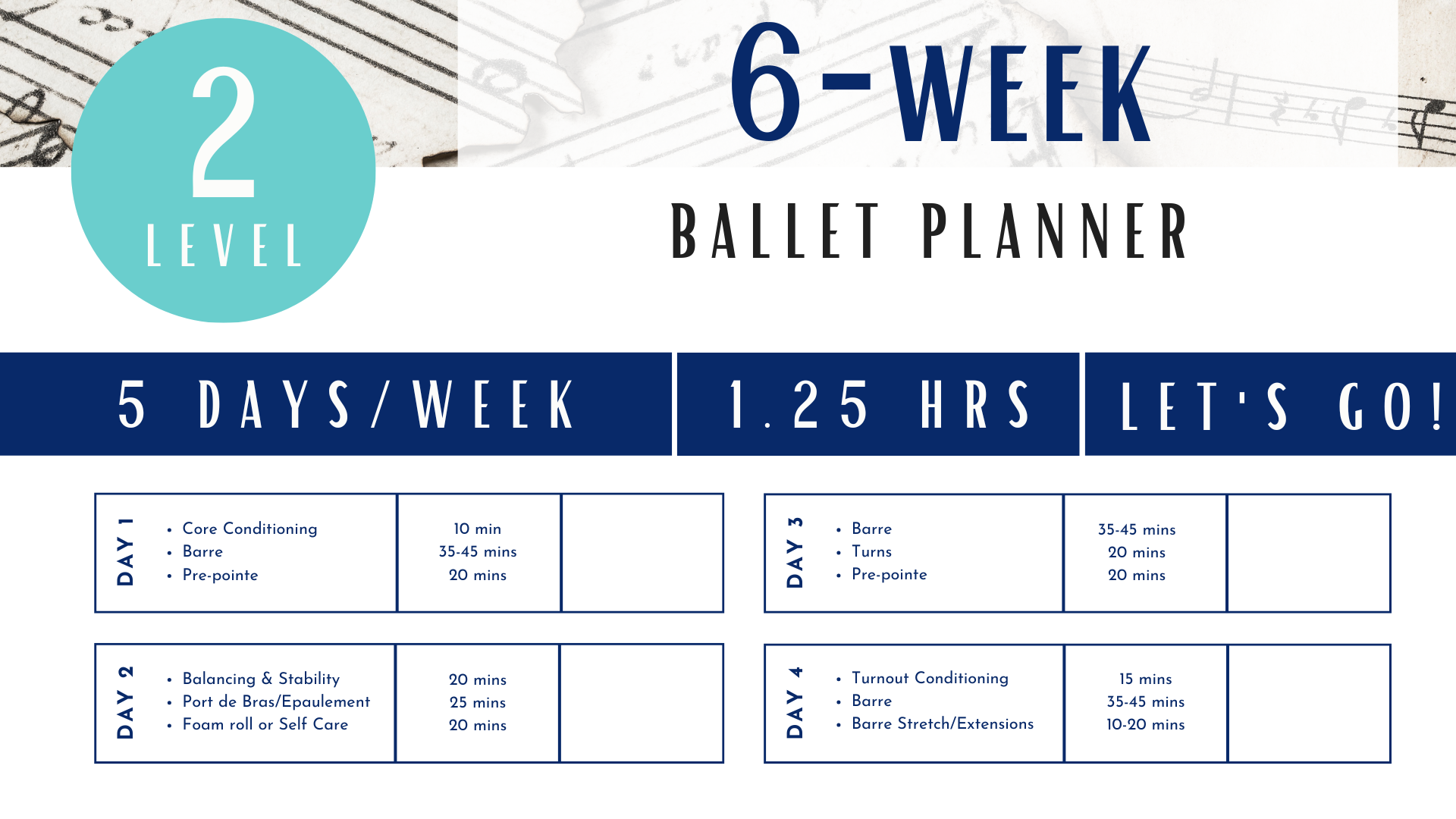
Our library includes over 8,000 on-demand videos, many of which are specifically designed for these "micro-practices." Programs like 6-Week Well-rounded Level 2 Ballet Schedule help you break down your practice into manageable facets, so you can focus on just one element—like port de bras or core stability—when you only have 10 minutes to spare.
The Importance of Rest and Cross-Training
As an adult, recovery is just as important as the practice itself. Your muscles strengthen and repair during rest, not during the workout. If you are over-training, you may notice your balance getting worse or your joints feeling achy.
Integrating cross-training is essential for injury prevention. As discussed in our session on How to Cross-Train for Ballet and Pointe, incorporating light weightlifting or Pilates can actually make your ballet sessions more effective. If you are returning from a long hiatus, the Gentle Return to Ballet after a Break program is the perfect way to re-habituate your body without the risk of over-training in the first week.
Structuring Your Week
A well-rounded week for an intermediate adult student might look like this:
- Monday: Full 60-90 minute class (Barre and Center)
- Tuesday: 15-minute foot and ankle strengthening
- Wednesday: Full 60-90 minute class
- Thursday: Rest or gentle stretching
- Friday: 30-minute technique deep-dive (e.g., focusing on pirouettes or adagio)
- Saturday: Full class or cross-training
- Sunday: Full rest
Ultimately, the best practice schedule is the one you can actually stick to. Whether you are following The 12-Week Ballet Reset to rebuild your foundations or exploring the Facets of Ballet curriculum to master specific skills, remember that every minute you spend on the floor counts. Your ballet journey is a marathon, not a sprint; honor your body's needs and celebrate the small, consistent wins.
Next step
See the short-practice pathRelated Videos
Watch classes and tutorials related to this topic
 18:39
18:39 Mindset: Developing Discipline & Consistency for Pointe and your Goals - Excuses, Motivation, and Accountability
 3:37
3:37 Too Busy for Ballet?
 41:56
41:56 Assessments for Adults in Ballet, Self-doubt, Performing & more with Julie
 2:53
2:53 Welcome To Sticky Buns How To Use The Program
 2:18
2:18 Q&A - How can I set up a practice routine? -- Dec 12
 13:29
13:29 How Long Should I Practice?
 5:16
5:16 Motivation - How to feel like you are improving and stay motivated?
 9:13
9:13 Plan your Ballet Journey with Me | Facets of Ballet Program
More Programs

Level 2 - 90 Days of Daily Practice
A complete, well-rounded practice plan for Level 2 dancers who want structure, clarity, and steady progress. This 90-day schedule eliminates the guesswork, guiding you through daily classes that strengthen your technique, improve your flexibility, and build confidence in both barre and center work. Day by day, you’ll feel stronger, more coordinated, and more at home in your dancing.
120 classes
Level 3 - 90 Days of Daily Practice
Designed for Level 3 dancers ready to elevate their artistry and stamina. This 90-day journey helps you refine your technique through progressively challenging and longer combinations that build endurance, memory, and expression. With a balanced mix of classes, you’ll take your dancing to the next level: gracefully, consistently, and confidently.
130 classes
Level 4 - 90 Days of Daily Practice
A transformative 90-day experience for Level 4 dancers looking to deepen their artistry and precision. Learn what to do with your head and épaulement, refine your pirouettes, and develop a more sophisticated understanding of ballet mechanics. This plan blends technical mastery with expressive nuance, helping you dance with elegance, control, and confidence.
127 classes