What is the difference between adagio and allegro in ballet?
Adagio consists of slow, sustained movements emphasizing balance, control, and fluid extensions. Allegro features brisk, lively sequences focused on jumps and quick footwork. While adagio builds the structural strength and stability needed for poise, allegro develops the cardiovascular endurance, power, and agility required for dynamic, high-energy movement across the floor.
In the world of ballet, adagio and allegro represent the two ends of the movement spectrum. Adagio is the art of slow, controlled grace, while allegro is the celebration of speed, rhythm, and flight. Understanding the technical and energetic differences between them is essential for any adult dancer looking to develop a well-rounded practice.
The Controlled Grace of Adagio
Adagio, derived from the Italian phrase ad agio (at ease), refers to slow, lyrical movements. In the center of a ballet class, an adagio combination typically involves slow developments of the leg (développés), sustained balances, and fluid transitions from one pose to another.
For adult dancers, adagio is often where we find our 'center.' It requires immense core stability and eccentric muscle strength. Because you are moving slowly, there is no momentum to hide behind; every misalignment is visible. This is why we focus heavily on the basics in our Technique Foundations, Basics, and Fundamentals program (which includes 104 videos covering everything from posture to the five positions). If you find your legs feeling heavy or your balance wobbling during slow movements, our Extensions Foundations for Higher Legs program provides 32 targeted videos to help build the specific hip and core strength needed to lift and hold the legs with ease.
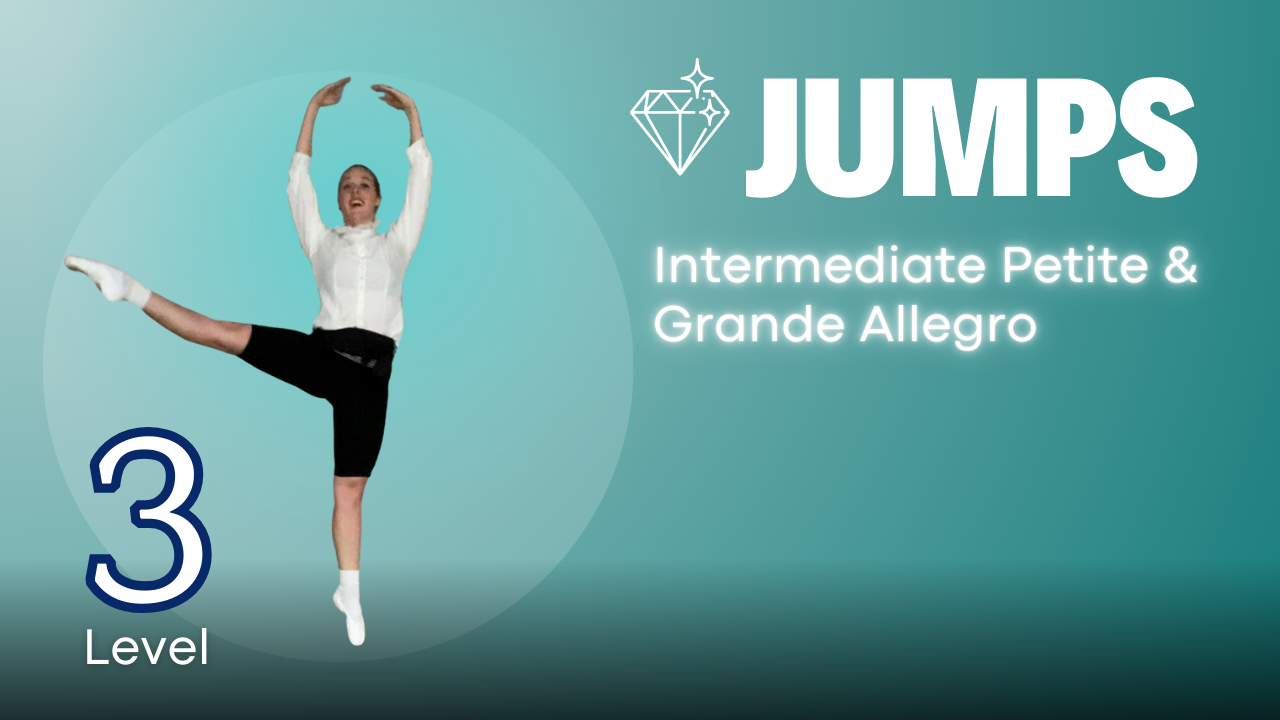
The Brisk Energy of Allegro
Allegro, meaning 'cheerful' or 'brisk,' is where ballet takes flight. It is divided into two main categories: Petite Allegro and Grande Allegro.
Petite Allegro involves small, quick jumps like sautés, changements, and jetés. The focus here is on foot articulation and speed. Our Foundations for Jumps and Petite Allegro program (52 videos) is the perfect starting point for adults, as it breaks down the mechanics of the 'push-off' and the 'landing' to protect your joints while building power.
Grande Allegro consists of large, expansive jumps that travel across the floor, such as grand jetés and sauté de chats. This requires a combination of strength, coordination, and 'ballon'—the quality of appearing to hover in the air. For those ready to advance, our Adv Beginner - Intermediate Petite Allegro & Grande Allegro program offers 48 videos focusing on complex steps like tours en l'air and fouetté sauté.
Key Differences for the Adult Learner
- Musicality: In adagio, you must learn to 'hide' the beginning and end of movements, making the sequence look like one continuous ribbon of motion. In allegro, the music is your motor. You must be precisely on the beat to stay in sync with the tempo.
- Physical Demand: Adagio is a test of muscular endurance and 'quiet' strength. Allegro is a cardiovascular challenge that tests your power and coordination. Adults returning to ballet often find that while their mind remembers the steps, their 'allegro stamina' takes a bit longer to rebuild.
- Artistry and Lines: In adagio, you have the time to focus on the tilt of the head and the softness of the fingers. This is where programs like Head, Épaulement, Fingers and Beautiful Ballet Lines (72 videos) become invaluable, teaching you to add sophistication to your slow work. In allegro, artistry is shown through lightness and a clear, bright expression despite the physical exertion.
How to Balance Your Training
As an adult dancer, it is common to have a preference. You might love the meditative quality of adagio but fear the impact of jumps, or you might find adagio boring and crave the excitement of allegro. However, the two are symbiotic. The control you learn in adagio provides the stable 'landing' for your jumps, and the foot strength you build in allegro gives you the 'point' and power for beautiful extensions.
Our library features dozens of classes like the Advanced Center Barre series, which seamlessly integrate both styles. Whether you have 10 minutes to work on your glissade speed or 40 minutes for a full center practice, remember that every slow balance and every small jump is a brick in the foundation of your ballet journey. Embrace the contrast, and you will find a new level of freedom in your dancing.
Next step
Related Videos
Watch classes and tutorials related to this topic
 40:38
40:38 Advanced Center Barre - Classic Barre Exercises without the Barre
 24:12
24:12 Beginner Ballet Center For Understanding Momentum in Piqué Soutenu Turn
 1:01
1:01 Jumps Combo #2 - Practice Non- Jumping Version Adagio Slow | Prix de Lausanne Petite Allegro - Part 4
 40:40
40:40 Ballet Basics: Super Slow & Steady Beginner Ballet Barre
 6:25
6:25 Quick Center Balancing Class
 40:59
40:59 Advanced Center Barre - Classic Barre Exercises without the Barre
 9:50
9:50 Learning a Single Petite Allegro Combo - Glissade, Jeté, Pas de Bourrée, Soubresaut, Sissone
 24:42
24:42 Beginner Jumps Series | Class #5 of 8 | No-Jump Speed Drills for Coordination
More Programs
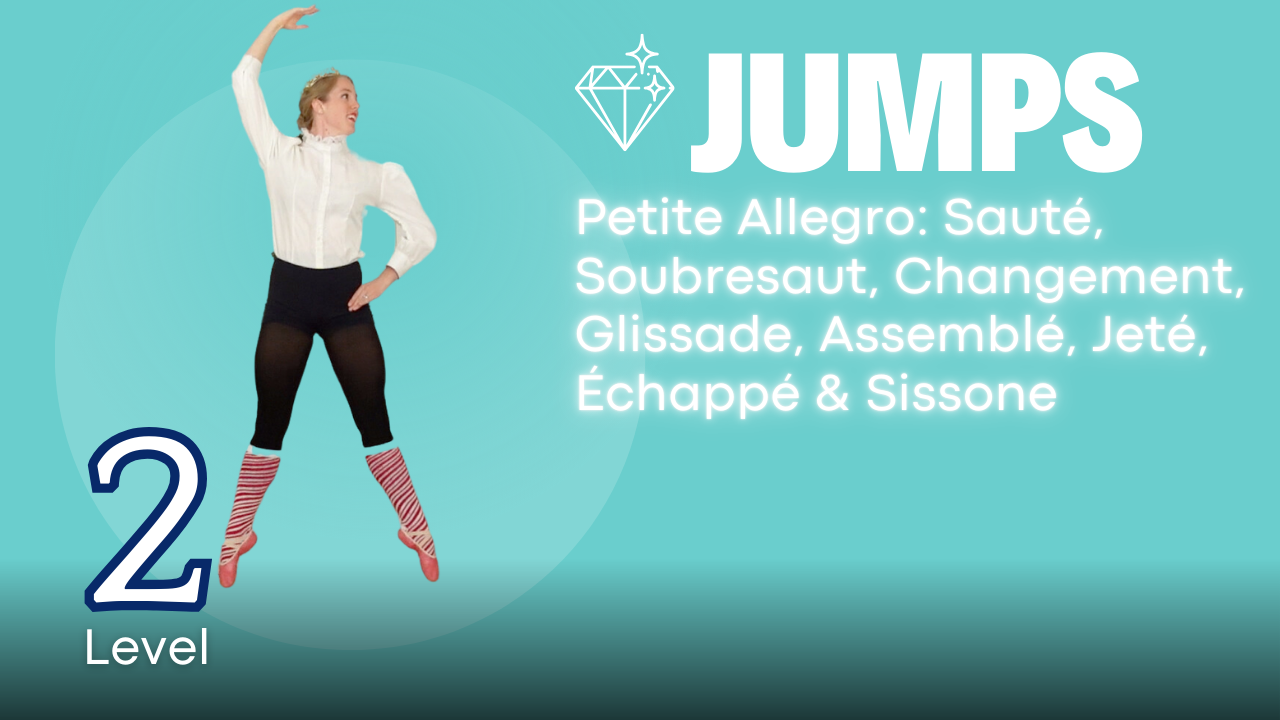
Foundations for Jumps and Petite Allegro
Build up to Jumps & learn Petite Allegro Vocabulary: Sauté, Soubresaut, Changement, Glissade, Assemblé, Jeté, Échappé & Sissone
52 classes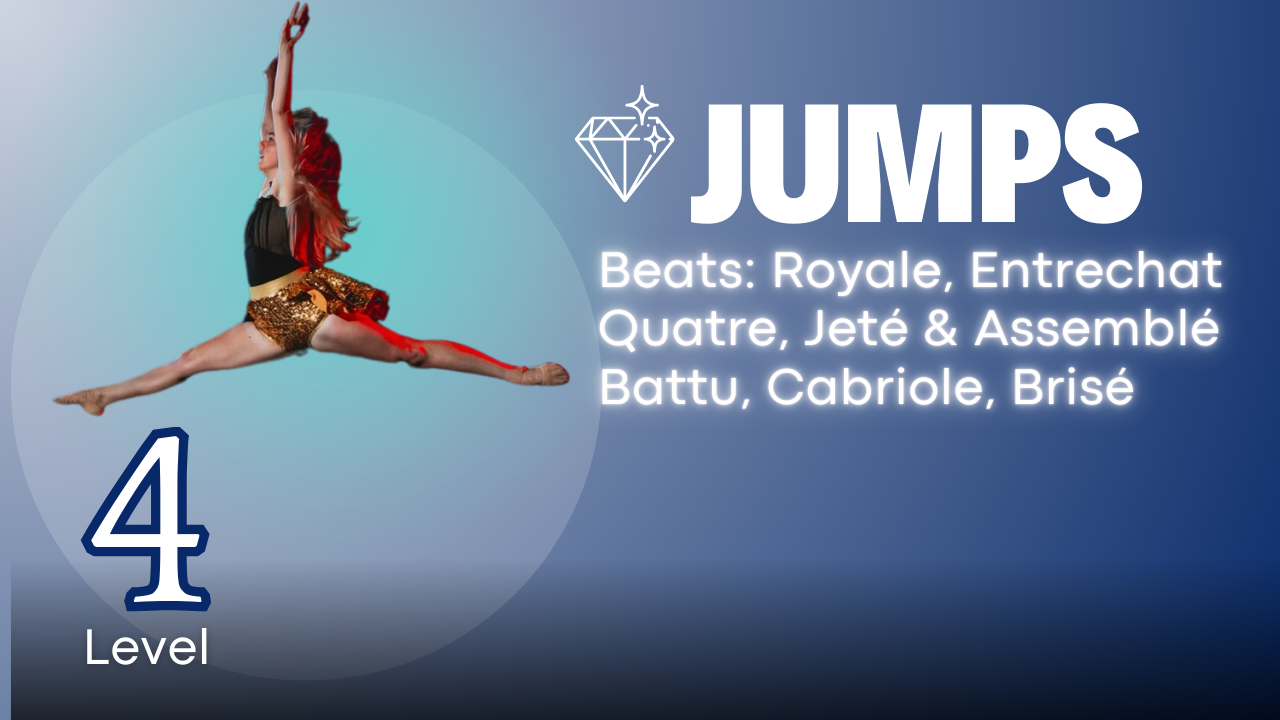
Beats, Battu, and Fancy Feet in Jumps
Jumps with Beats: Royale, Entrechat Quatre, Jeté & Assemblé Battu, Cabriole, Brisé
23 classes
The Stability Project: 12-Weeks to Better Balance
Stop wobbling and start feeling stable. The Stability Project is a transformative 12-week journey designed to help adult dancers master the art of balance. By combining deep core engagement, targeted ankle conditioning, and specialized proprioception drills, you will build the rock-solid foundation needed to balance on demi pointe—and in life—with unwavering poise.
61 classes