How Do I Improve My Turnout for Ballet?
Improve your turnout by focusing on active rotation from the hip socket rather than forcing your feet outward. Success comes from balancing strength in the deep lateral rotators and glutes with flexibility in the inner thighs. Consistently using your 'functional turnout' through programs like Total Turnout Transformation ensures safe, sustainable progress for the adult body.
Improving turnout is often the top priority for adult ballet dancers, but it is also one of the most misunderstood concepts in technique. Many beginners mistakenly believe turnout is a matter of how far the feet can point to the side. In reality, true ballet turnout is a dynamic, muscular action that originates deep within the hip socket.
For adult dancers, improving turnout isn't about changing your bone structure; it's about maximizing your 'functional turnout' through a combination of strength, mobility, and neurological awareness. With over 140 videos dedicated to this topic in our Total Turnout Transformation program, we focus on a holistic approach that respects the adult body while pushing for measurable gains.
Strengthen the Deep Rotators
To hold your turnout, you must engage the 'deep six' lateral rotators located under the gluteus maximus. These muscles are the primary drivers of external rotation. If you rely solely on your feet to grip the floor, you risk injuring your knees and ankles.
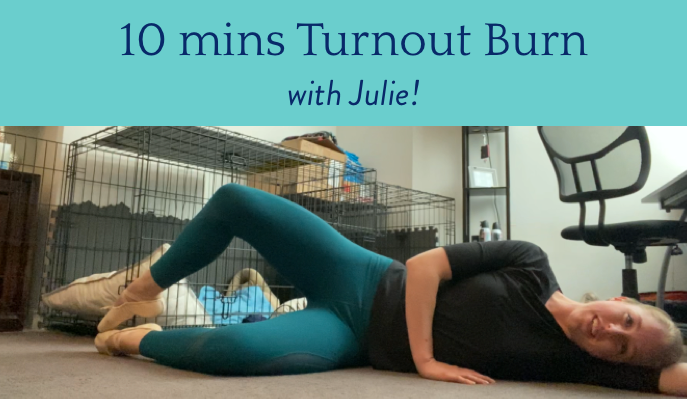
Exercises like the ones found in our 12-min Turnout Burn focus on isolating these muscles. Clamshells, side-lying leg lifts with external rotation, and 'froggie' lifts are essential. The goal is to feel the 'wrap'—that sensation of the upper thighs rotating outward and back. Strengthening these muscles provides the power needed to maintain rotation during difficult movements like pliés or tondus.
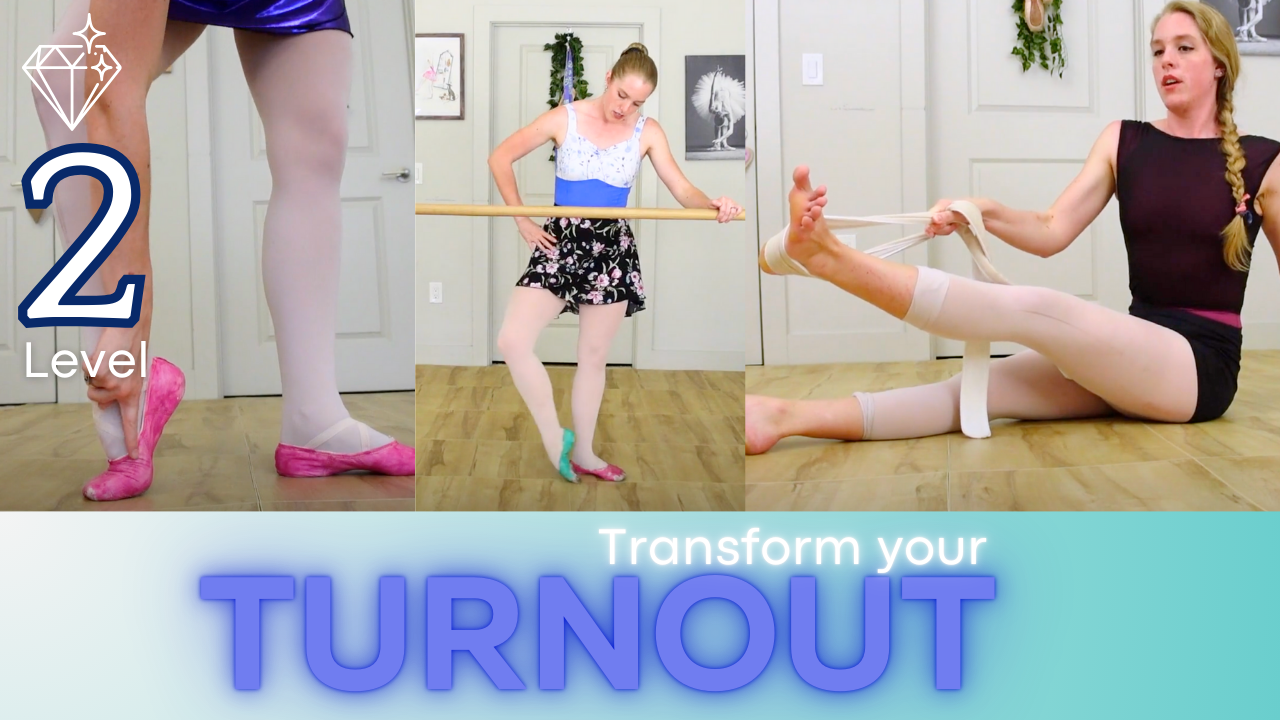
Improve Hip and Inner Thigh Mobility
If your inner thighs (adductors) are tight, they will fight against your rotators, pulling your legs back toward the center. Achieving a greater range of motion requires releasing this tension. Our Inner Thigh and Hip Mobility session uses neurological release techniques and targeted stretches to help the muscles 'let go.'
Adults often carry stress in their hips, which can lead to an 'arched' pelvis, which doesn't allow for maximum rotation. Finding a neutral pelvis is key to unlocking the hip socket. When the pelvis is aligned, the femur has the most room to rotate freely.
Avoid 'Screwing' the Knees
A common mistake is 'forcing' turnout by planting the feet in a wide position and then straightening the legs. This places immense torque on the knee joints. Your feet should only go as far as your hips can comfortably hold (with some effort). As you progress through the Advancing Technique with Posture, Turnout and Ballet Lines program, you will learn to prioritize the rotation of the thigh bone over the angle of the toes. Using your turnout correctly actually protects your joints rather than straining them.
Maintain Turnout During Movement
It is one thing to hold a beautiful first position at the barre; it is another to maintain it during a pirouette or a grand battement. As you lift your leg, the hip often wants to hike up or internally rotate to gain height.
In our Extensions Foundations for Higher Legs, we teach dancers how to maintain the 'under' rotation of the standing leg while simultaneously rotating the working leg. This 'double-sided' turnout is what creates the iconic ballet line. Similarly, the Turns Foundations Program emphasizes that a stable, turned-out standing leg is the secret to a successful piqué turn or pirouette.
The Adult Advantage: Consistency and Intelligence
Adults may not have the extreme bone plasticity of a ten-year-old, but you have the advantage of cognitive focus. You can visualize the mechanics of the hip and apply anatomical corrections more precisely than a child.
Incorporating a short activation routine, like the Turnout Follow-along Workout, before every class ensures your rotators are 'awake' and ready to work. By focusing on the quality of your rotation rather than the quantity of the degrees, you will develop a stronger, more resilient technique that looks beautiful and feels sustainable. With patience and the right structured approach, your turnout will continue to evolve throughout your dance journey.
Next step
Related Videos
Watch classes and tutorials related to this topic
 20:22
20:22 Turnout Follow-along WorkoutAllie-5 Turnout Workout
 14:12
14:12 Inner Thigh and Hip Mobility
 8:56
8:56 Short Barre Stretches for Devant (Front) and A La Seconde
 13:10
13:10 12-min Turnout Burn
 50:28
50:28 Ballet Barre: Emphasizing Turnout and Finding Rotation
 16:31
16:31 Turnout Stretch & Strength Week 1 of 5 -- Have a belt or bathrobe tie handy. Some may be kneeling, bring a pillow or sweater for comfort under your knee.
 14:17
14:17 Turnout & Torque - Generating Power in Turnout for Better Turns & Jumps - Some exercises are light weight-bearing on wrists; Most are seated or lying.
 23:16
23:16 25-min Progressing Ballet Technique for Core Stability & Turnout -- Dec 28
More Programs
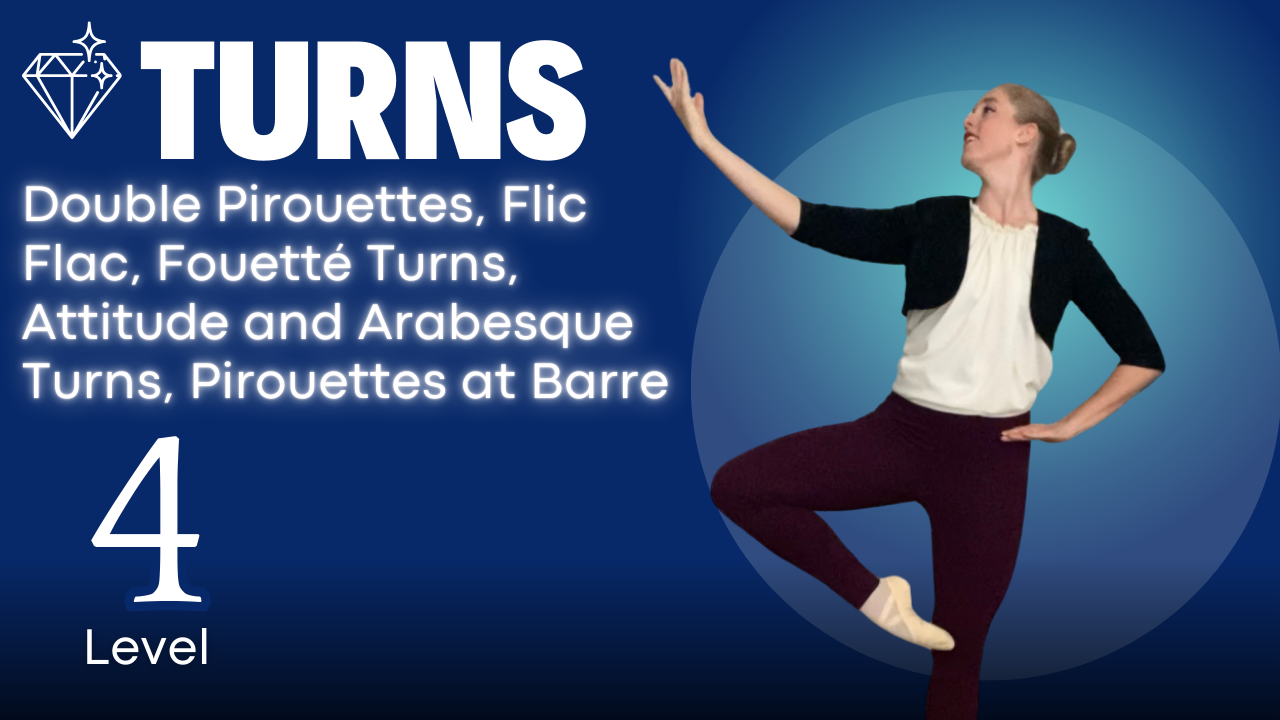
Advanced Turns Program
Pirouettes at the Barre, Flic Flac, Double Pirouettes, Fouetté Turns, En Dedans Attitude and Arabesque Turns
53 classes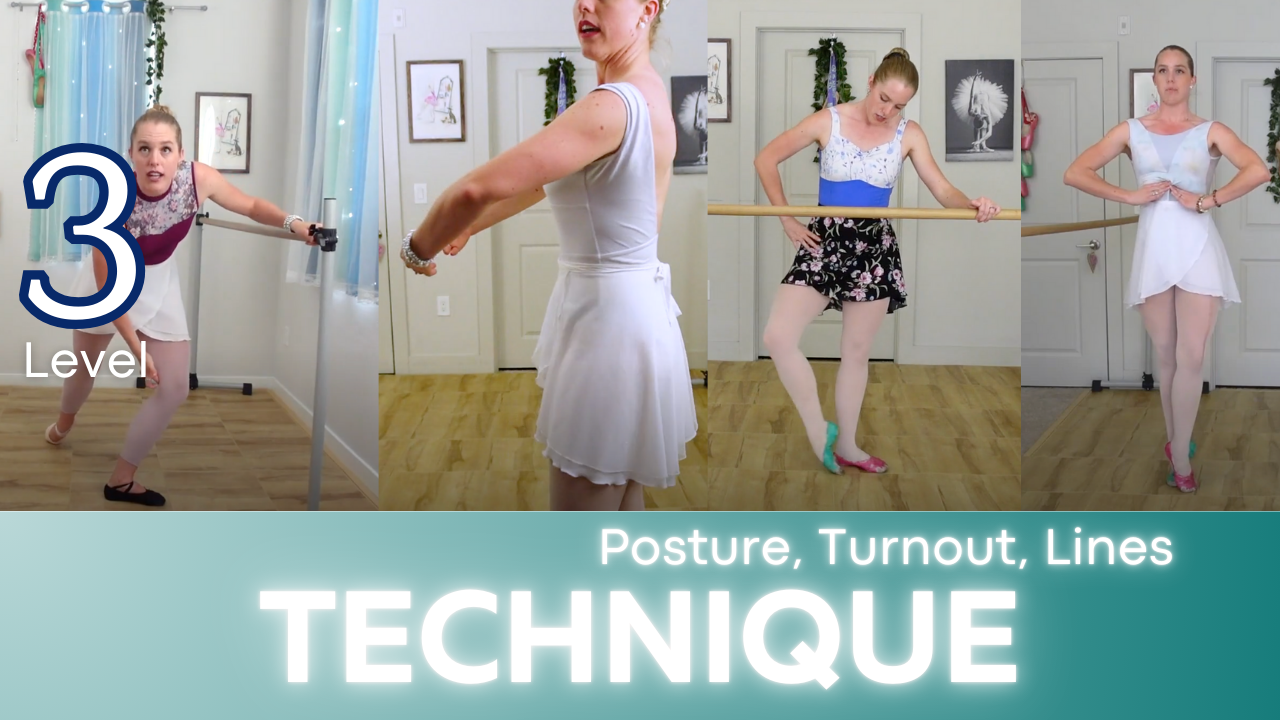
Advancing Technique with Posture, Turnout and Ballet Lines
Advancing Technique: From Head-to-Toe. Take your technique to the next level with a comprehensive, full-body approach designed to bring each part of your body into harmony. Level 3 addresses proper usage of hips, spine, Turnout, Feet, Knees, Elbows
75 classes
Progressing Ballet Technique (PBT) Conditioning
Experience a transformative approach to classical technique with our comprehensive 12-hour PBT series. Designed specifically for the adult body, this program bridges the gap between functional strength and execution at the barre. By utilizing stability balls, resistance bands, and targeted floor work, dancers develop the "muscle memory" required to execute complex movements with precision and ease. Broche Ballet is proud to offer this revolutionary conditioning program to help you find your strongest, most resilient self—both at the barre and beyond.
37 classes